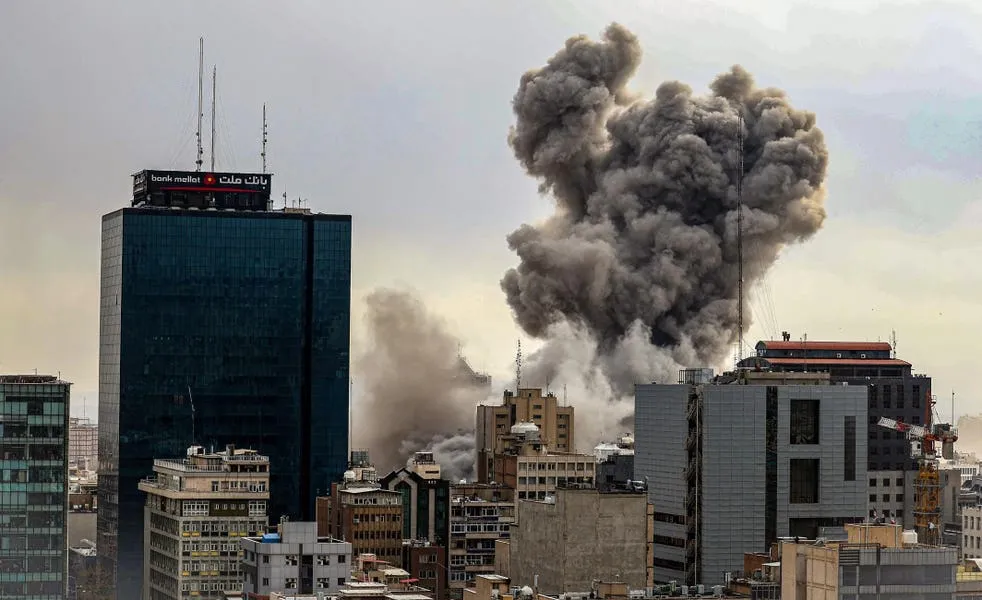
In the hours before President Trump announced a US-Iran ceasefire on April 7, a cluster of brand-new Polymarket wallets identified by Bubblemaps collectively netted roughly $600,000 in profit on the ceasefire contract. One account, "Fernandoinfante," turned approximately $13,200 into $467,515. Another wallet, created twelve minutes before Trump's social-media post on the ceasefire, placed $31,908 of "yes" bets at around $0.33 and walked away with a $48,500 profit. Rep. Ritchie Torres (NY-15) sent a letter to the Commodity Futures Trading Commission demanding an investigation within days.
The numbers are not new. I previously reported on Bubblemaps's earlier identification of six fresh accounts that profited a combined $1 million betting the US would strike Iran by February 28, and on a single insider netting $1 million on Polymarket in 24 hours back in December. What is new is that one of the platform's most active recent traders, with a US defense background, is willing to say on the record that the system is extracting from retail and creating direct financial incentives for soldiers to leak information.
Ryan Kirkley is the founder and CEO of Global Settlement, an institutional blockchain interoperability protocol that builds central-bank digital-currency rails for governments including Uganda. By his own account, he previously ran the largest crypto accelerator in Miami and managed the venture fund at Cointelegraph. He is also, by his own admission, a former Polymarket whale.
"I have been a whale on Polymarket many, many a month," Kirkley told me on my podcast On The Margin, "and not until recently when I've started to just find problems with the ethics, slash having been sowing the weeds, seeing how the sausage is made, that I think I've started to pull away realizing that you're just taking money from people who really can't afford to lose it."
His defense background gives him a specific lens on how Iran-related markets get traded. "I think there's almost two types of people," he said. "There's the type of people that can read the tea leaves. When I see troops getting served lobster and steak, I know exactly what that means. I can discern that it’s very likely in the next 48 hours, there’s going to be a major US move occurring. That might not be insider information. That’s just the ability to discern what is discernible intelligence." Then there is the other category. "The $800,000 bet that was placed two hours before the strike started the night of the invasion. That’s a different one. That is one where you can almost assuredly say there was an insider who knew exactly the timing of the strikes."
Kirkley's claim about a single $800,000 bet two hours before strikes began is supported in spirit by public on-chain forensics, even if the specific dollar number cannot be matched to a single transaction. Bubblemaps and a constellation of Polymarket-tracking accounts identified six fresh accounts that profited a combined $1 million in the hours before US airstrikes on Iran in late February.
The largest day Polymarket has ever had, Kirkley said, was not the 2024 US presidential election. "The largest day in the market history, that was not the election, happened during the Iranian invasion." A study published on the Harvard Law School Forum on Corporate Governance estimated that $143 million in profits have been made on Polymarket by individuals who potentially had insider information across events ranging from Taylor Swift's engagement to Nobel Peace Prize awards. CNN documented one trader who built a near-$1 million position from dozens of Iran bets with an 83 percent win rate, rising to 93 percent on trades over $10,000.
Kirkley's strongest critique is structural. The standard defence of prediction markets is that they aggregate information; his counter is that they aggregate insiders. "There was a press secretary one, how long would it last, and she ended it two seconds before the Polymarket edge," he said. "Could she have told her family, purely and simply, hey, take the bet on the under, don't worry, I'll end it before then? It's things like that, where like, sure, I guess we're getting slightly more information, but to the average person betting on Polymarket, they have no chance."
He went further on Trump-adjacent markets. "I could be sitting at Mar-a-Lago and talking to President Trump and then just plant the seed in his head that this is occurring, knowing that he's going to get up and do an interview for two hours the next day. There's all sorts of ways to manipulate these markets that aren't even, like, illegal or bad actor."
Kirkley's conclusion is blunt. "You are no longer betting against free and fair information. You are betting against the insiders. And your only job as a Polymarket trader now is to identify the insider as quickly as possible and follow their trade."
The most provocative claim Kirkley made was about the supply side of insider information. "You're now creating a financial incentive for one rogue actor, one rogue decision maker to launch a missile, launch a bomb. The average IRGC soldier is making less than $18,000 a year. Guess what, a quick million dollars in Bitcoin via Tornado Cash could easily sway him to do a preemptive launch."
That claim is speculative and unverifiable. It is also the cleanest possible articulation of the regulatory worry. When a market on a US strike pays out hundreds of thousands of dollars to whoever knows the timing first, the value of leaking that timing rises to whatever the market is willing to pay for it. The seller could be a Pentagon staffer, a White House communications aide, or a foreign soldier with a Tornado Cash address. Polymarket cannot police any of them.
The platform apologised earlier this month after letting users place bets on the fate of a downed US F-15 pilot in Iran. "It should not have been posted," the company wrote. The market was removed; the structural question Kirkley is asking remains.
Kirkley spent most of his Polymarket career on the inside of these markets. He says the moment he stepped back was when the math stopped working morally. "I think there comes a time where crypto has to call out just straight bad ethics."
On April 23, federal prosecutors in the Southern District of New York charged Master Sergeant Gannon Ken Van Dyke, a U.S. Army Special Forces soldier, with using classified information about the capture of Venezuelan leader Nicolás Maduro to win roughly $410,000 on Polymarket. It is the first known criminal prosecution of insider trading on a prediction-market platform in the United States. The case is not the Iran market Kirkley described, but it makes his point in a courtroom: a soldier with access to operational timing turned that access into a Polymarket payout.
Whether Polymarket, now valued at $9 billion after Wall Street's ICE took a $2 billion stake last October, survives the ethics question may end up depending less on whether retail keeps losing and more on whether the CFTC concludes that it is supposed to intervene. Until then, Torres's letter sits on the Commission's desk; the on-chain record sits on Polygon for anyone to audit; and one of the platform’s most informed former whales is on the record telling regulators where to start.