Amid a cost of living crisis, pricey patisserie is all the rage - and not just in London. Our reporter goes on a crawl to find out if a tart can really be worth £45.
There was a time when you could get a stuffed vanilla cream slice or a neon-pink Tottenham cake for about £1 on the leafy, residential corner of Hackney, east London, where I stand today. But the branch of Percy Ingle bakery that was here for nearly 50 years is gone. In its place sits Fika, a cafe where a cinnamon bun costs £4.20 and a pistachio croissant will set you back nearly £5.
In comparison with other bakeries, however, Fika's pastries are a bargain. At Copains, a Parisian favourite that opened its first UK branch in central London late last year, a large babka (about the same size as a supermarket chocolate twist) will set you back £12.50, while an eclair costs £11.90. In Harrods' food hall, a stuffed, savoury croissant topped with gold leaf is £12. At Cedric Grolet, located inside the luxury Berkeley hotel, a hazelnut cookie will leave you £25 out of pocket. Yes, the age of the £10-plus pastry has arrived.
These desserts have become viral fodder on social media, prompting long queues outside bakeries that have seized the algorithm to show off their mouthwatering goods. These spots are usually in big cities including London, New York (at Banque, a roasted pear danish costs $12 (£9), and the viral croissant supreme at Lafayette is more than $10) and Paris (at Pierre Hermé, a pecan tart is €12 (£10.40) and a box of eight macarons €27).
But the prices don't appear to be hampering the success of upmarket bakeries, at least not in Britain. A survey in September found that the number of independent bakeries in the UK had grown by 34% in the past five years, with the Midlands, East Anglia and the north of England growing fastest. Emma Bell, a business professor at the Stockholm School of Economics, says this is a global trend, with high-end bakeries benefiting from a shift away from "an era of cheap, ultra-processed food" and turning to food businesses that "promote craft making", with customers willing to spend big on unique, indulgent pastries in particular.
Outside London, the rise of bakery tourism has brought people from all over the world to towns and villages across the UK in search of sweet, flaky (and often costly) pastry perfection. Pump Street Bakery in Suffolk, for example, caused a festive furore for selling six mince pies for £25, coming in at more than £4 each.
So, are the long queues and the hit to your wallet worth it? Here, I take on the unenviable task of trying pricey pastries across London, including a few viral hotspots, to see what all the fuss is about.
My first stop is Yeast in Broadway Market, east London, where pastries included a pistachio crumble and praline creme brioche feuilleté (£7.50) and a poached vanilla rhubarb danish (£7.95). Ben Keane, who runs the bakery with his wife, Angela Chan, addresses the high prices head-on. "We know we're not cheap, but we use the best-quality ingredients," he says. When I visit on a Sunday morning, the cafe is packed.
I opt for a tomato, mozzarella and hot-honey swirl, which costs £7.25, a limited-edition pineapple and coconut danish filled with custard (£7.95) and a chocolate and hazelnut kouign-amann (£3.95). I start with the savoury option. It’s delicious. I intend to have only a small bite, with the pastry-laden day ahead in mind, but I eat the entire thing. I go for the pineapple-topped danish next. Again, it’s very yummy; the fruity topping surprisingly firm and fresh and the creamy filling adding a subtle but not overbearing sweetness. But the winner is the kouign-amann, a delicacy from Brittany that translates as “butter cake”. Each bite tastes exactly like a large blob of browned butter doused in sugar, with the pastry acting as a vessel. It’s divine. You can’t get this in Asda.
Since the supermarket is my usual patisserie of choice, I realise my taste buds shouldn’t be the sole barometer of quality. What do the customers think? “They’re just really tasty,” says Alice, 31, a “semi-regular” who has just finished her apricot and apple crumble danish. She is dining in with Baula, 29, and Emily, 30, who is visiting from south Wales. All together, they paid £37 for the danish, a chocolate ganache brioche feuilleté, a pain au chocolate and a kouign-amann, plus coffees. “These are amazing pastries. You don’t mind spending a bit more when it’s independent,” says Alice, who avoids chain bakeries. Emily is also impressed, despite being able to “buy a coffee and a cake for less than the price of a pastry here” in Wales. “I can make a sandwich at home; I can’t make this at home,” says Alice.
Keane uses flour and butter imported from France, as well as a “special dry butter” to craft his pastries, which he says has more than doubled in price from the £4.50 a kilogram he paid when he started in 2011. Other costs, he says, “have gone sky high too”, including rents, business rates and VAT.
Keane says Yeast has built its reputation “organically”, by word of mouth; although a few of their pastries have gone viral, prompting a surge in demand that, he says, is usually short-lived. “We don’t want to be a faddy place. Now it just seems to be: ‘What’s the next big thing?’ But the main focus for me is to make the perfect croissant every day.”
On to Copains, where all the pastries are gluten-free. Upon entering, I’m greeted by a worker who has an encyclopedic knowledge of each sweet treat on sale. The bakery, which has 26 branches across Paris plus outlets in Bordeaux, Lyon and Brussels, opened in Covent Garden in November and launched a second London shop in Islington this month. Robert Szucs, the bakery’s general manager, calls it Disneyland for people with dietary restrictions. He says that three or four customers each day “start crying” when they are told they can treat themselves to almost anything in the store. “There are a lot of people who need this,” he says.
I opt for a New York roll: a large, firm, circular croissant filled with hazelnut spread and topped with chocolate and nuts (£12.90), a large chocolate babka (£12.50) and a coffee eclair (£11.90). The New York roll is a beast; the dense pastry weighing heavy in my hand but for a gluten-free bake—which rarely tastes like the real deal—it’s impressive. The babka is glossy and oozing with chocolate yet not too sweet—a welcome respite from my sugar-fuelled day. Finally, it is time for the eclair. Unlike the other towering pastries, it’s thin and small; I calculate that each bite costs about £3. It’s pleasant—the coffee cream is particularly tasty—but the price leaves me feeling a bit raw.
Copains is not the only gluten-free bakery in London. At Libby's Bakery in Notting Hill, the starting price for a pack of four pastries is £12. Szucs says Copains uses only organic high-quality ingredients including chestnut and rice flours and that "everything is handmade and freshly baked in the morning". He rebuts the suggestion that they price out some customers pointing to a chocolate brioche at £3.50 and croissants that start at £4.90.
Were customers impressed? One rates their chocolate swiss bread (£5.50) six out of 10. But Vilija, 51, says she "just loved" her chocolate pistachio croissant. Her partner Rimsky also 51 was impressed with his raisin twist too. "I liked that it wasn't that sweet," he says. Neither have dietary requirements and they went in on a whim. They paid £29 for their pastries plus two coffees. "I was a little bit shocked but as soon as I tasted it I thought it was worth it," says Vilija.
It's a 40-minute walk between Copains and my final stop - a wise mode of transport considering how much dough, sugar and chocolate I have consumed. On the way, I pass Arôme Bakery—a mega-viral bakery with a long queue—but as its pastries cost a mere £7 or £8 I continue to Cedric Grolet.Another Parisian outlet,it has cultivated a large audience online with Grolet’s ultra-realistic fruit cakes turning the young baker—who has 9.5 million followers on TikTok—into a culinary celebrity.
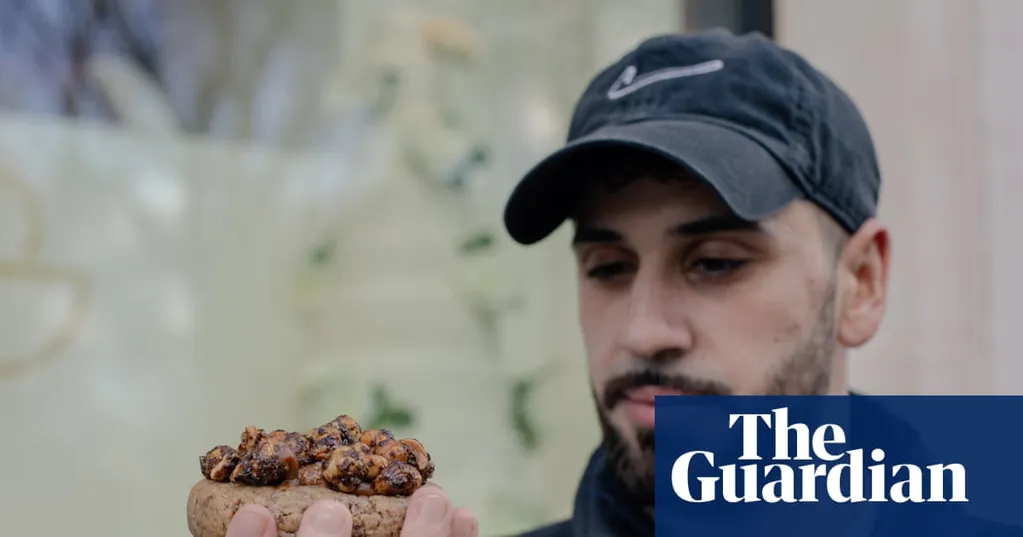
Before arriving,I had my sights set on one item—the £25 hazelnut cookie—but the server suggests the £45 “vanilla flower”:a hefty,towering tart which he assures me is one of the bakery’s most popular products.I take his advice and leave with my hulking pastries.
My inner cynic wants to rubbish these extortionate bakes,but with my first bite of the cookie—which,to be fair,is big enough for two people—I am blown away.The dough is soft and swirled with milk chocolate and caramelised hazelnuts.It sits on a bed of caramel,and praline adds an addictive crunch.I promise myself I will have just a single bite,but I have to go back for more.
Now for the vanilla flower.I eat a corner of the tart,felling my teeth struggle under a final sugary assault.Delicious.The crunchy pastry at the bottom is heavenly and the vanilla ganache on top creamy and sweet.By now though all I can think about is eating a whole head of broccoli to scrub my sugar-loaded palette.It’s time to call it a day.
Prof Bell,would carried out study into boom independent bakeries across UK since Covid,says pandemic was turning point because “we had more time high street became more destination”.While many have since faced financial pressures including “business rates,rising energy ingredient costs labour shortages”,sweet treats usually higher-margin products.They’re also way to “get people door”,with enticing pastries used lure shoppers hope they’ll also buy other products.
While high-end bakeries are up those lower end scale struggling.Percy Ingle which once reigned supreme across London Essex more than 50 shops shut doors 2020.Wenzel’s another low-cost chain recently closed several stores recorded £1.8m loss last year.Bell says high-cost low-cost bakeries not competition each other;instead those lower end seeing customers enticed cheap supermarket bakeries.
Am I now hooked on high-priced pastries after my indulgent crawl? Yes. In the context of rising costs and considering the other products I would probably spend a tenner on, a delicious, filling bake appears justifiable. But there might be a middle ground. Perhaps because of the popularity of weight-loss jabs or simply because many of these pastries are too much for a single serve; one-bite desserts are on the up. At Town restaurant in central London, for example, the buttermilk pudding with rhubarb can be bought in two sizes: a mini version (£6) and a standard size (£12). Maybe we can have our cake and eat it too.