The news of Andrew Mountbatten-Windsor's arrest this morning may come as surprise to many but the British royal family has long been mired by controversy. From illegal gambling, motoring offences and even execution, these are just a handful of the many royal run-ins with the law.
Charles I
The last time a member of the British royal family was arrested was more than 350 years ago. Charles I was taken prisoner in 1647, after his defeat in the English civil war by parliamentary forces. The monarch was a firm believer in the divine right of kings and led a tyrannical reign, refusing to recognise the authority of parliament when it came to matters of governance and religious practices in England and Scotland. He was put on trial and found guilty of high treason, charges which he denied by claiming that no court had jurisdiction over the monarch's God-given power.
Charles was beheaded in 1649, the only monarch to have been formally executed by the state. His last spoken words were: "I go from a corruptible to an incorruptible crown, where no disturbance can be, no disturbance in the world."
King Edward VII
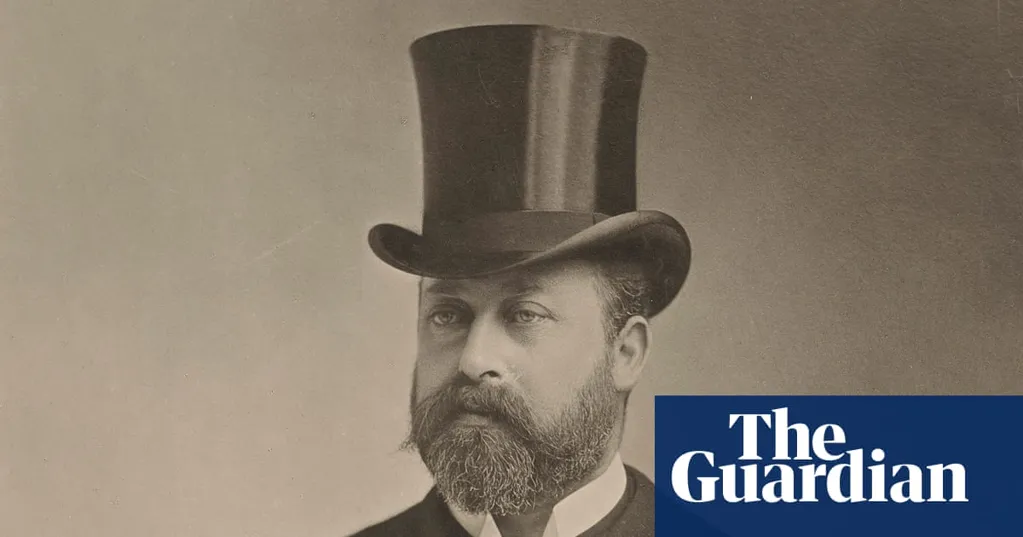
Like many a royal, the eldest son of Queen Victoria had a reputation as a playboy with an interest in gambling, drinking and women, alongside his royal duties. While Prince of Wales, he was questioned in court as a witness during the trial of the baccarat scandal - an illegal game of gambling which took place at the residence of one of England's richest men at the time in 1890. The case was a classic Victorian melodrama that is still shrouded in mystery. One of the players was accused of cheating and when rumour got out, he denied the allegations, pointing the finger at the other players for slander and blabbing.
The issue was a brought to the high court, where Prince Edward stood as a witness. It was a national scandal that damaged his reputation with the public. He was the last member of the royal family to stand in a courtroom before Prince Harry appeared in the exact same court 130 years later.
Princess Anne
When it comes to royal motoring offences, Princess Anne has paved the way. At the age of 21, she was given a written warning for speeding up to 90mph on the M1. Five years later, she was given a £40 fine at Alfreton magistrates court for driving at 96mph in a 70mph limit in Derbyshire. Having not learned her lesson in road safety, in 1990 she was banned from driving for a month on top of receiving a £150 fine at a magistrates court in Stow-on-the-Wold, Gloucestershire after she admitted to two speeding offences on the basis that "she had been late for an engagement." Then in 2001, Anne was fined £400, ordered to pay £30 costs and given five penalty points on her driving licence for breaking a 70mph limit, speeding at 93mph in her Bentley. Her defence was that she mistakenly thought the police car following her was a royal escort.
The princess seemed to be in a hurry to brush with the law again. In 2002, she pleaded guilty to offences under the Dangerous Dogs Act after her three-year-old bull terrier named Dotty bit two children in Windsor Great Park. She was fined £500 for the attack and ordered to pay £250 in compensation and £148 in costs at a magistrates court in Slough.
Prince Philip
It would appear that reckless driving runs in the royal bloodline. In 2019, Prince Philip’s Land Rover was turned on its side as a result of a car crash with another vehicle that happened close to the Sandringham estate in Norfolk. The Duke of Edinburgh, who was 97 and driving at the time, collided with another car while he was pulling out from a driveway on the A149. Philip escaped the smashed car unhurt; the driver and passenger in the other car were treated in hospital and later discharged. Both drivers were breath tested and provided negative results. After the incident, Philip was made to hand over his licence, but the CPS decided against prosecution.
Prince Charles
Twenty years after Diana, Princess of Wales, died in a car crash, it was revealed that Prince Charles had been questioned over allegations that he had plotted to kill his former wife. In 2021, the Daily Mail reported that the former Metropolitan police commissioner, John Stevens, had revealed that Charles was interviewed as a witness in 2005 during a three-year investigation into Diana’s death in 1997. He was questioned about a note Diana had written in which she speculated that she would be killed in order for Charles to marry their sons’ former nanny, after false rumours were circulating that he was having an affair at the time. Charles was not considered as a murder suspect and Stevens said that his team had found no other evidence during his investigation to support that Charles was involved in Diana’s death.