Westeros is noisy; as kings, wars, dragons, and dynasties drown out smaller voices. A Knight of the Seven Kingdoms chooses to do the opposite of its other HBO adaptation brethren; it quiets Westeros so viewers can notice the more intimate moments. The surprise of the season is how well Ira Parker (showrunner/writer) understands this tonal shift; he writes toward softness rather than spectacle, using decency, doubt, and human-scale storytelling as the foundation. Season 1 does not compete with the larger saga; it carves its own space within. Over six tightly structured episodes, the series proves that George R.R. Martin's work can be equally (and sometimes more) reverent when reduced to two travelers, their worn belongings, and their choices that reveal who they are becoming.
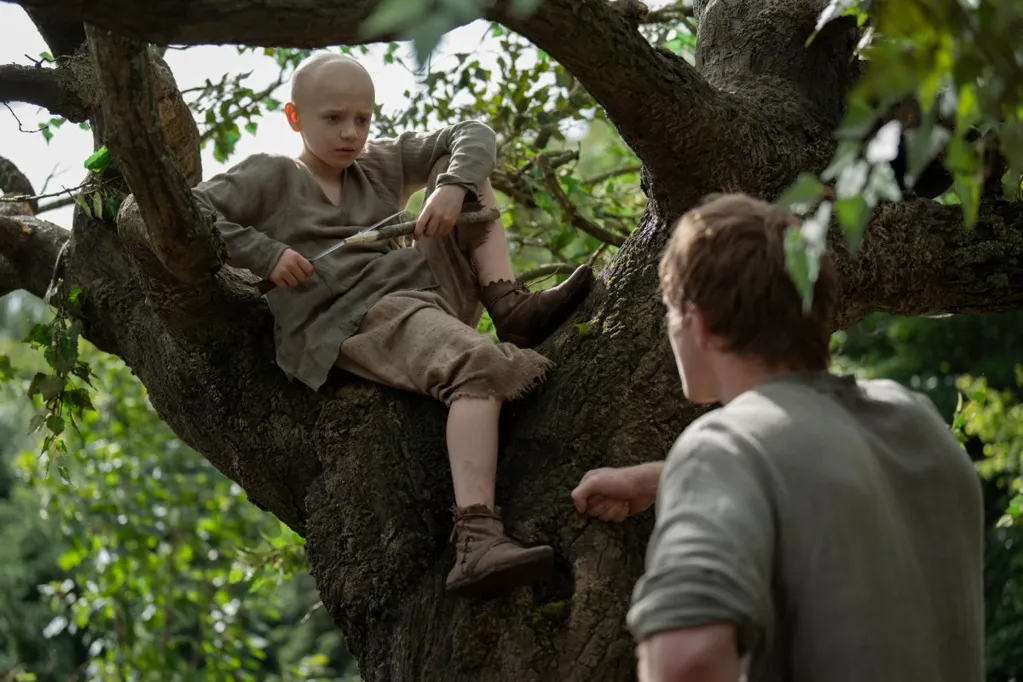
At the center of the story are Ser Duncan "Dunk" the Tall and his squire Aegon "Egg" Targaryen. Their relationship is the spine of the season; everything rests on how they grow together, stumble together, and learn to trust one another. The decision to stay with them nearly every step of the way pays off; it keeps the story grounded and gives every scene emotional specificity. Dunk, played with a careful stillness, is big enough to intimidate but honest enough to shrink himself during sensitive moments. Egg, portrayed with a blend of curiosity and conflict, is a child wrestling with privileges and burdens he barely comprehends. Their chemistry works because it is not exaggerated; it is instead natural, as they're two people thrown together trying to make sense of each other and the cruel world they inhabit.
What elevates the series is how Parker writes their scenes. He does not rush through emotional beats; instead, quiet moments do as much heavy lifting as dramatic ones. When Dunk tries to express himself, he often fumbles the wording; then juxtaposed is the well-spoken Egg, who asserts himself (sometimes embarrassingly). Those small imperfections make the characters complete; there's a readable rhythm of connection, frustration, learning, and gentle reconciliation. The season is fluent in that rhythm and uses it to build long-term investment.
That grounded approach extends to the humor. The jokes arise from awkward interpersonal situations, bodily discomforts, and the strange ways people will cope with a universe that is mean and unforgiving. Instead of undercutting tension, the humor reinforces; releasing a valve needed to keep the season from drowning under seriousness. This humor, while crude at points, never mocks its characters; instead, it gives them the room to breathe, laugh, and trip over themselves in ways that deepen the emotional stakes rather than cheapen them.
Parker evidently influenced the physical details for the set and costume designers to shape the world the best you'll ever see. Costuming leans into practicality; armor looks repaired instead of polished; clothing reflects travel and wear. When the characters are brutalized in combat, they don't magically become better by the next episode. Settings are lived-in rather than staged; stables are appropriately lit, coarse with hay; taverns are cramped (especially to the ever-uncomfortable Dunk who towers over everything); the armor is fable-appropriate while it presses uncomfortably against flesh and blood. These tactile decisions bring back the dirt and texture that made the early years of Game of Thrones compelling. You imagine the smells; you feel the burn of the rope during tug-of-war; the exhaustion after travel and battle coats the overall atmosphere. Despite this weight, the production design doesn't overwhelm; instead bringing you closer to the experience of the protagonists.
Action sequences follow the same philosophy. They do not arrive as the point of an episode; instead, they're tense and interrupting. Fights are brief, messy, and consequential; the violence hurts because the show has invested in the people involved, not in the choreography itself (and it is excellent choreography, at points more accurate to Medieval times than straightforward historical adaptations). After each conflict, the aftermath matters more than the clash; bruises, guilt, relief, and shaken confidence are as central to A Knight of the Seven Kingdoms as any heavy sword swing.
The music, too, stays close to the characters. Instead of swelling orchestral declarations, the score is intentionally restrained, like a western, melodic, warm and intimate. There are sounds that you'd hear as hums on the road, and the gorgeous whistling is enough on its own to provide a solemn atmosphere. Even still, it's the quieter approach that reinforces the scale of the story; and despite character themes, it avoids telling the audience how to feel. Creating a space for emotions to unfold naturally.
Where the season truly shines is in how it handles moral questions. Dunk is not a strategist or a political force; he is a man desperate to adhere to his code, the show places him in situations where that code would strain. Loyalty is complicated for Dunk when protecting one person risks harming others. Honor among his peers is fragile, and cruelty is often ignored for the sake of safety. So, it's established, doing the right thing can look foolish or even dangerous. Parker writes his dilemmas with clarity; he lets Dunk learn from his missteps, stumble toward integrity, and understand that kindness is not weakness.
Egg's journey mirrors Dunk's in a more volatile way. He lies when frightened; he pushes boundaries; he tries to emulate courage before he understands it. The show allows him to fail like a child; but also allows him to grow as one too. His communication is always improving; his awareness deepening. All the while, his sense of responsibility and what he wants to do build towards the final episode. Watching Egg develop through mistakes adds the much-needed emotional counterpoint to Dunk's steadiness.
Supporting characters enrich the season without overwhelming its focus. Tanselle, the puppeteer, brings out Dunk's gentlest instincts; her scenes suggest a person who has found survival in creativity. Nobles and lords introduce conflict shaped by ego, pride, and power; some act generously (with Sir Baratheon being an entertaining standout), others pettier or harsher. Their presence adds weight to Dunk and Egg's journey without pulling the camera away from them. This is a balanced ensemble that populates while never overcrowding.
The season's restraint is one of its strongest assets. Hinting at the wider politics of Westeros but not rushing to connect itself to every major house or event. This refusal to expand beyond personal emotional boundaries portrays confidence. The writers show frequently that they know the larger map; but recognize how important it is to not follow every path. The decision allows the finale to build tension organically; trial, consequence, and personal choice collide in a way that's explosively earned.
A fair critique is that the narrow focus can occasionally make the story feel visually small; some moments might have benefited from a wider angle or additional breath. Yet this intimacy is intentional. When the show finally does pull back for a broader view, the shift resonates precisely because it is used sparingly.
What lingers most is the writing itself. Parker's dialogue is thoughtful in the way events affect the characters; flashback transitions are purposeful; and emotional arcs land without being overtly telegraphed. Jokes rely on character rather than extraneous setup; dramatic beats emerge from choices rather than twists. The finale works because the season teaches you to care about the integrity of vows as deeply as the outcome of a conflict. Performances follow suit. Claffey gives Dunk a gentleness that feels earned; Ansell keeps Egg unpredictable yet believable. Their partnership shapes the heart of the series.
Taken as a whole, Season 1 is a quiet triumph. It remembers that the most affecting stories are not always about who wins but about who remains kind when victory feels improbable. Parker's direction is modest where it should be; ambitious where it matters; confident enough to let character define the stakes. When the final scene fades, you want more time with Dunk and Egg—not to unravel lore—but to see whether the goodness they choose now can survive what lies ahead.
And there is much ahead. You see, there is a lot to be excited about with the next chapter in Dunk and Egg's story, which is already being filmed. If waiting feels impossible, the graphic novel adaptation of the second novella is an easy step into what comes next. With George R.R. Martin continuing to share material with Ira Parker, it would not be surprising if Parker pursues his ambitious idea to tell multiple seasons over the span of decades; following Egg from boy to prince to king, letting the actors age naturally into the legacy their characters will carry. And you will earn dividends for paying close attention to this stellar season of fantasy television.