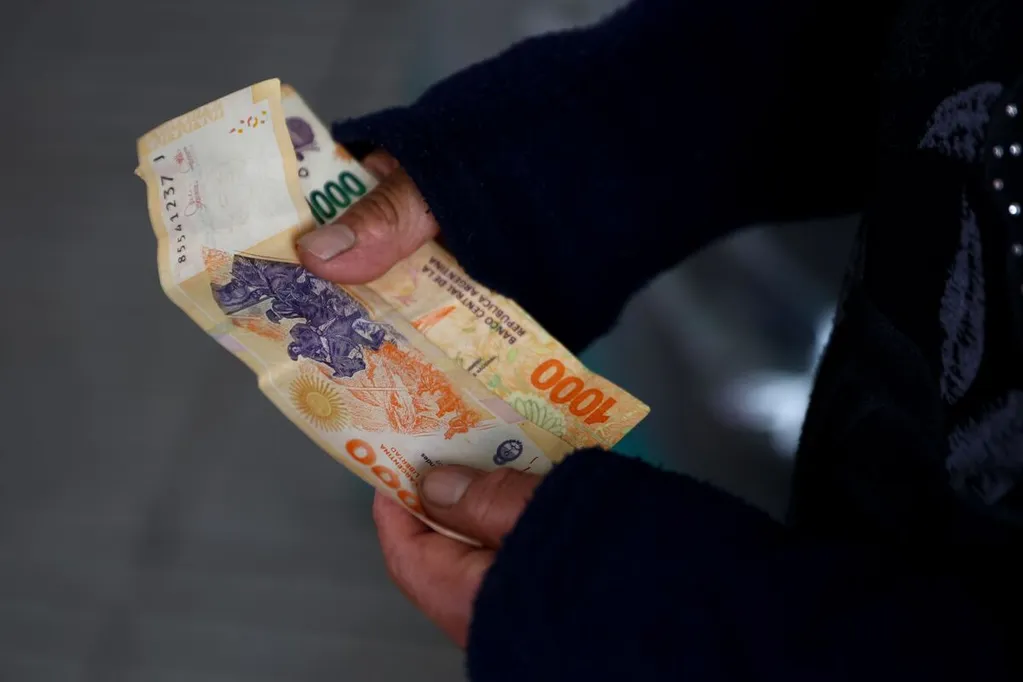
For more than a decade, investors could rely on the Argentine peso to do one thing -- plunge. Now, as the war in Iran roils global markets, it's thriving.
The peso was one of two developing currencies to gain against the dollar in March, when the MSCI total return index for emerging FX saw it's worst monthly tumble since 2022 as traders reassessed odds of interest-rate cuts and higher energy costs since the start of the conflict.
It's a stark turnaround for the peso, the worst performing currency among 22 peers in 10 of the past 11 years.
The gains are being driven by a seasonal surge in agricultural exports, rising energy shipments from the Vaca Muerta shale basin and a wave of dollar borrowing by local companies earlier this year. The combination of factors has led some investors to say the peso is a "safe haven," said Joseph Incalcaterra, head of Latin America Macro Strategy at HSBC in New York. "Half-joking, half-serious," he added.
"A lot of export dollars are hitting the market right now," Incalcaterra said. "The structural growth in oil and gas exports is coinciding with high prices as well as with Argentina's harvest season."
Argentina's trade surplus in the first two months of the year was more than six times larger than in the same period last year, reaching almost $3 billion. The improvement has been driven by food exports and a sharp drop in imports as the economy stagnates, while booming output from the Vaca Muerta shale basin -- one of the world's largest unconventional oil and gas reserves, spanning roughly 30,000 square kilometers in Patagonia, about the size of Belgium -- reduces the need for energy imports.
The second quarter marks the peak of the harvest season, when dollar inflows typically accelerate. At current prices, gains across key commodities -- from soy and corn to oil and mining -- could generate as much as $10 billion in additional export revenue this year, according to estimates from Banco Galicia.
Besides, the currency remains subject to strict capital controlsBloomberg Terminal, meaning foreign investors can't easily repatriate capital or multinational companies transfer accumulated earnings from previous years. That leaves it subject to hard-currency flows, rather than the speculative moves that often dominate trading elsewhere in the emerging world.
"The current strength and stability of the peso, while occasionally influenced by government intervention, has more to do with trade flows which have improved structurally in a big way thanks to Argentina's energy production," said Todd Martinez, co-head of the Americas sovereigns group at Fitch.
While President Javier Milei has kept a grip on the peso -- declining to let it free float, or devalue it like investors said he should last year -- Argentina’s renewed access to global financial markets is also playing a role in the peso’s strength.
Argentine companies have steadily tapped international markets for the past few months -- including as the war in the Middle East raged -- largely aimed at financing energy investments. Debt-related inflows have become a key source of dollar supply in the local foreign-exchange market, according to central bank data.
The inflows have allowed the bank to build reserves, purchasing roughly $4 billion since the start of the year. Economy Minister Luis Caputo has said the peso would be about 20% stronger were it not for those purchases.
The outperformance hasn't extended into all asset classes. Sovereign spreads on Argentine debt have widened by nearly 60 basis points since the conflict began, with notes due in 2035 down almost three cents on the dollar over the period. Spreads on emerging-market sovereign bonds, meanwhile, rose by nearly half as much in the period.
Investors are concerned over persistent inflation, fanning worries about the peso -- this year, the central bank started letting the peso trade within a broader range that expands at the pace of monthly inflation. Consumer prices rose 2.9% in February, slightly above the 2.8% median estimate of economists surveyed by Bloomberg.
"This is not an attractive exchange rate, and it's partly explained by weak economic activity," said Martín Polo, chief strategist at Cohen. "The four legs of the table are misaligned: inflation is rising, interest rates are falling, bonds are declining, yet the peso is appreciating. It's just not coherent."