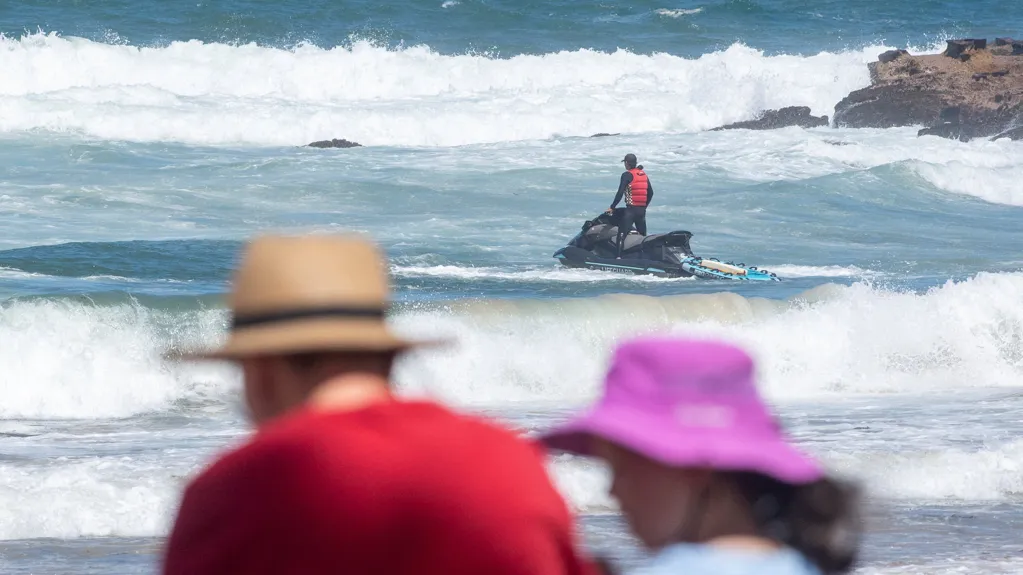
Dozens of beaches in eastern Australia were closed on Tuesday, after four shark attacks in a span of 48 hours, a spree that the head of a lifeguard group described as unprecedented.
On Tuesday morning, a surfer was knocked off his board by a shark near Point Plomer Beach, about 200 miles north of Sydney. He was briefly hospitalized with minor injuries, local news media reported.
That episode followed a spate of attacks off the coastline of Sydney, Australia's largest city.
On Monday evening, a 27-year-old surfer's leg was bitten by a shark in waters off Manly Beach. Fellow beachgoers administered first aid before the surfer was taken to the hospital with what the police described as "life-changing injuries."
That same day, and just a few miles away, an 11-year-old boy escaped injury after a shark bit his surfboard.
The fourth episode occurred on Sunday afternoon, when a shark bit the legs a boy who was swimming with friends in Sydney's east. The authorities have said that the boy, who is believed to be 12 or 13 years old, was "fighting for his life."
More than a dozen beaches in northern Sydney, including Manly and Palm Beach, will be closed on Tuesday and Wednesday, the local authorities said. Further north, near Point Plomer Beach, the authorities have closed several beaches for 24 hours.
Steve Pearce, the chief executive of the volunteer lifeguard organization Surf Life Saving New South Wales, called the number of attacks "unprecedented" and urged people to avoid swimming at northern Sydney beaches for the next 48 hours.
Scientists say the attacks in Sydney were most likely the work of bull sharks -- a species that is considered among the most dangerous.
Weather conditions in the past week have been conducive to an increased shark presence off Sydney's shores, Leonardo Guida, a shark scientist with the Australian Marine Conservation Society said. Ocean temperatures have been warmer-than-average and runoff from heavy rainfall has brought prey into the ocean water for sharks to feast on, he said.
Unlike other sharks, bull sharks have the ability to swim in fresh and salt water, allowing them to hunt in a range of marine environments.
Shark attacks are rare in Australia but this week's episodes come after a deadly attack in Sydney's northern beaches in September.
"Many are still grieving the loss of Mercury Psillakis and we are all shocked this can have happened again so soon on our beaches," Sue Heins, the mayor of the Northern Beaches Council, said in a statement Tuesday.
Australia has done more than perhaps any other country to try to mitigate shark attacks. It is one of the few countries to use shark nets, a contentious form of beach protection, as well as noninvasive measures such as drone monitoring and smart drumlines -- floating traps with hooks that snare sharks and alert officials so they can be released.