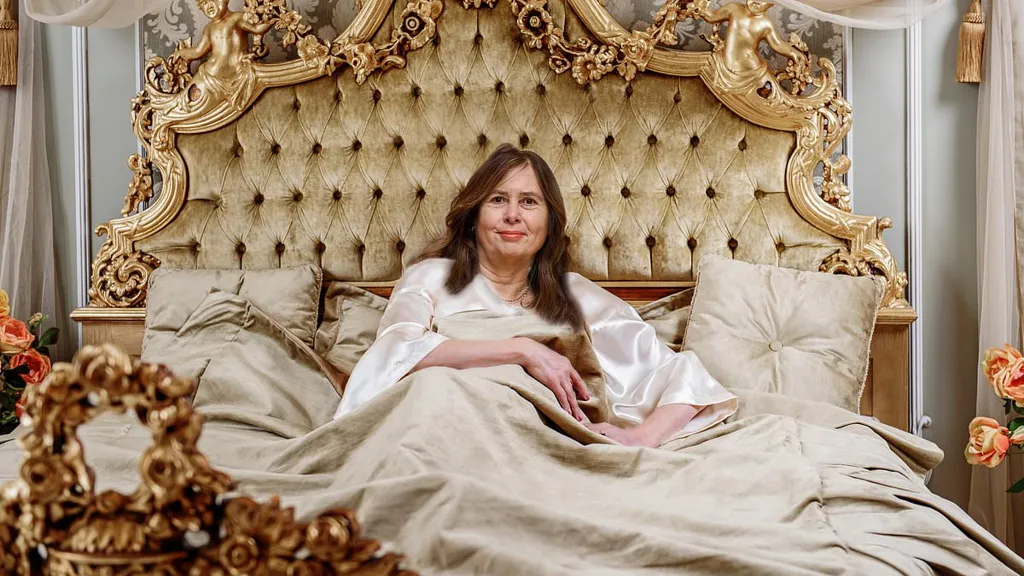
Sleep, a trusty friend I was once able to rely upon, has abandoned me. I conk out instantly I hit the pillow only to wake around 3am, unable to sleep again before the advent of the dawn chorus. A good night will be five hours of shut-eye.
For cures, I've tried them all - sleeping pills, yogic breathing, counting sheep and magnesium in every form.
Yes, large amounts of alcohol worsen the situation, but there is no real difference between an entirely sober night and a couple of glasses of wine.
Sometimes, getting out of bed and reading a book switches off the internal noise, but in general my mind refuses to accept that there is nothing to be done in the middle of the night that can't wait.
It's not even important issues that fill the whirring carousel of thoughts - I can obsess about whether or not to make a vegetable stock the next day and which vegetables to use.
But help has arrived in a groundbreaking discovery. When we were children, our father would always have a tin of Grether's blackcurrant throat pastilles around the flat.
I don't know why he had these delicious, black, gummy lozenges, but he handed them out as a treat from time to time.
Seeing them on the counter of an upmarket pharmacy a few months ago, I bought one of the familiar, intricately patterned tins for old-times' sake.
I put this box by my bed, as much as anything for the comforting nostalgia of the packaging, but then I learnt, after trying the odd one, that they had an incredible, unexpected effect.
Sucking on them lulled me to sleep. This might sound ludicrous but it's not.
Although there is some emotional resonance for me in this particular brand, it is clearly the chewing and sucking that works - the same soothing effect dummies have on babies.
It may be why so many people swear by CBD gummies to help their sleep but, like everything else, those didn't do anything for me. It might work with wine gums for some people.
For me, though, this old-fashioned tin, bringing with it comforting memories - together with the sucking motion - has provided a relief no number of better-known remedies have managed.
The Mandelson papers revealed his basic contract as ambassador to the United States offered a severance payment of three months' salary, £40,330. This works out to just over £160,000 a year.
While by any standards that is a decent sum, it struck me as a pretty small wage for the top diplomatic job in the Foreign Office which many, though not Mandelson, will have spent a lifetime in the lower-paid FO trenches building up to.
While, of course, he would be able to charge much of his lifestyle to expenses, I bet there are still quite a few requirements that would come out of the incumbent's salary - and we all know how much getting any help with these are now scrutinised. Can the ambassador accept a free suit from Ralph Lauren? I doubt it.
Most people don't go into diplomacy for the cash, but even so, in today's world it's surprising that this 24/7 role as one of the most important cogs in our relationship with the US is paid at just over twice the rate of the average Tube driver working a 35-hour week.
On the subject of who earns what, it seems extraordinary that anybody would pay anything at all to hear Meghan, Duchess of Sussex, say a word but tickets to hear her speak at the women-only Her Best Life retreat have sold out.
VIP tickets for this Sydney gig, including a two-night hotel stay, a front-row seat and a group photo with Meghan, cost £1,706.
The fee for an average inspirational speaker in the UK is about £10,000 and I can't imagine this will be much different. Proof that the Duchess is not commanding the mega-bucks she delusionally thought she was worth when she parted ways with the Royal Family.
Last week, I indulged in a binge night of TV. First was the final episode of Apple TV's Iranian-based thriller Tehran, with guest star Hugh Laurie. Then four episodes of Vladimir, Netflix's current top pick, featuring Rachel Weisz as a middle-aged academic obsessed with Leo Woodall, playing the new young buck on campus.
Woodall is one of today's top love objects after his appearances in One Day and the latest Bridget Jones film, but as Vladimir I find him far too clean-cut and cuddly, with as much sex appeal as a teddy bear.
Hugh Laurie, though, in all his craggy, grey-haired, scheming splendour - now he's the real thing.
Sorting through our mother's papers after her recent death, I found the script for an advertisement she did in the 1960s for Radiant soap powder. It was the first live British TV ad.
The clothes were put into soak in the first ad and then revealed in their white splendour half an hour later in the next.
The scraps of paper brought back all the excitement we had as small children watching it to see if the test worked. Of course it did.
The announcement that the non-hormonal drug fezolinetant will soon be available on the NHS sounded like a breakthrough moment for women such as me, who have had oestrogen-dependent breast cancer.
HRT, which combats many menopausal side effects, is not advised for this large sector of breast cancer patients as it offers more of the oestrogen thought to have contributed to the tumour.
Headlines have suggested fezolinetant will solve that problem; but sadly it turns out the drug is still a no-go for many women with oestrogen-dependant cancers. I no longer need a solution for those unpleasant night sweats and hot flushes but for those who do a search for a solution continues.