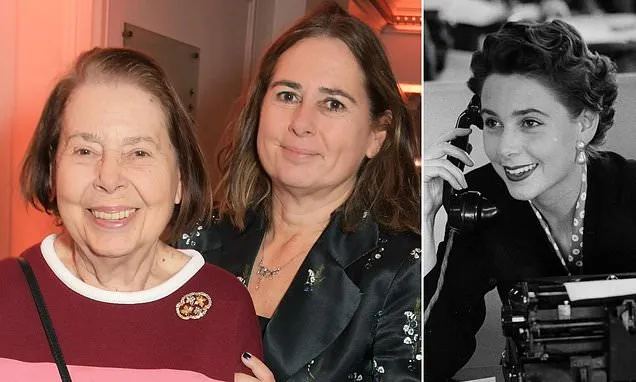
I write this feeling completely exhausted. My mother died nine days ago and I haven't been able to sleep since.
It was not unexpected but, still, her death is clearly a shock to my body as well as my mind.
Every night I slump into bed tired, yet utterly wired, unable to stop thinking about memories and funeral arrangements.
In these intervening days, I've realised how difficult it is to respond to someone who is immersed in grief. Our emotions are either so raw or stunned in the immediate aftermath of death that our reactions are unpredictable.
A hug may set me off - an arm around the shoulder is safer.
A concerned voice saying how sorry they are has me wondering how to reply to them. Can I just smile and move on?
It's not that there are hard and fast rules - everyone treats loss in their own way. One person can say something and it will make me feel better; when another utters the same sentiment, it just amplifies the loss.
The one thing sure to drive me mad, though, is those who feel compelled to note that I am now 'an orphan'. Technically that might be true. I have been orphaned, but I am not Oliver Twist or Little Orphan Annie. I have not been abandoned in the world at a young age. And I simply don't understand why anyone would think it helpful to remind me that both my parents are now dead.
As an adult, my relationship with my parents had become very different to that of a child. By the time that they died (my father in 2004), all expectation of parental care for my brother, sister and I was long gone.
But that didn't mean I didn't want to sit with my mother, to talk to her and look at her, until the last possible moment - getting some kind of nourishment from the fact she was still in my life.
On the other hand I have been touched by kindnesses such as flowers and letters in the post. There's just something so much more meaningful in a letter than in an email and, while emails might be quicker and more convenient (let alone the fact that nobody knows anyone's postal address any more), it's consoling to hold that letter in your hand and go back to it.
And while I'm on the etiquette of responding to someone else's grief (after all, my mother, Drusilla Beyfus, was an etiquette expert), texting emojis is no help at all.
A friend offered to arrive with a meal, which I kept saying I didn't need, but undeterred, she appeared and it was the perfect visit - short, with Kilner jars of delicious chicken soup. Others have kindly continued to check in daily with how I am.
But I have also found that opportunities to remove myself from this overwhelming new world, where my mother is no longer with me, are a help.
A 'work' dinner last week with a group of women I didn't know well was a great escape.
Interviewing super hair stylist Sam McKnight for a legal conference took my mind off my mother, forcing me back into the world I inhabited before her death. I got my hair done, I thought about what to wear, I put on some different jewellery. It was useful to focus on something other than grief or the huge task of sorting through her belongings.
I know many people find others avoid them when they're grieving as they don't know the right thing to say. I've found it helpful to be with those who don't even know about my situation, let alone the person I am grieving. The fact is there is no right thing to say. Just don't call me an orphan!
You'd think that grief would at least bring the compensation of losing a few pounds, but far from it. I've missed my gym slots and have no ability to push myself to go for a run even as spring is prettily springing. I think: 'What would Mama do?' And then I remember that she never once went to the gym or for a run, and looked pretty good into her 90s.
One evening, one of her carers asked my sister whether, if she got worried, she should call a rabbi.
My sister Nicky looked at her blankly; then discovered the carer had assumed my mother was Jewish—possibly due to the number of books on the rise of the Nazis that had become our mother's preoccupation during her last year.
Nicky informed her that she shouldn't think of it. Mum had never been near a rabbi in her life and that, if one suddenly loomed up in front of her, the shock might easily finish her off.
It's hard enough navigating the workplace during pregnancy, but now there's confirmation our brains do shrink at this stage in life. Spanish scientists working on the largest study to date found that the grey matter in charge of processing information and emotions is 'pruned' in order to help the brain adapt to the requirements of motherhood.
All well and good, but not helpful for the many women struggling to prove there's nothing remotely different about them when pregnant and that their faculties haven't been affected at all.
The last thing women need is colleagues dishing up this proof that 'baby brain' exists every time they forget something.
Small takeaway from Paris Fashion Week: the much-derided puffball skirt might be back after making an appearance on the catwalk at Dior. In its 1980s heyday I made my own out of a piece of checked taffeta and elastic. It was not a success. I won’t be going there again, but I would say, if you’ve got the legs, go for it.