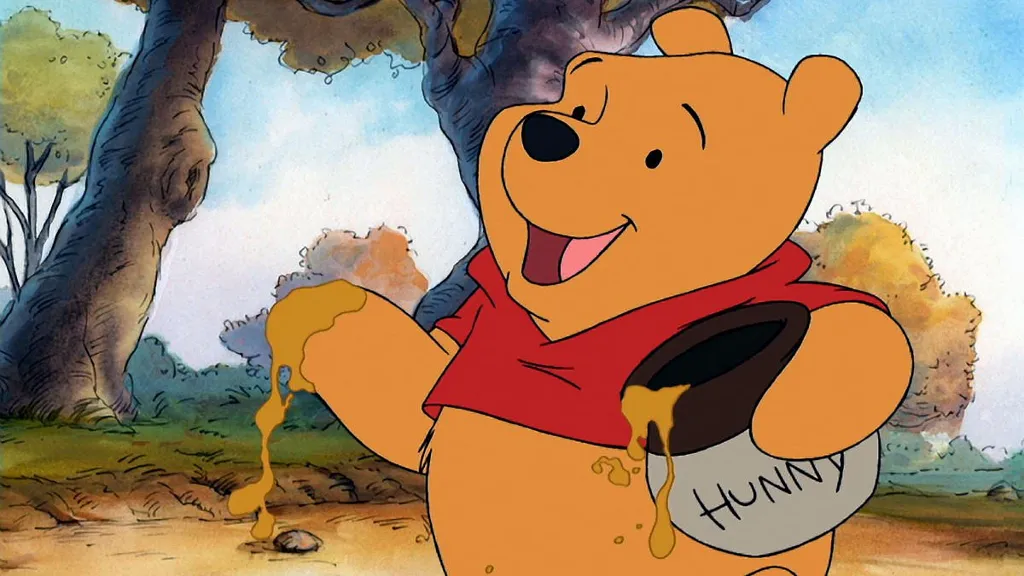
A century ago, on Christmas Eve 1925, The Evening News in London published a story. Most such tales in a newspaper are forgotten within days, if not in minutes, yet this one ran and ran - and is still running now.
It was about a bear called Winnie-the-Pooh and was called The Wrong Sort Of Bees, by AA Milne. A few days later, on the Home Service of the BBC (the British Broadcasting Company in those days) it was aired as a radio programme. And, so, the immortality of the bear - and his young friend Christopher Robin - were assured.
Winnie-the-Pooh is loved all round the world and, for many of us, the stories were the first introduction not only to a loveable collection of characters but to the idea of humour itself.
It should not be necessary to say it, but life without humour isn't really life. A world in which we are afraid to laugh at what we find funny is a sort of hell. Yet we live in strange times and much that makes us laugh, by instinct or through the wit of others, is now frowned upon as hurtful or even dangerous.
I suspect that even the gentle, mocking humour of AA Milne would meet with stern resistance were he writing now.
Children's author Frank Cottrell-Boyce - currently commemorating the Pooh Bear centenary with a series on Radio 4 - makes the telling observation that, whether they are timorous little Piglets, melancholy Eeyores or over-enthusiastic Tiggers, all the characters in Milne's books are flawed. And these oddities, he suggests, are the very essence of their charm.
Sadly, if similar characters were submitted to a publishing house today, alarm bells would be soon ringing for the humourless arts graduates now working as editors.
Is it advisable, some would anxiously inquire, that Winnie-the-Pooh's addiction to honey should be a subject of mirth? Developing a sweet tooth is notoriously dangerous. What begins with an attempt to get honey out of a bees' nest up a tree could lead to a dependency on sweet fizzy drinks and to the spread of diabetes.
Winnie-the-Pooh would be classed as obese in today's world, according to AN Wilson
Pooh, we are told, 'gets what exercise he can by falling off the ottoman - but generally seems to lack the energy to clamber back'. A poor example for the young.
Should we be making fun of a bear because he is obese? Is this not teaching children that body-shaming is 'acceptable'?
As for Winnie-the-Pooh's friends, making fun of them - as the author perpetually does - is surely insensitive? It's obvious that Eeyore is suffering from depression and needs therapy. They all need therapy, probably. Poor little Piglet needs to believe in himself. Tigger is a clear case of ADHD and should be attending sessions with other toys similarly afflicted.
As for Christopher Robin himself . . . well, playing Pooh-sticks is all very well, but why is the author encouraging boys and bears to lean over bridges with all the health and safety considerations such activities imply?
The world conjured by AA Milne is one of childhood innocence, of course, and this is another reason his stories have endured. Pooh and his friends - in reality they were stuffed-cloth animals bought by Milne for his son Christopher Robin - are animated not just by literary talent but by love. That is what stays with us and helps make the stories so powerful.
But into this innocent world was built the useful - vital - understanding that humour allows us to embrace imperfection.
It is hard to think of any successful comedy which does not recognise character flaws, whether we are thinking of Chaucer's profoundly imperfect pilgrims setting out to Canterbury or Falstaff and his gang of Eastcheap low-lives in the plays of Shakespeare.
The great traditions of British humour were carried down through the ages, through Restoration comedy, the grotesque-filled novels of Dickens and on into the raucous laughter of the music hall and pantomime.
The glory age of British television comedy absolutely depended on recognising our shared weaknesses and foibles.
Walled up together in Porridge, Godber and Fletch gave us humour as rich as anything ever shown on the small screen.
In The Good Life, Richard Briers and Felicity Kendal were by no means saints of the ecology movement. That's why their attempt to be self-sufficient hippies in Surbiton - while living next door to suburban snobs Margot and Jerry - was a perfect recipe for comedy.
Fawlty Towers would not be funny if Basil and Sybil were happily married, or if Fawlty Towers were a perfect hotel, or if the Fawlties were kind to Manuel the waiter, or if the Major, always waiting for the hour when he can have his snifter in the bar, were not half-way to becoming demented.
True, a lot of what passed for 'humour' in the past was simply cruelty. 'Haven't they got any sense of humour? I was only joking' is not an excuse to be horrible to one another.
Yet, while denigration of someone else because of their race or their appearance should never be allowed, on or off the screen, it is surely better to live in a world where we risk bad taste from time to time rather than one which banishes humour altogether.
At some point, we stepped over an invisible line. Now in our anxiety not to tread on toes, we have brought about a nightmare world in which it's no longer safe to make a joke about anything.
Today, we hear that theatres are offering 'trigger warnings' to anyone rash enough to buy a ticket for the pantomime.
For the tenth year running, Julian Clary is appearing at the London Palladium. This year, the panto is Sleeping Beauty.
It is very hard to imagine anyone buying a ticket for this show who does not know what they are going to get, which is to say a few hours of riotously funny smut, high camp and gentle mockery.
Yet the theatre thinks it necessary to warn punters that they should prepare for some 'innuendo'!
Who can blame the London Palladium for doing this, given the world we now live in - a dour, po-faced world in which it is all too easy for some disgruntled individual to cry out that they have been insulted or hurt?
So, when the time comes for us to make New year resolutions, I'd urge us all to make these promises: to be a little bit less humourless, a little less thin-skinned, and to realise that we human beings are all in danger of seeming ridiculous in the eyes of others.
This does not mean we hate one another. On the contrary, it means we have learnt the lessons of Winnie-the-Pooh - namely that our imperfections are not only absurd, they can also be endearing.