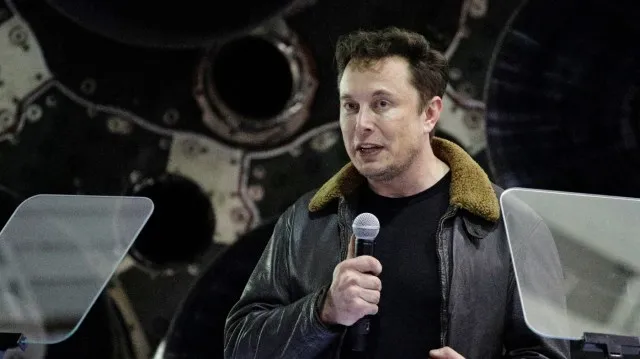
When SpaceX CEO Elon Musk announced a pivot from Mars to the moon, one detail of his plan caused eyebrows to raise. Musk plans to build something called a mass driver on the lunar surface to deploy AI data centers into Earth orbit. These facilities would be built on the moon before being launched into space using the device.
What is a mass driver? It turns out that the technology has a storied history going back to just after the Apollo moon landings.
It all started when a physics professor at Princeton named Gerard K. O'Neil, inspired by the Apollo program, asked his students to write papers describing the problems of building a human space habitat. Urged by his students' insights, he published his own paper in Physics Today entitled "The Colonization of Space." He would later expand his ideas in a best-selling book called "The High Frontier."
The idea of space colonies has been around for many decades, largely a topic of science fiction. All of the extraterrestrial settlements were depicted as being on the surface of another world, say the moon, Mars or someplace more Earth-like orbiting another star. Musk's vision for cities on the moon and Mars is an attempt to make science fiction a reality.
O'Neill hit upon the notion of building space colonies in space itself, in the form of free-flying cylinders that rotated to create gravity for people living inside. The "O'Neill Cylinders," as they were called, would be built of material mined from the moon and the asteroids. Tens of thousands of people would live in each of these flying cities.
The advantage of a free-flying space colony is that, unlike one on a planet's surface, its gravity could be calibrated to Earth normal. Humans would not be obliged to live in a gravity field that the species did not evolve under.
The mass driver would be the technology that transported the material to the construction site for the space colony. It would consist of a track that uses electromagnets to accelerate cargo past escape velocity. The moon, with its one-sixth gravity and no atmosphere to speak of, would be a perfect site for such a device. Whereas rockets can cost tens of thousands of dollars a pound to lift cargo into space, a mass driver would cost a few dollars a pound in electricity.
O'Neill is credited for inventing the mass driver, though something like it was depicted in the 1966 novel, "The Moon is a Harsh Mistress," by Robert Heinlein. He even built a working subscale model under the auspices of the Space Studies Institute, a private research organization he founded.
O'Neill made his space colony idea profitable by having them build solar power satellites. Huge solar arrays would be deployed in space, collect solar power 24 hours a day and then beam it to Earth. The notion was attractive during the energy crises of the 1970s and has some resonance now because of fears of carbon-induced climate change.
O'Neill never deployed a mass driver on the moon or used it to build space colonies. NASA certainly was in no position to take up the project during his lifetime.
However, the rise of space billionaires with deep pockets has caused a revival of the idea. Jeff Bezos, founder of Blue Origin and Musk's main business rival, proposes to make O'Neill's dream a reality. Bezos even suggests moving all heavy industry off the Earth, the better to protect the environment. His vision contrasts with that of Musk, who desires to build cities on the moon and Mars.
So far, one of the only examples of an O'Neill space colony in fiction was the one depicted in the 1990s TV series, "Babylon 5."
Musk's plans for a mass driver on the moon are a little less grandiose than O'Neill's vision. A swarm of premade space-based AI data centers would be far easier and cheaper to build and deploy than a real-life version of Babylon 5 and would start making money almost immediately.
Still, once a lunar-based mass driver is developed and deployed, what the technology will make possible will be limited only by the human imagination. Mass drivers on the moon and, later, on asteroids would become a way to move cargo across the inner solar system. It will be an example of an idea, once impractical, suddenly enabling a better future than the past or the present.
Mark R. Whittington, who writes frequently about space policy, has published a political study of space exploration entitled "Why is It So Hard to Go Back to the Moon?" as well as "The Moon, Mars and Beyond" and, most recently, "Why is America Going Back to the Moon?" He blogs at Curmudgeons Corner.