Jeff Wagner joined the WCCO-TV team in November 2016 as a general assignment reporter, and now anchors WCCO's 4 p.m. newscasts.
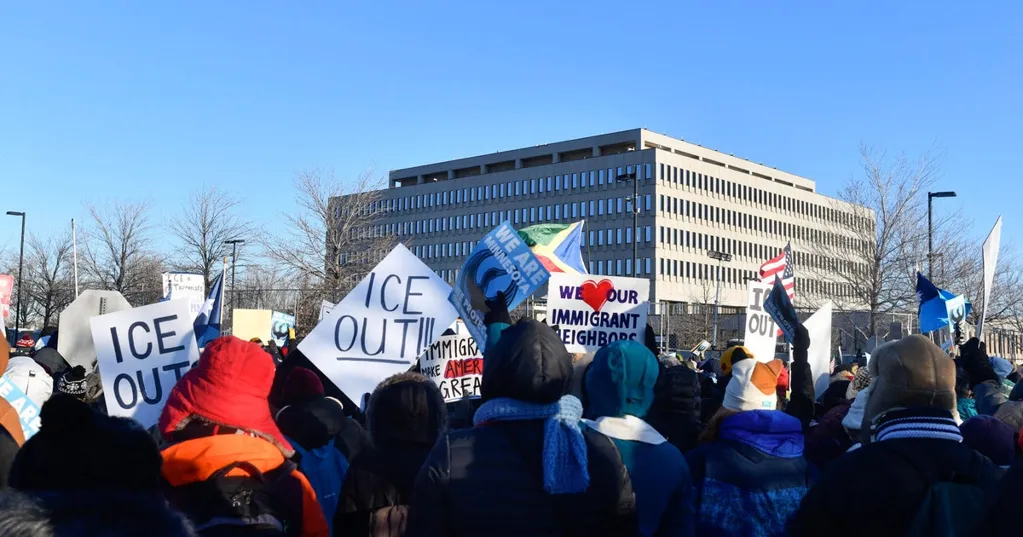
The monthslong Immigration and Customs Enforcement surge in Minnesota has sparked ongoing protests, some measured tens of thousands of demonstrators, others just a few dozen.
Any day of the week, any type of weather. Protesters noisily share their displeasure with ICE outside the Bishop Henry Whipple Building in Minneapolis. It's where ICE houses immigrants they've arrested and citizens who get in their way.
The protesters are unwavering and passionate. That dedication that has some accusing them of being compensated.
"It's really insurrectionists and agitators, and they're paid," said President Trump last month.
WCCO asked Josiah Devine Johnson, a protester at Whipple, if they were paid. Johnson laughed before answering, "No, we're not paid."
"I am not (paid)," said protester Pamela Scott.
"I wish someone was paying me," joked protester Julian Latourelle. "And if there is someone paying people, get in touch with me. I could use the money."
If there is no price, then what motivates protesters to be outside Whipple?
"Justice, ethics, humanity, decency," said Johnson.
"I'm trying to protect the First Amendment and the Fourth Amendment and all the amendments that are supposed to guarantee us rights in this country," said Scott.
Nearby in a parking lot, Julie Prokes sets up a mutual aid station filled with food and supplies.
He says it's his thirteenth day on site, often from morning until night. His table is open to anyone, not just protesters.
"We have families that are sitting here for hours waiting for people to get released. We've got people that are getting released that haven't been fed in a while," he said.
Prokes is sort of a volunteer and protester, but he'd prefer no label. Who funds all the items on his table? Prokes said he and his partner foot the bill, plus donations.
"It started out with a Costco run. I don’t think that you need to be a billionaire to do a Costco run yet. And then at that point the community just keeps bringing stuff out," he said.
No one WCCO talked with says they were paid. Critics will likely say, "Well, of course they won't admit it."
So, if they're hiding something, then there must be evidence somewhere proving that.
"We never found evidence that there was any alleged money," said Amy Sherman. She's a senior correspondent at PolitiFact. Along with staff writer Maria Briceño, the two investigated the paid protester claim to fact-check the rhetoric coming out of the White House and across social media.
"For protesters to be paid there would have to be some sort of master leader, or master organization, telling tens of thousands of people what to do and how to sign up and how to get paid. And we're not seeing that," said Sherman.
The so-called evidence they did find circulating online was debunked, like a picture of a paid protester contract in Minnesota.
"After researching online, we found that essentially it was a recycled narrative, and that this contract was shared during 2015 during the Baltimore riots and then in 2020 during the George Floyd riots," said Maria Briceño
They also determined a TikTok video of conservative YouTuber Nick Shirley allegedly interviewing a paid protester in Minneapolis was AI-generated.
"What we found is when politicians are making these statements, they're not following it up with evidence. They're not saying who's paying them, what organization's paying them," said Sherman.
There is one company admittedly paying protesters: Crowds on Demand. It can assemble big groups for ad campaigns, PR stunts, and protests. But the CEO recently told Fox News that his company is not involved in Minneapolis.
"Crowds on demand does not engage in any unlawful forms of protest," CEO Adam Swart said in another interview with Fox News.
The accusations, however, aren't just for the protesters in Minneapolis. It goes back years across different movements.
WCCO talked with Dr. Danielle Brown, a college professor at Michigan State University who researches how activism is portrayed in the media.
"It just falls in line with a pattern of delegitimizing protests that are trying to really shake up what people in power want to be the norm," she said.
Brown acknowledged there are professional community organizers who promote protests. She calls them anomalies amongst a true grassroots effort in Minneapolis.
"No organization is capable of unifying a group of people like arresting your neighbor or shooting your neighbor in the street. That doesn't need payment to get people together," Brown said.
While some accuse protesters of being paid, other people struggle to conceptualize the idea of protesting for a cause for free. Whether it's the time commitment, dangers, or adverse weather, protesting without being paid is hard for them to believe. Brown said that's because the extent of civic engagement most people participate in is voting, and usually that's only for the presidential election.
"The kind of political participation that protests are is above and beyond voting," she said. "But I think that's what Minneapolis and Minnesota know very well over the course of the years. It's facing so many tragedies, seeing them, having them in your neighborhood, in your streets,... that is a triggering event that really ignites civic engagement at the voting level, but also at the protest level."
On a recent podcast, FBI Director Kash Patel alleged that protests are not happening organically in Minnesota. Patel said the agency has actually found "groups and individuals" funding demonstrations. No evidence of that has been shared with the public.