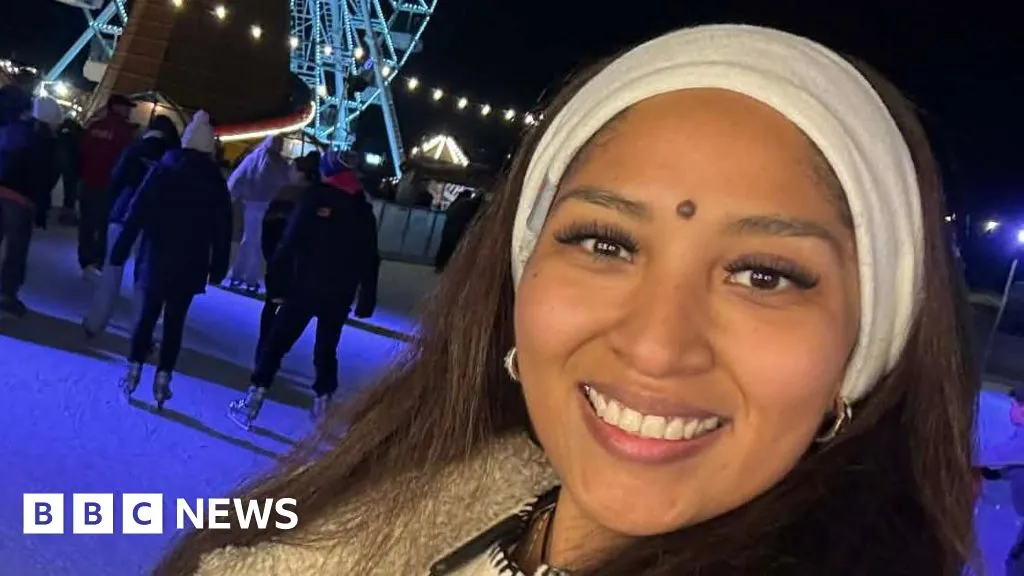
When 29-year-old Joyce Leon Velasquez wanted to form meaningful friendships with other women she did not know where to start.
She turned to social media and decided to set up her own community where people can introduce themselves online and then attend social events in-person.
Miss Velasquez is not the only one though -- social media sites like Facebook are now overflowing with groups designed to help people meet new friends.
But why are so many people turning to these online groups? In an age where we are more digitally connected than ever, are we losing the art of making friends?
Miss Velasquez, who works as a senior school administrator at Anglia Ruskin University as well as a Tesco colleague in Newmarket, set up Cambridge Girls Circle in March and its Facebook page already has more than 700 members.
She wanted to ensure the group involved in-person meet-ups and stressed people had to "put the effort in" to form meaningful connections.
"I think the opportunities are there [to meet people], but social media does influence a lot," she explained.
"I spend a lot of time on my phone and I've realised when I talk to my family, especially my mum when she asks me about some people from my past and if we're still friends, I keep saying, 'Oh yeah they're fine' because I saw a picture on social media.
"But I didn’t really ask them how they were, so we assume we are still connected to those people, but in reality we’re not."
Raymond Osborn, 42, a full time carer from Northampton set up Northamptonshire - Make New Friends (UK) in 2010 after being in a similar position to Miss Velasquez.
He also wanted to meet new friends online and in-person and his group now has 3,000 members with regular events, such as pub trips, karaoke and quizzes.
"I think these groups are more widespread now because there's a lot of people with a lack of friendships or in situations where they find it hard in real life to make friends," he said.
"So it's great that people make friends on them, but also have a bit of a laugh and banter along the way, without judgement or prejudice."
Mr Osborn believed people often struggled with the feeling of going out, but social media groups provided a place to "gain a trust with fellow members before meeting".
Royah Irvine, 39, a primary school teacher, set up Milton Keynes Social Meetup Group in October 2022 and it has more than 1,200 members.
She felt the world had "changed so much" giving more people more opportunities to make friends in these social media groups.
"Perhaps before we would just stick with our childhood friends, university friends or colleagues, but everyone has busy lives nowadays and we don't always find or make time for each other," she said.
She added that while many people like to be social, anxieties can get in the way and it was hard to make friends as an adult.
More and more people are also making use of social media to help connect with other people who enjoy exercise.
Pia Carson-Moore, 31, from Ipswich, is a personal trainer and dance teacher who set up a women-only run club, using social media to connect members and organise runs across Suffolk each week.
"It's really hard if you haven't found your little group when you're at school or you haven't got a little group at work," she said.
"It's really rough out there... once I can encourage those people to get out and come along on their own and get chatting to someone else, then hopefully there'll be an increase of people that they know,[they] start to be a little bit more social and don't feel so scared to do things on their own."
Miss Carson-Moore said she believed social media groups that promoted and led to in-person meet-ups could help people make new friends, but felt those that just promoted online talking would not.
Katy Coe, 43, from near Great Massingham, Norfolk, runs her own woodland wedding events and retreat venue.
She is behind Tribe Norfolk which started in 2016 and now has more than 4,800 members.
"I think people crave connection," she explained.
"Humans really need connection and they get all this fake false connection online... it's what makes us human, but we're getting less and less of it because of the online world.
"Pubs are closing, all of these event spaces are closing, they're closing daily at the minute and it's because the price of energy, wages, and more."
In the modern world many seeking real world friendships still need to use social media to help ease that process.
Social media in the grand scheme of things is a very new concept, the effects of which are being increasingly scrutinised.
Some studies suggest the "digitalisation" of our lives should not replace "the value of promoting and keeping offline friendships".
Others found that younger generations' wellbeing could be improved through online contact and, at a time when millions of people in the UK have reported experiencing loneliness and isolation in the past few years, should social media friendships not be embraced?
Dr Veronica Lamarche, senior lecturer in psychology at the University of Essex, said she did not think social media had increased people's anxieties of meeting others in-person, but for many people it created an "ease of entry point".
"So you can post in a group chat, you can walk away for 20 minutes and come back to the conversation and it doesn’t have the same kind of implications as you’ve gone for coffee with a friend and then every few minutes your attention is being pulled away by one demand or another," she explained.
"So I think it allows this flexibility that makes space for connection and closeness in a world that has lots of competing priorities."
Dr Lamarche stressed that online connections were not any less meaningful than those in real life.
She added: "I don't think we've lost the art of making friends."
"I think humans are very adaptive and they'll find ways to connect with other people."