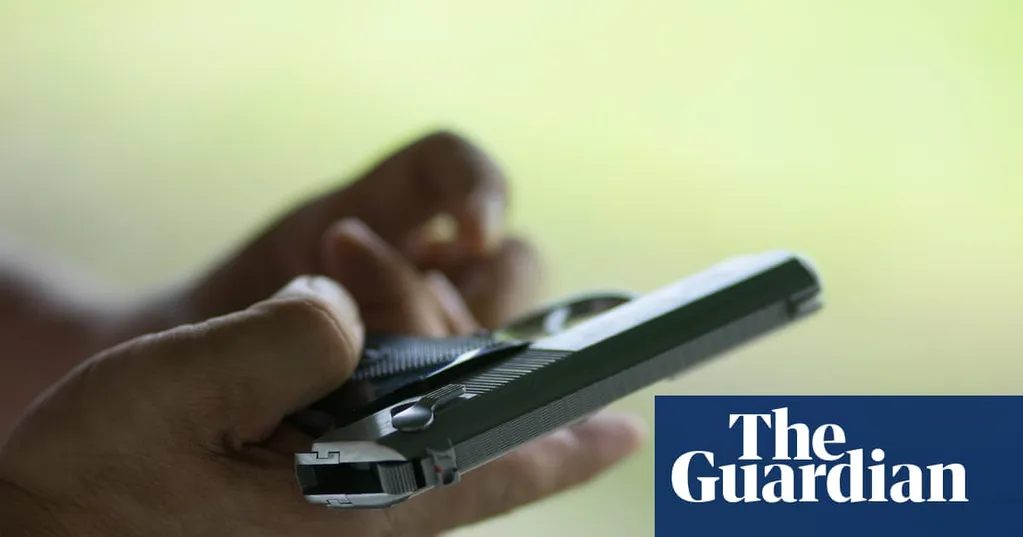
An Arizona licensed gun dealer was charged this month with attempting to provide material support to terrorist organizations after federal agents caught him allegedly selling a series of rifles and guns to two Mexican cartels.
The federal charges against the American firearms dealer come amid years of pressure by the Mexican government to stop the flow of weapons into the country. Mexico's violent and bloody internal conflict, between drug cartels and the Mexican government, has been largely fueled by American weapons smuggled into the country.
Laurence Gray, the owner of Grips by Larry, an Arizona-based gun dealer, stands accused of facilitating the sale of three semi-automatic rifles, a machine gun and two pistols to the Jalisco New Generation Cartel (CJNG) and the Sinaloa cartel, according to a federal indictment.
One of the weapons Gray attempted to sell includes a military-grade rifle "designed for airborne, armored infantry and close quarters combat operations", according to the manufacturer's website. Another weapon was a high-caliber machine gun, similar to an M2 Browning, used for rapid gunfire.
The 17 March indictment added the terrorist support and conspiracy charges for Gray and an accomplice, Barrett Weinberger. The two had been arrested last year for trying to sell weapons to the CJNG and the Sinaloa cartel. The Trump administration last year designated both Mexican criminal groups as foreign terrorist organizations.
The two cartels are the biggest criminal organizations in Mexico, oftentimes relying on violent tactics against other groups to expand and maintain territorial control of drug routes. For years, the Mexican government, with support by the US, has been engaged in an aggressive war against the groups and others.
The CJNG recently brought on a wave of violence throughout Mexico, after the group's leader, "El Mencho", was killed in a Mexican military operation aided by US intelligence. And the Sinaloa cartel, which has been feuding with CJNG, is also embroiled in a violent internal conflict after its top boss was kidnapped and brought to the US, where he was arrested by US authorities.
While the Trump administration has placed pressure on Mexico to stop the flow of drugs into the US, the Mexican government has, in recent years, also attempted to pressure the US for their role in the conflict.
Mexico has extremely strict gun laws, with just two legal gun stores run by the military, meaning the majority of the weapons used in the conflict have come from the US.
The Mexican government has an ongoing lawsuit against a number of American gun manufacturers, accusing them of aiding illegal weapons trafficking to drug cartels. Last June, the supreme court blocked Mexico from suing two of the companies. The Mexican president, Claudia Sheinbaum, and her predecessor have called on the US government, including the Trump administration, to help stop the flow of guns into the country.
Oftentimes, criminal groups in the US will use "straw purchasers" to buy guns and help smuggle them into Mexico. The criminal groups will typically purchase the guns in states like Texas or Arizona, where lax gun laws make it easier to buy high-caliber weapons.
Typically, after Mexican authorities recover weapons in the country, they will share the serial numbers with US counterparts. The Guardian reported this week that, according to the most recent available data, 62% of the guns seized in Mexico in 2024 and traced to the US came from Arizona.
"We have an enormous problem with gun trafficking by the Mexican drug cartels from Arizona down into Mexico," Arizona's attorney general, Kris Mayes, told the Guardian for that story. "There is no doubt in my mind about that."
The Alcohol Tobacco and Firearms (ATF) federal agency is tasked with investigating drug smuggling into Mexico. The ATF is in charge of the Gray and Weinberger investigation. Attorneys for the two men did not respond to a request for comment by time of publication.