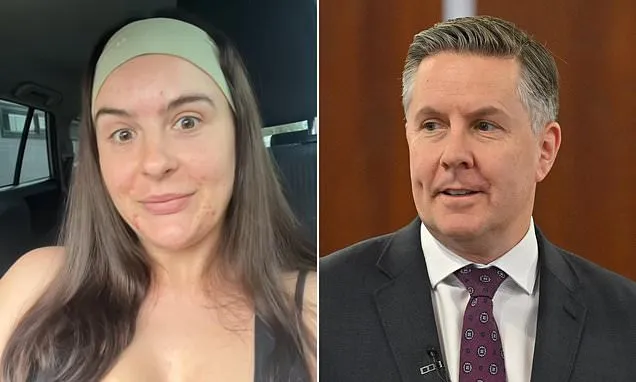
Australians relying on the NDIS have raised their concerns about suddenly being cut off after the Albanese government revealed 160,000 participants would get the boot.
NDIS Minister Mark Butler unveiled sweeping changes to the scheme last week, including tightening eligibility rules, slashing spending, reducing third-party management costs and introducing new provider standards.
Aussies living with a disability have vented their fears they could be among the participants to be dumped from the scheme, saying it will reduce their quality of life.
Butler was forced to defend the overhaul in spending on Sunday as he was asked whether residents will be forced to cough up their own money to pay for essential services.
Tessa, who lives with autism and psychosocial disability, said the NDIS makes her independence possible.
'Because of the NDIS, I can work three days a week and maintain employment,' she said. 'I can stay out of hospital and live independently.'
She warned that without the NDIS, she would 'not be well' and would 'not be able to go to work'.
'You do the math,' she said.
Single mum Kymberly Moss said she is 'terrified' for her two daughters with level two autism and additional diagnoses.
'People see them functioning in public, but they don't see the meltdowns and aggression at home,' she said.
'When you cut 160,000 people from the scheme, they don't just stop being disabled.'
Fardell warned that slashing social and community participation funding would 'have a definite impact on participants'.
She said forcing all providers to register would be the most disruptive change.
'Four out of five providers are unregistered sole traders, and this is a huge impact on our industry,' she said.
'There is a lot of anxiety and panic, but we will deal with this and get through it together.'
Speaking to Sky News on Sunday, Butler said the government is finally taking financial control of the NDIS, with new laws due to be introduced to Parliament in May.
Host Andrew Clennell repeatedly challenged Butler to admit whether the NDIS reforms would force more families to pay for services out of their own pockets.
'Do these changes basically mean, in a nutshell, a lot more people will have to reach into their own pockets for services?' he asked the first time.
Butler responded: 'That first tranche of changes that will take effect immediately really is about curtailing out-of-control growth. It's not reducing the scheme size, which is currently over $50 billion, the largest social programme we have outside the age pension.'
Clennell asked a second time if the changes would mean 'there will be more user pays?'
'There will be more disabled people, parents of disabled people, reaching into their own pockets to pay for these services?' he said.
Butler deflected, arguing the outcome depended on the type of support required.
'If people are not going to be on the NDIS because they're not severely and permanently disabled, there obviously have to be government‑funded supports in place for them,' he said.
Clennell hit back a third time, saying he was 'struggling' get Butler to 'admit what I think is the truth'.
'That yes, there will be state government supports, but there will be more cases of people having to reach into their own pockets to pay for these services. Yes or no?'
'I don't necessarily accept that,' Butler said.
'There will be supports available where families live, learn and play, and they are going to be government‑funded services.'