Australia isn't looking to engage in a "dispute" with President Donald Trump over his repeated complaints about Canberra's failure to assist the US in the Iran war and to secure the Strait of Hormuz, senior government ministers said.
The remarks came after the US president was asked whether he was satisfied with Australia's plans announced Thursday to boost defense spending to 3% of gross domestic product by 2033, a level below the 3.5% sought by Washington. Trump didn't respond to the question, instead switching to say he was "not happy with Australia" over its failure to help out.
Prime Minister Anthony Albanese's center-left government has consistently maintained the US hasn't actually asked for assistance in relation to Iran. In interviews with local media, senior ministers sought to play down the issue.
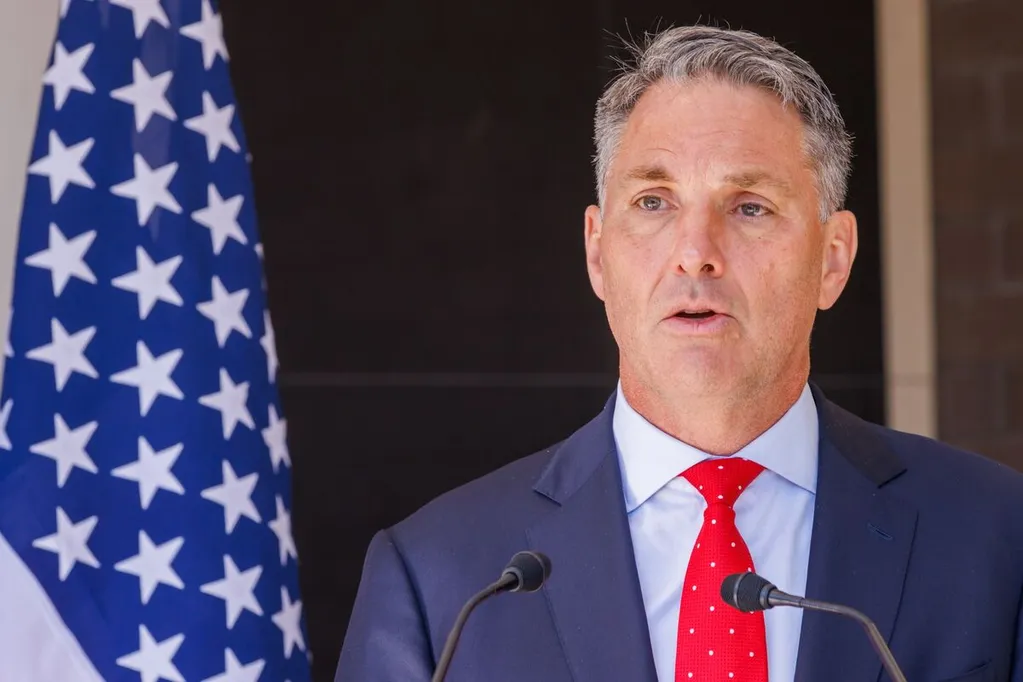
"I'm not interested in engaging with some kind of dispute with President Trump on these issues," Treasurer Jim Chalmers told reporters in Washington, where he's attending a G-20 meeting. Deputy Prime Minister Richard Marles echoed those sentiments, telling ABC radio on Friday: "I'm not about to go into a running commentary on what the US president says," when asked whether the Labor government was frustrated with his repeated criticisms.
Trump has lashed out at Australia at least three times since the US and Israel began strikes on Iran at the end of February. He has also criticized NATO and Asian allies including South Korea and Japan for failing to help.
"I'm not happy with Australia because they were not there when we asked them to be there," Trump told reporters outside the White House on Thursday. "They were not there, having to do with Hormuz, the Hormuz Strait."
The US is trying to force Iran to reopen the strait, a key artery that prior to the war accounted for one-fifth of global oil flows. Iran all-but shut the waterway after the US-Israeli strikes, and its failure to reopen Hormuz following a ceasefire with the US prompted Trump to order a blockade of Iran-linked vessels crossing the chokepoint.
The outbreak of the Middle East conflict sent oil prices soaring, and while they have eased since the ceasefire began around April 8, they are still up more than 35% since the war began.
Trump's complaints about Australia were sandwiched between comments from Marles, who is also defense minister, on Thursday and again Friday that the US had made no new requests to Canberra for help.
"We've not received a specific request in relation to the Strait of Hormuz," Marles told ABC radio Friday. "But we'll work with all partners, our allies, and that very much includes the US in terms of whatever needs to be done in relation to the Strait of Hormuz."
He said Australia had been working with the US, UK and France and suggested it would contribute to an operation to help get energy supplies moving through the strait once the timing was right.
The UK and France will host a summit with about 40 nations to discuss setting up a naval force that would ensure freedom of navigation in the Strait of Hormuz. The deployment of such a mission remains far off given that European leaders have said they want to wait for the US and Iran to agree to a longer-term agreement.