Austria will ban social media for children up to the age of 14 following lengthy negotiations within the ruling coalition, the government said Friday.
'It is almost impossible for parents to control their children's consumption' on these platforms, which are designed to make them 'deliberately dependent,' Vice-Chancellor Andreas Babler told a press conference.
The government plans to introduce a new compulsory school subject called 'Media and Democracy' to help students distinguish truth from falsehood and recognise attempts at anti-democratic influence, according to the proposal.
Several European Union countries, including France, Spain and Denmark have announced their intention to establish a digital age of majority for social networks.
It comes after Meta and Google were found liable for a woman's social media addiction and ordered to pay her $3 million in damages on Wednesday.
The first-of-its-kind lawsuit saw the plaintiff, a 20-year-old referred to only as Kaley, accuse the tech giants of hooking her to their platforms.
Kaley started using YouTube at six, downloading the app on her iPod Touch to watch videos about lip gloss and an online kids game. She joined Instagram at nine after getting around a block her mother had put in place to keep her off the platform.
After more than 40 hours of deliberation across nine days, California jurors decided the tech giants were negligent in the design or operation of their platforms.
The jury also decided each company's negligence was a substantial factor in causing harm to Kaley, who alleged her use of social media as a child addicted her to the technology and exacerbated her mental health struggles.
Jurors also found that both companies knew or should have known their services posed a danger to minors, that they failed to adequately warn users of that danger and that a reasonable platform operator would have done so.
Jurors assigned Meta 70 percent of the responsibility for Kaley's harm - a $2.1 million share of the compensatory award - and YouTube the remaining 30 percent, or $900,000.
The multi-million-dollar verdict will grow as the jury decided the companies acted with malice or highly egregious conduct, meaning they will hear new evidence shortly and head back into the deliberation room to decide on punitive damages.
The landmark ruling comes just one day after Meta was ordered to pay a penalty of $375 million after a New Mexico jury determined the firm knowingly harmed children's mental health and concealed what it knew about child sexual exploitation on its social media platforms.
Meta and Google-owned YouTube were the two remaining defendants in Kaley's social media addiction case after TikTok and Snap each settled before the trial began.
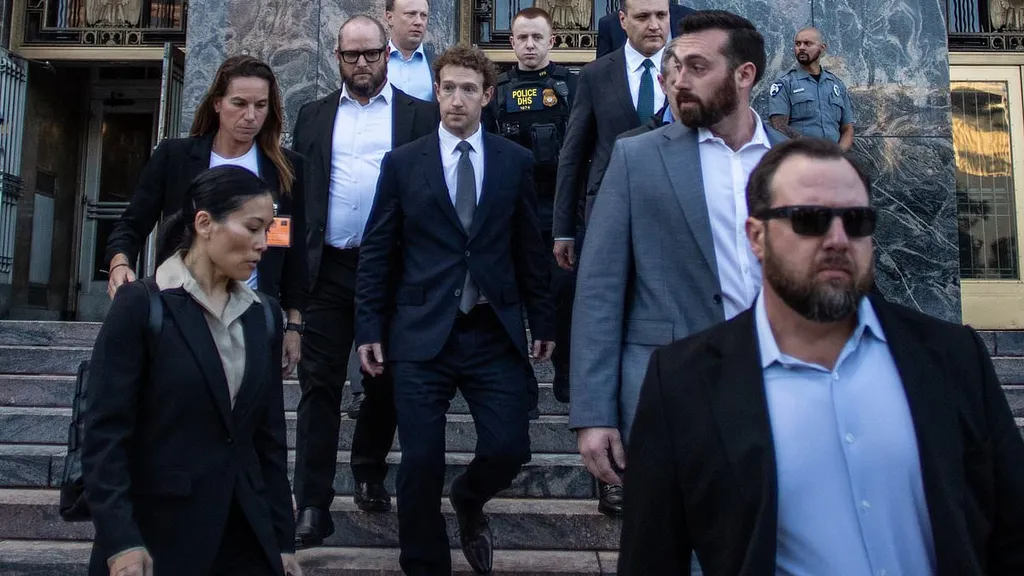
Jurors listened to about a month of lawyers' arguments, testimony and evidence, and they heard from Kaley, as well as Meta leaders Mark Zuckerberg and Adam Mosseri. YouTube's CEO, Neal Mohan, was not called in to testify.
Kaley told jurors that her near-constant social media use 'really affected my self-worth,' saying the apps led her to abandon hobbies, struggle to make friends and constantly measure herself against others.
In closing arguments, plaintiff attorney Mark Lanier cast the case as a story of corporate greed. He argued that features on the apps were engineered to drive compulsive use among young people.
But the tech giants maintained throughout the trial that Kaley’s mental health struggles had nothing to do with their platforms.
Meta lawyer Paul Schmidt highlighted her turbulent relationship with her mother, playing jurors a recording that appeared to capture her mother yelling and cursing at her.
YouTube disputed how much time Kaley actually spent on its platform, with its attorney telling the court that usage records showed she averaged little more than a minute a day on the very features her lawyers called addictive.
The jury completely sided with Kaley in the case and rejected all arguments made by the defense.