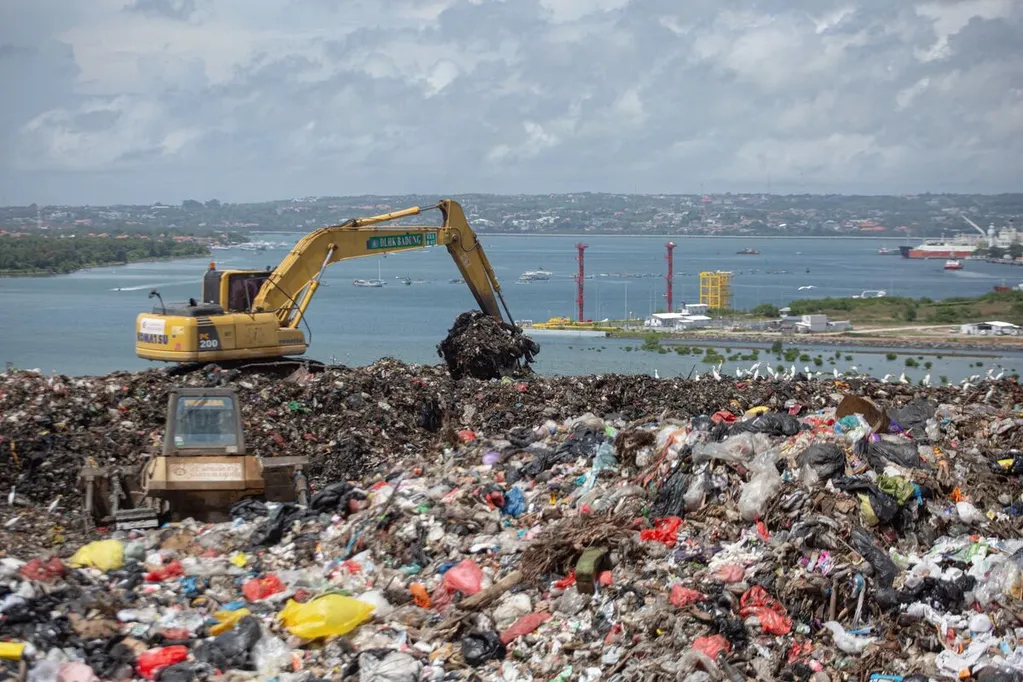
The partial closure of a major landfill site on the Indonesian holiday island of Bali is forcing thousands of residents to instead burn trash in their yards, sparking widespread environmental and health concerns.
Suwung landfill, about 10 kilometers (six miles) northeast of Denpasar international airport, used to handle some 1,000 tons of rubbish a day. Authorities said it would stop taking organic waste as of April 1 as the site nears capacity and in an attempt to direct that matter instead to places where it can be composted or dealt with in a more appropriate way.
Organic waste such as household scraps, spoiled produce and leftover food from the island's hundreds of hotels and beach clubs was one of Suwung's biggest challenges. Once in landfill, it produces methane, a greenhouse gas that contributes to global warming. Organic waste accounts for about two-thirds of all waste produced in Bali.
But with few other disposal options, people have started burning the rubbish, or dumping more of it in rivers or along the roadside.
"Almost every third or fourth house in my street is burning their own trash," said Ravinjay Kuckreja, a longtime resident of capital Denpasar. "Obviously it's small scale but it adds up." Neighborhood trash collection points are now overflowing, he said.
While the challenge is less acute in touristy areas where some businesses have private channels to dispose of their waste, the issues at Suwung only add to Bali's growing rubbish crisis. Poor collection and treatment capacity on the island has led to serious plastic pollution in its rivers and coastal waters. Seasonal monsoons often exacerbate the problem by washing debris onto beaches.
Indonesian sovereign wealth fund Danantara has announced plans to build facilities that would burn waste to generate electricity in Denpasar, as well as in dozens of other cities across the archipelago. In Bali, the fund has partnered with China's Zhejiang Weiming Environmental Protection Co. to develop a facility that's expected to start operations by the end of 2027.
Bali Governor I Wayan Koster described Danantara's waste-to-energy project as a "beacon of hope." But he said until such facilities come online, Bali is "under siege by garbage, an irony for a global tourism destination that represents Indonesia's image globally."
The island's local administrators are encouraging households to sort their own trash and compost organic waste to mitigate the problem until the incinerators are operational, although Koster acknowledged that's been difficult to enforce.