The Bank of England believes it has got on top of Britain's inflation problem. Now it runs the risk of a jobs crisis.
The central bank's latest forecasts show almost 110,000 more people becoming unemployed than it projected in November, as the current "restrictive" policy stance bears down on the economy.
Alongside its warning that the jobless rate will hit 5.3% by the spring, the BOE slashed it 2026 growth forecast to 0.9% from 1.2%. But inflation, the challenge the bank has been grappling with for the past four years, finally comes under control.
From 3.4% today, it drops to around the 2% target by April and stays there for the next three years. Even with two quarter-point rate cuts in 2026, lowering borrowing costs to 3.25%, the bank believes it has inflation tamed.
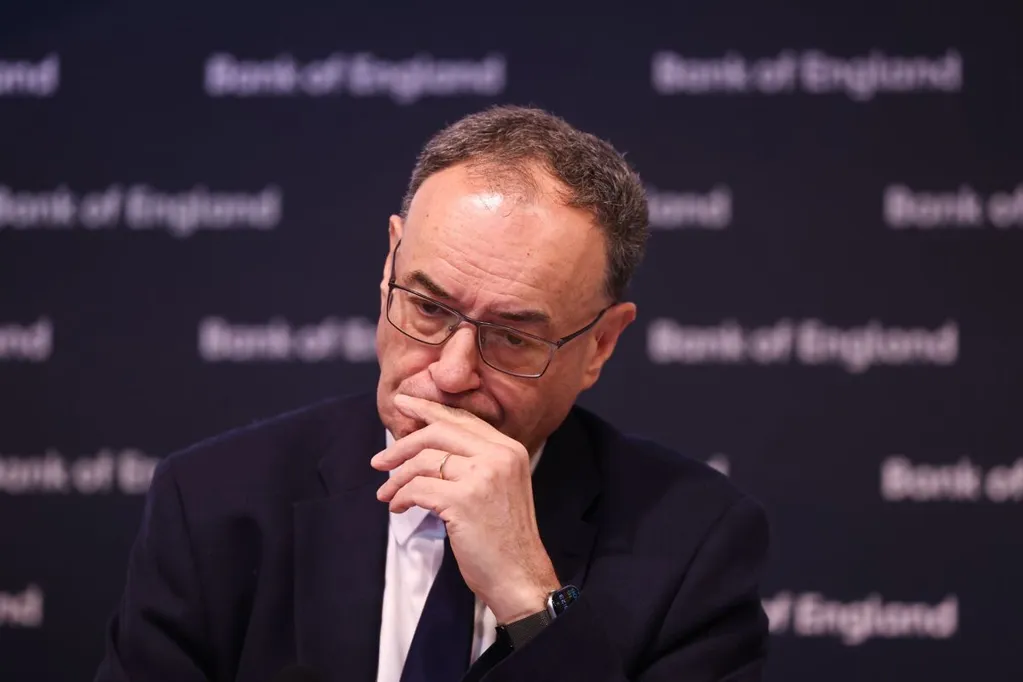
Yet on Thursday the Monetary Policy Committee kept rates at 3.75% after a knife-edge 5-4 decision in which Governor Andrew Bailey held the swing vote.
Monetary policymaking is all about difficult trade-offs, Deputy Governor Dave Ramsden pointed out at a press conference Thursday. "We have to think about what's going on with subdued activity, with the labor market, on inflation," he said. "So we're balancing those risks."
Bailley, though, rejected the notion that unemployment is "a price worth paying" to bring down inflation, careful to avoid the sort of language that has landed officials in trouble in the past.
In 1998, for instance, then-Governor Eddie George provoked outrage by suggesting job losses in the north were an acceptable price for curbing inflation in the south. More recently, Chief Economist Huw Pill said Britons needed to help in the battle against inflation by stopping asking for pay rises to maintain their spending power.
"I want to knock that very firmly on the head," Bailey said. "We do not welcome unemployment. Let's be very clear our job is to hit the inflation target."
For now, Bailey, whose judgment will likely determine when the next rate cut comes, is prioritizing inflation risks despite saying his personal "outlook is aligned with the staff's view of weaker demand."
Under that scenario, there is a trade-off. "There is a risk that unemployment continues to rise beyond the near-term peak currently expected," the bank's Monetary Policy Report warned.
Younger workers, who are already struggling to find jobs, will be hardest hit and history suggests a controlled increase in unemployment is rare. "Instead," it tends to be the case that "there are turning points where unemployment rises quickly."
The bank estimates that the UK's natural unemployment rate is 4.75%. Anything lower is inflationary; anything higher suggests the economy is not operating at its optimal level. That implies the cost in lost jobs by early next year will be close to 200,000. The bank said rising unemployment is mostly coming through a lack of hiring rather than lay-offs, though official data show redundancies are starting to pick up.
Bailley's colleagues are more immediately concerned about the jobs threat. Deputy governor for financial stability Sarah Breeden warned of a "weakening labor market" and said she saw "a case for taking out some insurance against these downside risks" by cutting rates faster than the market implies.
Swati Dhingra, an external MPC member and longtime dove, warned in her personal statement that "the costs of making a policy mistake seem much higher on the downside, especially given weak labor demand." Both voted to cut rates.
Ramsden also backed a cut but the five who chose to hold are still fighting what the bank's forecasts suggest is now the UK's legacy problem of sticky inflation. Bailey insisted that he will wait "to see more evidence" that the 2% inflation target is hit.
James Smith, developed markets economist at ING, expects Bailey's concerns about the growth outlook to move to the forefront of his decision making next month.
"He doesn't give too much away," Smith said. "But our sense is that if the data follows recent trends then he will swing behind a cut next month."