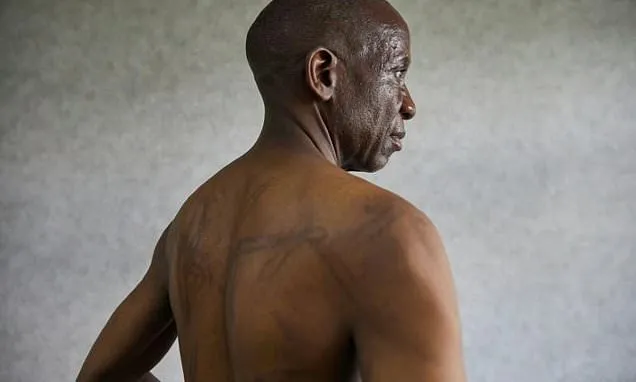
Professor Lovemore Madhuku struggled to focus without his spectacles broken in an assault that shocked many in Zimbabwe when footage of his injuries was shared on social media.
His lips were still swollen and bruises lined his back, the aftermath of an assault he blamed on police-backed security agents, who stormed a meeting of his opposition party in early March.
The attack is among a series reported by groups mobilising against a proposed constitutional amendment passed by cabinet last month that would extend President Emmerson Mnangagwa's term.
But it has not weakened his resolve to fight the changes, said Madhuku, a law professor and leader of the National Constitutional Assembly.
"If we are shot, we will die. If we are beaten up... we may be hospitalised or even crippled. But we are not going to care," the 60-year-old told AFP.
Police denied involvement in the attack by men in balaclavas but this assault and others echo previous violent and sometimes deadly crackdowns against Zimbabwe's opposition blamed on state forces.
Madhuku is among opposition figures who have reported intimidation as they mobilise to oppose moves to extend President Emmerson Mnangagwa's term.
The proposed amendments raising most alarm would extend the presidential term from five to seven years and replace direct presidential elections with a vote by lawmakers.
They would keep Mnangagwa, 83, in office after his constitutionally limited two terms end in 2028.
Critics say they would also entrench the grip on power of the Zanu-PF, which has governed the resource-rich country since independence in 1980, overseeing crippling economic crises and accused of corruption and repression.
Prominent opposition lawmaker Jameson Timba, 61, said he and a colleague had been under surveillance since speaking against the amendment.
Both found an "X" painted at their homes the day they planned to hold a meeting at the offices of the pro-democracy Southern Africa Political Economy Series (SAPES) Trust.
The SAPES building was bombed last year as debate over the possibility of extending presidential terms gained momentum.
"We are not scared," said Timba, who spent more than five months in jail in 2024 on charges of holding an unlawful meeting. "We will not stop," the Defend the Constitution Platform leader told AFP.
A member of the separate Constitution Defenders Forum told reporters he was beaten last month by armed men who ran over his legs with a SUV and interrogated him about the group's strategy to challenge the amendment.
"Since the bill has been introduced, there has been a systematic shutting down of those whose voices that oppose it," political analyst Blessing Vava told AFP.
"We are in a very dangerous space," he said, recalling the role of the military in crises in 2008 and 2017.
The 2008 crackdown came after the first post-independence president, Robert Mugabe, lost the first round of elections.
Human Rights Watch said government forces were responsible for systematic abuses that left at least 163 people dead and 5,000 tortured or beaten. It forced the late opposition leader, Morgan Tsvangirai, to withdraw from the run-off.
Mugabe was eventually pushed out in a military-backed coup in 2017 at the age of 93 and after 37 years in power, paving the way for Mnangagwa to take over.
"This is all being done by state forces and it's not new," said Zimbabwe scholar Brian Raftopoulos of the University of Cape Town.
"The state has been involved in repression of civil society since the Mugabe period. It's only intensified under Mnangagwa," he said.
Madhuku says he was beaten by police-backed security agents. The police deny involvement.
The amendments need to be passed by parliament, which will first hold public hearings. Legal challenges have been lodged and experts insist a national referendum would be necessary.
But with parliament dominated by the ruling party, analysts expect the changes to be adopted.
Madhuku said he hoped the issue could forge unity among Zimbabwe´s fragmented opposition.
"Currently we are speaking with the same voice from different tents, but there will be times when we will stand side by side and speak with one voice," he said.