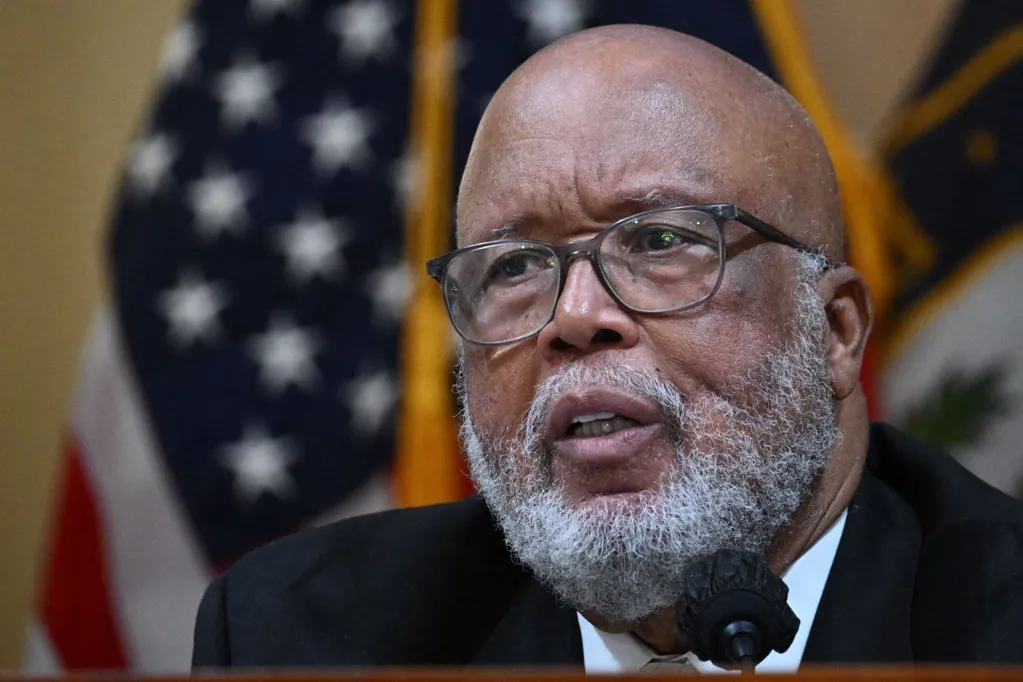
Representative Bennie Thompson, one of the longest‑serving Democrats in Congress, won his election after a primary challenge from a millennial candidate calling for change in Washington, D.C.
Thompson, who was first elected in 1993 and has represented the majority‑Black district for more than three decades, has been a loyal ally to the Democrats in Congress. But being a staple of the Democratic Party doesn't guarantee a person's reelection, and young politicians have increasingly sought to oust incumbents by calling for change in Congress that better reflects what Americans are experiencing.
At 78, Thompson is one of the most senior members of the U.S. House and a well‑known figure both in Mississippi and nationally. He previously chaired the House Homeland Security Committee and later served as chair of the House Select Committee investigating the January 6, 2021, attack on the U.S. Capitol, elevating his national profile within the Democratic Party.
Supporters of Thompson point to his seniority and long list of accomplishments as reasons to keep him in office. He has argued that his decades in Washington give Mississippi's 2nd District leverage that would be difficult for a freshman lawmaker to replicate, particularly in a Congress where seniority often translates into influence and federal resources.
Thompson has also emphasized his local roots, noting that he has lived in the same community for most of his life and maintains long‑standing relationships with constituents across the district, which stretches from Jackson west to the Mississippi River and includes much of the Delta region.
Despite Thompson's entrenched position, this year's Democratic primary is not a formality. His main challenger, Evan Turnage, is a 34‑year‑old attorney and former congressional aide who has framed his campaign as part of a broader generational shift within the party.
Turnage previously worked for top Democrats in Washington, including Senate Majority Leader Chuck Schumer and Massachusetts Senator Elizabeth Warren, and has built his challenge around the argument that Mississippi's 2nd District has remained one of the poorest in the country throughout Thompson's tenure.
In campaign messaging and media appearances, Turnage has questioned whether decades of seniority have translated into meaningful economic change for constituents. He has called for "new ideas and new leadership," arguing that younger lawmakers are better positioned to address emerging issues such as economic inequality, corporate power and the regulation of new technologies.
The race has also drawn attention for its explicit focus on age, an issue that has increasingly surfaced in Democratic primaries nationwide. Turnage has not made Thompson's age his sole focus, but his campaign has highlighted the contrast between a lawmaker who has been in office since the early 1990s.
Thompson has pushed back strongly against any suggestion that age has diminished his effectiveness. He has argued that experience, not novelty, is what allows him to deliver results for the district, and he has said voters should decide the race based on performance rather than generational labels.
Thompson framed the challenge as a choice between proven leadership and untested ambition, stressing that his relationships in Washington have helped secure funding and attention for Mississippi during times of crisis.
Younger challengers have already notched notable victories against entrenched incumbents in recent cycles, even if upsets remain uncommon. One of the most prominent examples came in New York in 2018 when Alexandria Ocasio‑Cortez, then 28, defeated Representative Joe Crowley, a 10‑term incumbent and a member of Democratic leadership, in a stunning primary upset that reshaped expectations about the vulnerability of senior lawmakers.
Crowley had been widely seen as untouchable before losing to Ocasio‑Cortez, who ran on a message of economic justice and generational change—a playbook that has since been emulated by younger challengers nationwide.
That same year, Ayanna Pressley defeated Representative Mike Capuano in a 2018 Democratic primary, unseating a 10‑term congressman by arguing the district needed not just representation but a representative who reflected the urgency of the moment. That race, like Ocasio‑Cortez's, demonstrated that seniority alone is not always enough to survive a primary when voters are receptive to generational and stylistic change.
In Illinois, longtime Democratic Representative Jan Schakowsky, who was first elected in 1998, announced she would not seek reelection after drawing a primary challenge from 26‑year‑old Kat Abughazaleh, a progressive activist and media figure. Schakowsky explicitly framed her decision as passing the baton, illustrating how the mere presence of a younger challenger can alter the political landscape and accelerate turnover among veteran incumbents.
While incumbents still win the vast majority of Democratic primaries, political strategists say these examples loom large in the minds of veteran lawmakers. They help explain why age, longevity and the question of "what comes next" for Democratic leadership have become unavoidable topics in races like Mississippi's 2nd District, where Thompson is facing one of the most serious primary challenges of his career. Even when younger challengers fall short, their campaigns can reshape debates, force incumbents to defend long records, and signal shifting expectations among Democratic voters.
Because Mississippi's 2nd Congressional District is heavily Democratic, the winner of the primary is widely expected to prevail in the general election in November, making the intraparty contest effectively decisive.
The outcome could also carry broader implications for the Democratic Party, which has been grappling with internal debates over leadership, generational turnover and the balance between experience and reform. A Thompson victory will reinforce the power of long‑serving incumbents, while a Turnage upset would have signaled that even the most established lawmakers are not immune from grassroots dissatisfaction.