The US could also unilaterally release its own reserves, with about 260 million "excess barrels of energy" available, to keep the price down.
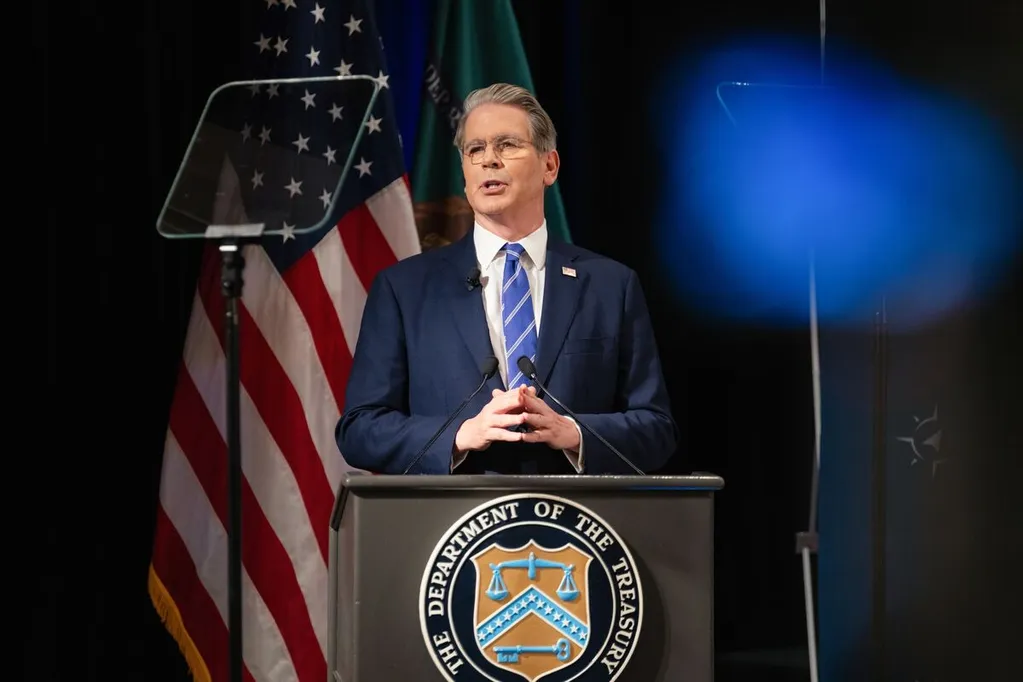
Treasury Secretary Scott Bessent said the US is looking to remove sanctions that it has long imposed on Iranian oil in an effort to lower surging energy prices triggered by its war in the Gulf, and could also look at a unilateral release of its own reserves.
"In the coming days, we may unsanction the Iranian oil that's on the water," Bessent said on Fox Business Thursday. The US is already allowing Iranian oil to pass through the Strait of Hormuz, and that nation has about 140 million barrels afloat now, the Treasury chief said. "Depending on how you count it, that's 10 days to two weeks of supply."
The possibility of removing sanctions on Iranian oil is a stunning reversal of years of US policy that has used energy sanctions as a way to bring Tehran to the negotiating table over its nuclear program. In yet another u-turn of its stance, the US also earlier loosened sanctions on Russian oil temporarily.
The scattergun of policy ideas -- which also include another unilateral release of US emergency supplies -- are a sign of the Trump Administration pulling as many levers as it can to tame oil and gas prices. Benchmarks have skyrocketed to multi-year highs across the world as both sides step up attacks on energy infrastructure and the vital Strait of Hormuz remains effectively closed.
Iran's supplies have mainly been heading to China up to now, but once sanctions are eased, that can then go elsewhere, Bessent said. "It can flow into Malaysia, Singapore, Indonesia, Japan, India -- who have been good actors in this."
Asia -- which depends heavily on crude from producers in the Persian Gulf -- faces the greatest exposure to the disruption of supplies from the region. Its refiners are already hunting down alternative supplies from the US and elsewhere.
"We will be using the Iranian barrels against the Iranians to keep the price down for the next 10 or 14 days as we continue this campaign," Bessent said.
Further Releases
By the time the US takes action on Iran's floating oil, there will be about 260 million "excess barrels of energy" available, Bessent said -- pointing to the co-ordinated release of oil from emergency reserves by a number of countries.
Traders and analysts estimate the current crisis has knocked out more than 15 million barrels a day of oil flows and as more energy infrastructure comes under attack, prices could surge further. Already US gasoline prices at the pump have surged to the highest since 2022.
The US could unilaterally do another SPR release to keep the price down, Bessent said, referring to the Strategic Petroleum Reserve.
However, drawing even more oil down could be logistically and physically tricky. The reserve is already poised to fall to its lowest level since 1982 if the administration completes its 172-million barrel release - which will be the second-largest in the reserve's history.
By law, non-emergency drawdowns are barred once inventories in the reserve fall below 252.4 million barrels, and a 1981 report from the US Government Accountability Office recommended against releases below 250 million barrels outside of a "very severe emergency."
The reserve, created in the aftermath of the Arab oil embargo of the early 1970s, consists of a complex network of underground salt caverns, wells, pipelines and pumps; it was only designed with a 25-year life span.
The facilities' 60 subterranean salt caverns—spread across four sites in Texas and Louisiana—were generally designed for about full five drawdowns and refills, William "Hoot" Gibson—the reserve's former project manager—said in an interview. The more the system is used, the greater the risk the caverns will dissolve and merge with one another.
No Trading
Bessent noted that there had been some speculation the US Treasury would intervene in the oil futures market, but "we're absolutely not doing that."
"We are not going to do a financial market intervention," he also said. "We're not intervening in the financial markets. We are supplying the physical markets."
The US hasn't been targeting Iran's energy assets in the war, he said. With regard to Kharg Island, a key Iranian export hub, it mounted a "precision strike" against the military assets.
"The other thing I can tell you," Bessent said, "if you're an oil worker you don't want to work there. We will see what happens with whether that eventually becomes a US asset."