It's just two companies. But their escalating financial strains have sent bondholders racing to the exits and sown fear that more Brazilian businesses will be driven to the brink by the nation's highest interest rates in two decades.
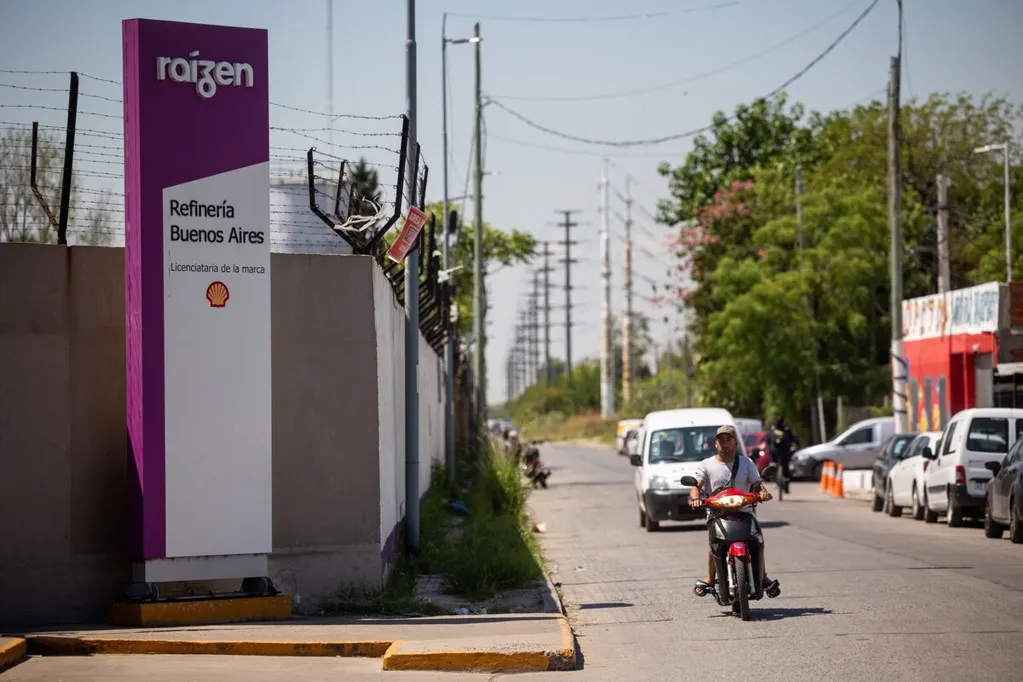
The worries were thrown into sharp relief on Monday, when Raízen SA was hit by back-to-back downgrades that knocked it from investment grade to deep into junk status. The move came after its controlling shareholders -- Shell Plc and Cosan SA -- have continued to balk at injecting more cash into the troubled firm, raising the prospect of a debt restructuring that would hammer bondholders with losses.
The reaction was swift: Investors unloaded the securities, extending a selloff that's slashed the price of some bonds nearly in half over the past week to around 46 cents on the dollar. That's sent the yield to around 18%, a level that typically indicates a company in distress.
The pullback was echoed at steelmaker Cia Siderurgica Nacional SA, which has been trying to assure investors that it will be able to reduce its debt load by selling assets. Yet rather than wait, bondholders have been pulling out, sending some of its notes sliding by 30 cents on the dollar over the past four days.
Omotunde Lawal, head of emerging-market corporate debt at Barings, said the scale of Monday's Raízen downgrades -- with S&P Global Ratings cutting it by seven levels and Fitch Ratings by eight -- has rattled investor confidence.
"No other country gives you issuers whose ratings drop 7-8 notches in one day," she said. "This suggests Brazilian corporate risk premium is mispriced."
At the heart of the anxiety is the debt that piled up in recent quarters as global investors flooded into Brazil, eager to lend as the central bank kept interest rates elevated to curb inflation.
The worries are isolated to only a corner of Brazil's corporate debt market. Its stocks have rallied along with other emerging markets, sending the Ibovespa index up 34% in 2025 and another 13% last month, and the real has strengthened against the dollar as cash flooded in. But as the nation's central bank keeps its key rate pinned at 15% -- the highest since 2006 -- it has taken a toll on heavily indebted companies.
Brazil's corporate-bond market was rattled last year by a similar rush to the exits triggered by the troubles that engulfed waste-management company Ambipar Participações e Empreendimentos SA and petrochemicals giant Braskem SA, though they were ultimately seen as unique circumstances.
This week such concerns have flared up again, leaving investors once more trying to figure out if the latest examples are isolated or harbingers of more stress to come.
The market in Brazilian corporate debt remains "relatively nervous and quite illiquid," said Sergey Dergachev, head of emerging-market corporate debt at Union Investment Privatfonds GmbH, who owns Raízen bonds. "Investors are trying to understand the true state of things."
The reaction toward Raízen in part reflects the concern about the commitment of its key shareholders, Shell and Cosan, which created the sugar-and-ethanol company over a decade ago and took it public in a 2021 IPO that valued it at $14.3 billion.
Since then, Raízen has been squeezed by high debt bills, weaker-than-expected harvests and costly bets that have yet to pay off. Efforts to raise cash from Shell and Cosan have yet to pan out, which investors have seen as a negative sign.
On Monday, S&P said the company may be headed toward a debt restructuring that's tantamount to a default. After Raízen hired a financial adviser, which often precedes such a move, Fitch took the unusual step of downgrading the company for the second time in one day, saying it was unaware of the hiring when it made the first move.
"Raízen has been a value-destruction story for equity holders since the 2021 IPO; it now looks like bondholders are being asked to share the pain," said Juan Manuel Patiño, an analyst at Sun Capital Valores SA.
CSN's bonds, meanwhile, have tumbled just as it is planning to raise up to $1.5 billion through a secured loan to refinance maturing bonds and shore up its balance sheet, people familiar with the matter said last week.
The company has repeatedly promised to cut debt in recent years and in January outlined plans to sell assets.
The speed and magnitude of the recent bond crashes has taken investors and analysts by surprise. In the case of Raízen, both JPMorgan Chase & Co. and Balanz upgraded its bonds to overweight earlier this month, seeing the initial selloff as an opportunity, according to notes sent to clients.
"We underestimated the probability of a worst-case scenario," said Balanz's Nicolas Giannone.
"We were also definitely not expecting the pace of the selloff. As a result, we pulled the trigger too early."