You're reading the Brussels Edition newsletter.
You're reading the Brussels Edition newsletter.
You're reading the Brussels Edition newsletter.
Bloomberg's bureau chief Suzanne Lynch analyzes what matters most in the heart of the European Union.
Bloomberg's bureau chief Suzanne Lynch analyzes what matters most in the heart of the European Union.
Bloomberg's bureau chief Suzanne Lynch analyzes what matters most in the heart of the European Union.
Welcome to the Brussels Edition. I'm Suzanne Lynch, Bloomberg's Brussels bureau chief, bringing you the latest from the EU each weekday. Make sure you're signed up.
Big Tech's grip on the full chain of AI technologies is under scrutiny for possible competition distortions, according to the European Union's antitrust chief.
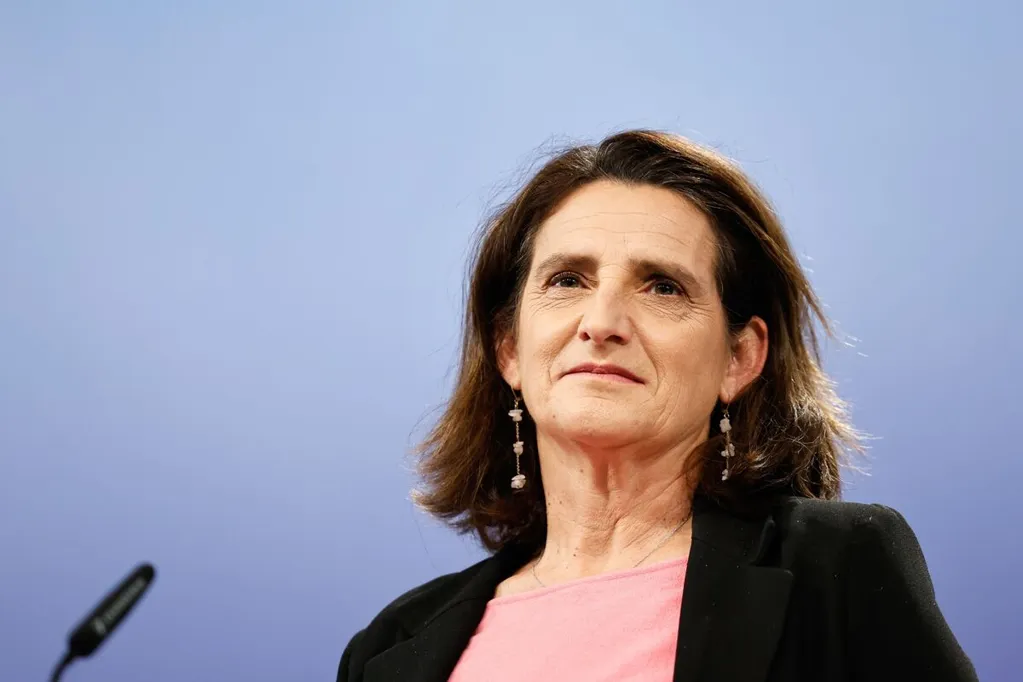
As Sam Stolton reports today from Berlin, Teresa Ribera raised the alarm in a speech today over how companies can "entrench corporate power" in Artificial Intelligence markets, as her regulators pursue alleged risks posed by giants including Nvidia and Meta.
"We are looking at the entire AI stack," Ribera told Berlin's International Conference on Competition on Thursday, referring to the set of technologies and services that underpin AI systems.
She said the focus is not just on the final applications "but also on underlying models that power them, the data the models are trained on and the cloud infrastructure and energy sources at their foundation."
Scrutiny from the EU's powerful regulatory arm of the burgeoning AI industry is likely to unsettle US tech giants, already feeling the heat of regulations like the bloc's Digital Services Act (DSA) and Digital Markets Act (DMA).
At the same time, European countries are grappling with the implications of AI on their economies and work-forces. While fears of workers being displaced by technological change exist, Europe equally needs to ensure it doesn't miss the benefits of the current data revolution.
Earlier this week, Nobel prize-winning economist Professor Sir Christopher Pissarides briefed EU ministers in Brussels as Europe grapples with the implications of AI on its economy.
Speaking after the meeting, EU Commissioner Roxana Minzatu said it had been a "lively" discussion, with different opinions expressed. While there was an emphasis on protecting workers, "we should make the most of the opportunities that artificial intelligence can bring to the workplace for both companies and workers," she said.
With EU leaders set to discuss the issue of competitiveness at next week's summit in Brussels, addressing the reality of AI and its potential benefits as well as costs to the region's economy should be front and center.
- The European Commission is considering relaxing carbon-permit supply rules and allowing more state aid as part of an emergency plan to cut spiking power prices to be presented ahead of next week's leaders' summit.
- The EU warned that its inflation rate could surpass 3% this year if the war in the Middle East causes Brent oil prices to remain around $100 per barrel and gas prices stay elevated.
- The EU rebuffed US allegations that it's contributing to global market overcapacity, and vowed to respond "firmly and proportionally" if Washington imposes tariffs that breach a trade deal with the bloc.
- Deutsche Bank flagged a €26 billion exposure to private credit, an asset class grappling with fund redemptions, scrutiny of underwriting standards and the impact of AI on some borrowers such as software makers.
- Ukraine's central bank chief said the Iran conflict risks piling additional pressure on his country's war-devastated economy while handing a boost to Russian President Vladimir Putin in the fifth year of his invasion.
- The EU's financial support for Rwandan troops helping to fight an Islamic State-linked insurgency in Mozambique expires in May and there are no plans to extend it, according to people familiar with the matter.
Seen and Heard on Bloomberg
BMW's Chief Executive Officer Oliver Zipse says the automaker isn't currently seeing any supply-chain disruptions from the conflict in the Middle East. Speaking to Bloomberg's Oliver Crook as the company reported full-year results, Zipse criticized the EU's so-called "Made in Europe" plan, saying it was "leading in the wrong direction."
Chart of the Day
Finland, a nation of less than six million that for decades inhabited a diplomatic limbo between East and West, now sits at the center of new geopolitical currents. Finland's exposure to the complications of its eastern neighbor means that it's ready for war. The question is, however, is anyone else?
Coming up
- Ukrainian President Volodymyr Zelenskiy in Romania this afternoon
- German Chancellor Friedrich Merz meets Norwegian Prime Minister Jonas Gahr Store this evening
- Bank of France Governor François Villeroy de Galhau speaks at Bloomberg Future of Finance event in Paris this evening
Final Thought
Le Pen's National Rally, known as the RN, leads national polls for the first round of the 2027 presidential election, riding the illiberal wave that has elevated once-fringe figures throughout the West and rattled the EU's elite. Le Pen and her allies see municipal elections this month in the diverse, cosmopolitan city of Marseille -- far from the provincial towns that represent their political base -- as a potential stepping stone to conquering the country.