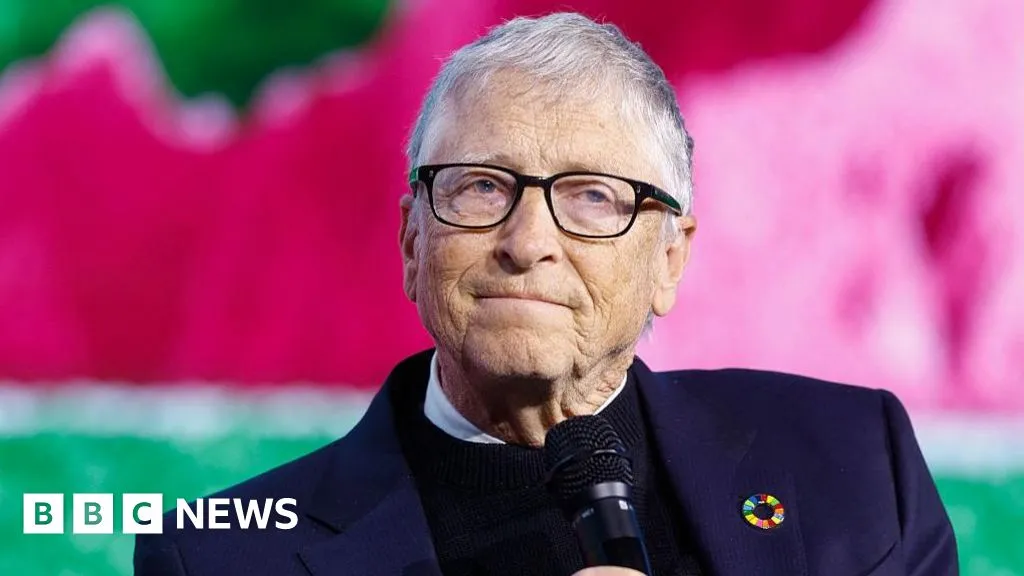
Bill Gates will not deliver his keynote address at the India AI Impact Summit in Delhi, his philanthropic organisation said hours before the Microsoft co-founder was due to speak.
The Gates Foundation said the decision was made after "careful consideration" and "to ensure the focus remains on the [summit's] key priorities", but did not elaborate.
Gates's withdrawal comes amid a controversy over his ties to the late sex offender Jeffrey Epstein after he was named in new files released by the US Department of Justice in January.
Gates's spokesperson has called the claims in the files "absolutely absurd and completely false", and the billionaire has said he regretted spending time with Epstein.
Gates has not been accused of wrongdoing by any of Epstein's victims and the appearance of his name in the files does not imply criminal activity of any kind.
The Gates Foundation said that Ankur Vora, president of its Africa and India offices, would speak at the summit instead of Gates.
The organisation added that it remained "fully committed" to its work in India to advance "shared health and development goals".
The announcement comes after days of uncertainty over whether Gates would attend the summit. He is currently in India and had visited the southern state of Andhra Pradesh on Monday, where he reportedly discussed initiatives for boosting health, agriculture, education and technology.
After media reports speculated that he would pull out of the summit, his foundation said on Tuesday that he would deliver the address as scheduled.
The withdrawal is a blow for the summit, which India has pitched as a flagship gathering to position the country as a global AI hub.
However, there are a number of big names speaking on Thursday, including Google CEO Sundar Pichai, OpenAI CEO Sam Altman and Anthropic CEO Dario Amodei.
In his keynote address on Thursday, Prime Minister Narendra Modi said India would play a key role in an AI-driven future but also called on the West to democratise the technology by sharing it.
"AI must become a tool for inclusion and empowerment, particularly for the Global South," he said.
He also stressed the need to develop "common global standards" to combat deepfakes and fake information.
Delegates from more than 100 countries, including several heads of states, are attending the event, which has been marked by some controversies over mismanagement on the first day and an Indian university's claims to have developed a robot dog that turned out to be made in China.
The five-day summit features policy discussions, start-up showcases and closed-door meetings on AI governance, infrastructure and innovation.
The event has also seen investment pledges by companies, including Microsoft, to expand AI access and infrastructure in countries such as India.