The Trump administration is being sued over USDA waivers allowing five states to restrict SNAP benefits from buying sugary foods.
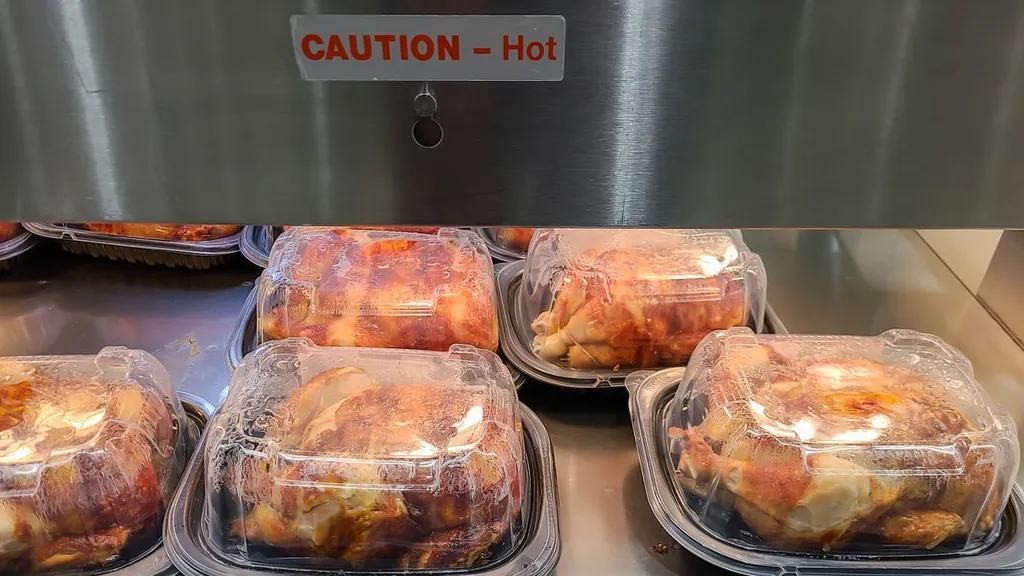
A bipartisan group of lawmakers joined forces on a bill to broaden access to a beloved grocery store staple, aptly called the "Hot Rotisserie Chicken Act."
Introduced by Sens. Jim Justice, R-West Virginia; John Fetterman, D-Pennsylvania; Shelley Moore Capito, R-West Virginia; and Michael Bennet, D-Colorado, the bill would allow recipients of the Supplemental Nutrition Assistance Program (SNAP) to use benefits to purchase the popular cooked chickens. Currently, the purchase of hot prepared foods is prohibited under SNAP.
In a joint news release issued by Capito's office, the lawmakers noted that under the current statutes, "hot" rotisserie chickens cannot be bought with SNAP benefits; however, rotisserie chicken that has "been cooled down" can.
"Congress should be making it easier, not harder, for families to put food on the table," Bennet said in the release.
In the same statement, both Capito and Justice called allowing the purchase of the grocery staple "simple, practical" and "commonsense," citing ease of access and affordability.
"For seniors, working families, and those without reliable access to cooking equipment, this is about convenience and dignity," said Capito.
The bill would amend the Food and Nutrition Act of 2008 to modify the definition of food by adding "hot rotisserie chicken." It does not increase funding or participant eligibility for SNAP or allow all hot foods to be included for purchase. It also doesn't extend purchasing power to restaurants or other retailers outside of the already approved options.
"America's best (and delicious) affordability play is Costco's $4.99 rotisserie chicken. It's one of my family's favorites and I'm proud to join this bill with Senator Justice for all to try," said Fetterman. "SNAP funds would be well spent to feed our nation's families who need it."
Companion legislation in the House is being led by Rep. Rick Crawford, R-Arkansas.
Stricter SNAP rules, budget cuts ongoing under Trump admin
The Supplemental Nutrition Assistance Program, sometimes known as "food stamps," is a federal resource designed to help low-income individuals and families afford nutritious food. It provides monthly benefits via an Electronic Benefits Transfer card, which works like a debit card that can be used to buy groceries at authorized retailers, including supermarkets and convenience stores.
In 2024, SNAP was used by an average of 41.7 million people monthly, or about 12.3% of the U.S. population, according to the U.S. Department of Agriculture.
The Trump administration has put SNAP and similar options in the crosshairs during the president's second term, placing an unprecedented pause on the program during the government shutdown in late 2025.
Recipients in five states filed a lawsuit against the USDA in March over newly implemented restrictions on the program, accusing the department of breaking the law by allowing the states to issue waivers to ban the purchase of "sugary" foods and drinks.
The federal agency has approved such "food restriction" waivers in at least 22 states in total, USA TODAY previously reported, a first after 60 years of denying state requests to restrict SNAP-eligible food under presidents of both parties.
The USDA previously said it could not waive the definition of "food" for purchases with SNAP benefits, which Congress set in law, and recipients could buy anything except alcohol, tobacco, hot and prepared foods and personal care products.
Trump's administration began granting waivers in 2025, despite no change in the law, according to previous USA TODAY reporting. The USDA says these waivers are permitted under its pilot project authority to test the impact of excluding some foods on health and nutrition. In 2007, however, the USDA issued a memo stating that the authority under which the Trump administration is acting could not be used to restrict food choices.
These restrictions are in addition to significant changes to the program passed in Trump's "One Big Beautiful Bill," which included tightened work requirements and an estimated $300 billion in funding cuts through 2034, according to the Congressional Budget Office.
Contributing: Sarah D. Wire, USA TODAY