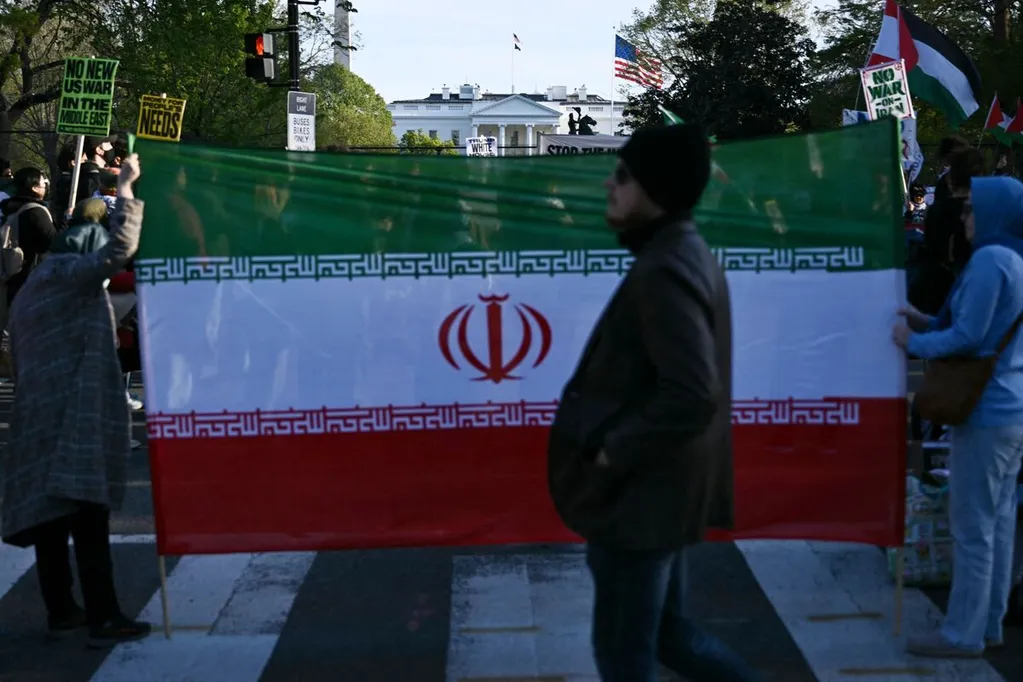
As the clock runs down on a two-week ceasefire agreed to by the US and Iran, the key question is whether they can reach a deal to end a war that has killed thousands of people and sparked a global energy crunch.
The chances of this happening appeared to improve after Iran said it would open the Strait of Hormuz for commercial shipping for the duration of a 10-day truce between Israel and Lebanon. Its throttling of traffic through the waterway has been the most pressing issue to resolve between the US and Iran amid the disruption to global oil and gas supply.
President Donald Trump has expressed optimism that the two sides are getting closer to an agreement to end the hostilities. But some leaders in Europe and Gulf Arab states are skeptical that a full peace settlement can be hashed out quickly, anticipating it could take months to resolve issues such as the future of Iran's nuclear program, according to officials familiar with the matter. Here are some of the hurdles to reaching a lasting, comprehensive agreement.
The Strait of Hormuz
After the war began, Iran choked off access to this crucial waterway that normally handles around a fifth of the world's oil and liquefied natural gas supply, sending energy prices soaring. It continued to move its own crude exports through Hormuz and only allowed certain other vessels to cross the strait, often after talks for safe passage and sometimes after requesting payments of as much as $2 million.
As daily traffic remained severely constrained, and after the failure of talks in Pakistan, the US implemented a blockade of ships that have called at or are heading to Iranian ports. This is designed to curb Iran's oil exports and apply economic pressure on the regime in Tehran to restore the strait's status as a toll-free zone for all vessels.
While Iranian Foreign Minister Abbas Araghchi said on April 17 that Hormuz is "completely open," Iran is still setting the terms of passage. Access is seemingly tied to the Israel-Lebanon ceasefire holding and only commercial vessels can cross using a route coordinated with the Iranian military.
Iran has repeatedly stated that it wants to maintain control of the strait in the longer term and is working on legislation to charge transit fees. It's unlikely to give up its leverage over the waterway -- and by extension the global economy -- easily or without significant concessions from the US. It has endured extended periods of low oil exports before, including during Trump's first term, when he pursued a "maximum pressure" strategy of harsh sanctions.
Trump saidBloomberg Terminal that the US blockade will remain in place until a broader deal is "100% complete."
Iran's nuclear program
Trump said the talks in Pakistan ended unsuccessfully because Iran refused to give up its nuclear program. The US is pushing for Iran to be stripped of its nuclear capabilities -- except for the civilian power plant at Bushehr -- so that it can't produce an atomic bomb. Iran has long denied that it wants to develop nuclear weapons -- a claim met with skepticism by some Western governments. It insists that it has a right to enrich uranium for civilian purposes.
Trump has pushed back against suggestionsBloomberg Terminal that a fixed-term moratorium on Iran's uranium enrichment activities is up for negotiation, and claimed that Iran has agreed to suspend its nuclear program indefinitely. Axios reportedBloomberg Terminal that the US is considering releasing $20 billion in frozen Iranian funds in return for Iran giving up its stockpile of enriched uranium, citing two US officials. Trump has saidBloomberg Terminal that "no money will exchange hands in any way, shape, or form."
The last time the United Nations nuclear watchdog was able to verify Iran's uranium reserves was prior to the US and Israeli strikes in June 2025. Inspectors determined that Iran had amassed 441 kilograms (972 pounds) of uranium enriched to 60%, which, if processed further, would have been enough material for around a dozen nuclear bombs. The current location and condition of this stockpile is unclear.
The Lebanon conflict
Sustained conflict in Lebanon, where Israel has been waging a parallel war against Iran-backed Hezbollah militants, has threatened to undermine US efforts to end its hostilities with Iran.
While Israel agreed to join the US in a two-week suspension of attacks on Iran, it initially continued its strikes on Lebanon. Iran’s Parliament Speaker Mohammad Bagher Ghalibaf, who took part in the Pakistan talks, said that a “ceasefire in Lebanon is as important as the ceasefire in Iran.”
The US has pursued a separate diplomatic track to try to deescalate the Lebanon conflict. Trump saidBloomberg Terminal on April 16 that Israel and Lebanon had agreed to a 10-day ceasefire and that US officials would work with the two sides to try to secure a lasting peace. Hezbollah wasn’t party to the negotiations, although the group stopped firing rockets into Israel overnight.
Israel’s Prime Minister Benjamin Netanyahu said that Israeli forces would remain in what he called a “security buffer zone” in southern Lebanon for the duration of the truce. One of his key demands for the peace talks is that Hezbollah disarm. Hezbollah has rejected attempts to dismantle its military assets and Lebanon’s government has failed to disarm the group in the past.
Other sticking points
The US wants Iran to limit its ballistic missile program. These weapons pose a conventional military threat that can reach beyond the Middle East and could be used as a delivery system for a nuclear warhead if Iran wanted to develop such capabilities.
The Trump administration is also demanding that Iran stops arming and funding militias in the region, such as Hezbollah in Lebanon and the Houthis in Yemen, both of which are designated terrorist organizations by the US. Iran views these proxies as parts of its “axis of resistance” to project its influence in the Middle East.
Iran’s other conditions for a peace deal include a lifting of sanctions—something the US previously indicated it’s open to—as well as demands that are likely non-starters, such as compensation for war damage and a withdrawal of American combat forces from the region.
Trump may be willing to compromise on his maximalist demands and leave some key issues unresolved as he comes under political and economic pressure to find an off-ramp from the war. The conflict pushed US gasoline prices above $4 a gallon for the first time since 2022, squeezing consumers ahead of the midterm elections later this year.