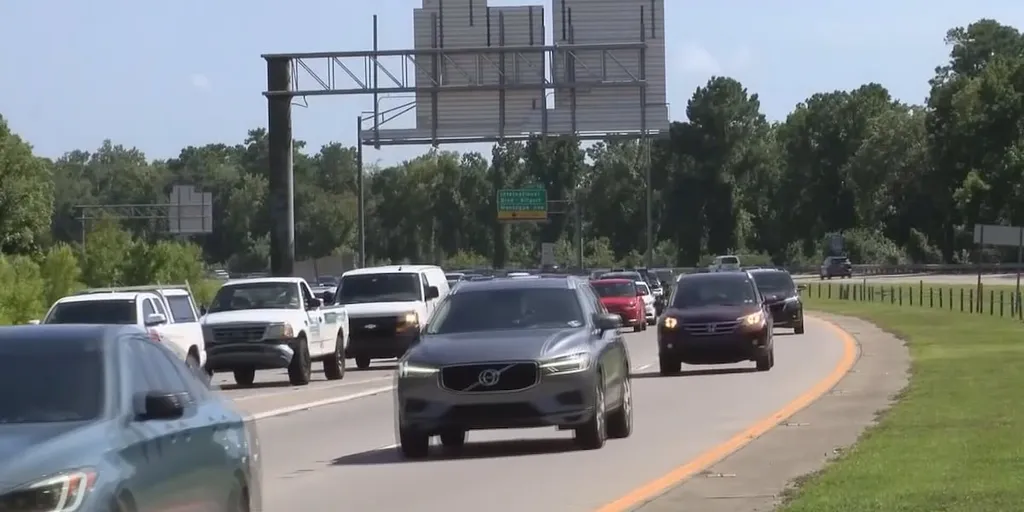
CHARLESTON COUNTY, S.C. (WCSC) -- The proposed Charleston County transportation sales tax referendum is set to take another step forward Thursday as county leaders prepare to advance the final draft following months of public feedback.
Charleston County Council Chairman Joe Boykin said ahead of the transportation sales tax committee meeting that the council is expected to review and potentially advance the proposal, which could appear on ballots this November if approved through the remaining steps.
The half-cent transportation sales tax would add half a penny to every dollar spent in Charleston County if approved by voters. County leaders say the revenue would fund road improvements, transit upgrades, resiliency projects and other infrastructure needs across the county.
If passed by voters, the referendum would generate an estimated $4.25 billion over 25 years for transportation and land preservation projects across the county.
County leaders have emphasized public engagement after a similar 2024 transportation sales tax referendum was rejected by 61.4% of voters. Officials say gathering community feedback has been a priority this time as they work to reshape the proposal before it returns to the ballot.
Since the first draft was introduced, county leaders have made several revisions. The most significant change removed $75 million from the City of Charleston's Battery Extension Project and split that money three ways: $25 million for North Charleston infrastructure priorities, $25 million for public transportation improvements tied to a Berkeley-Charleston-Dorchester Council of Governments downtown route study and $25 million for flood mitigation on Hagood Avenue.
Leaders also shifted an additional $20 million to North Charleston priorities by taking $10 million from the unspecified allocation portion of the intersection improvement program and $10 million from the pavement management program.
Council members also adjusted funding among the proposal's three main categories, shifting money from the Greenbelt Program to public transit. In the first draft, the Greenbelt Program was slated to receive 20% of revenues, while public transit was set for 15%.
Under the current draft, $2.7 billion, or 63.52%, would go toward roads, traffic improvements and bicycle and pedestrian projects. Another $860 million, or 20.24%, would be allocated to public transit, including $25 million for implementation of a downtown route study. The remaining $690 million, or 16.24%, would go to the county's Greenbelt Program.
Those funding allocations were approved in February on a narrow 5-4 vote.
Featured projects in the current proposal include:
Thursday's meeting is expected to include another review of the proposal using a second round of public feedback. Boykin said he does not anticipate major changes but hopes council will direct county staff to begin drafting ballot language.
Boykin said public participation throughout the process has been strong and helped shape the proposal.
"We have had participation from the public, our voters, our citizens of Charleston County, like we've never seen before," Boykin said. "People are concerned, interested and inquisitive, and they want information. That's encouraging, and I feel very good that we have had a transparent process. We have made these public comments part of the ballot itself."
Boykin also said he supports including detailed information on the ballot so voters understand what they are approving.
"I want as much information as we can put on that ballot,"
he said.
"I think informed voters make great decisions. People need to see what's in it for them, where the money is going and what it's going to build or make safer."
If the council advances the proposal, county legal staff would draft the ballot question before it returns to committee and then moves through three County Council readings for final approval.
Changes could still be made to the referendum items themselves during that process, but officials face a firm deadline. The measure must be submitted to the Board of Elections by Aug. 15 to qualify for the November ballot.