PONTIAC, Michigan, March 18 (Reuters) - Vaccination rates among young children in Michigan dropped sharply during the first year of the Trump administration, a Reuters analysis of state data shows, providing an early indication of how vaccine-skeptic Health Secretary Robert F. Kennedy Jr. is influencing immunization practices in the United States.
Michigan, an influential battleground state in U.S. elections, offers a unique view into the impact of Kennedy's dismantling of vaccine policies that had successfully prevented large disease outbreaks for decades. Unlike many other states, Michigan provides detailed, monthly updates on vaccination rates. A national estimate isn't expected until later in the year.
The Reuters analysis comes amid a resurgence of measles cases in the U.S. during President Donald Trump's second term. The analysis focused on the rate at which toddlers in the state completed a series of seven vaccinations - including the combined measles, mumps and rubella (MMR) shot as well as whooping cough and hepatitis B - before their third birthday, a benchmark set by federal health officials.
The series completion rate fell nearly three percentage points, to 66.5%, from January 2025 to January this year. That decline is about 13 times greater than the average annual change over the last 18 years. The only years the rate dropped more steeply were during the COVID-19 pandemic in 2020 and the U.S. financial crisis in 2008, which hit Michigan especially hard.
Among children whose race and ethnicity were identified in the data, the biggest declines were among white toddlers, the largest demographic group, and Hispanic children, Reuters found. Kennedy's frequent attacks on vaccines were the primary influence among white families, while the Trump administration's deportation campaign against immigrants has kept Latino families away from public clinics, according to interviews with more than two dozen public health officials, parents, researchers and community advocates across the state.
The trend in Michigan is concerning given its size and diversity, even if it can't predict rates nationwide, said Mathew Kiang, an assistant professor of epidemiology at Stanford University.
"What's happening there is almost certainly happening in other states," Kiang said.
The Michigan drop in 2025 represents about 4,500 additional toddlers with an increased vulnerability to serious illness, according to state data. These children can also pose a risk to infants too young to be vaccinated and immunocompromised adults, health officials said.
"Even if the public health impact of one vaccine in one arm is unmeasurably small, every unvaccinated child is at risk," Lauren Fink, an Oakland County, Michigan, epidemiologist, said in an email.
RFK JR'S ANTI-VAX MESSAGING
Kennedy has for years promoted the view, contrary to scientific evidence, that routine childhood shots are linked to rising autism and chronic disease rates, posing more dangers than the illnesses they prevent.
Since becoming the nation's most powerful health official, Kennedy has elevated that anti-vaccine messaging. Such views, once largely limited to narrow social media communities, are now broadcast by the federal government.
"People are becoming a little more open to questioning things because RFK Jr is pushing out information that has never been really readily available on mainstream media," said Rachel Atwood, a longtime vaccine skeptic in western Michigan.
Atwood agrees with Kennedy that the U.S. spends too much time and money on preventing infectious disease and should focus more on combatting chronic conditions like diabetes and obesity.
Kennedy has also upended the process for recommending childhood vaccination, ousting a national advisory board and replacing its members with people who share his views. The new board recently led the U.S. government to reduce the number of routinely recommended childhood shots, despite lacking new evidence of harm. A federal judge on Monday blocked those changes, siding with leading medical associations who argued that they would increase distrust in shots and lower immunization rates.
Health and Human Services Department spokesman Andrew Nixon denied that Kennedy had a role in declining vaccination rates. He said Michigan officials pursued a particularly aggressive response to the COVID pandemic, including school closures and mask mandates, that eroded public trust in health policies.
"Restoring confidence in public health, not repeating the mistakes of the pandemic era and failed policies from states like Michigan, is the path to stronger vaccination uptake over time," Nixon said.
Dr. Natasha Bagdasarian, Michigan's chief medical executive, said the state's 2025 immunization trend is distinct from previous years because vaccination rates had stabilized after the pandemic. What's new, Bagdasarian said, is Kennedy's language and policies, which have sown doubt and confusion among families.
"Michigan is not failing," Bagdasarian said. "I think we are being failed by some of the rhetoric that is being put out at the national level."
A PUBLIC HEALTH SETBACK
The United States was deemed to have eliminated measles in 2000 thanks to high rates of vaccination at the time. Growing vaccine hesitancy has chipped away at that achievement.
In the last year, the country has battled its worst measles outbreaks in decades, first in Texas and more recently in South Carolina. At least two children died and dozens have been hospitalized. Most of them were unvaccinated. Cases of whooping cough in Michigan surged in 2024 and remained elevated in 2025.
Rather than promote widespread inoculation to curb these outbreaks, Kennedy has said the decision to vaccinate is a matter of personal choice after consultation with their doctors.
Noah Sliwa, a father of two in Lansing, Michigan, said Kennedy’s policies have given comfort to him and his wife. They had already decided to extend the time between shots given to their children to better manage any side effects, and they skipped a birth dose of the hepatitis B vaccine for both, contrary to the U.S. recommendations that existed before Kennedy took office.
“We felt more understood,” said Sliwa. “It felt normalized.”
Michigan health officials interviewed by Reuters say they see a direct impact from Kennedy’s views on vaccination rates. For example, the statewide data for 2025 shows a decline of nearly three percentage points in the share of toddlers receiving their first dose of the MMR shot, a frequent target of Kennedy.
Among white toddlers, the statewide vaccination rate for the series of seven shots dropped four points to 67.5% from January 2025 to January this year. For Hispanic toddlers, the rate fell 4.6 points to 69.8% over the same period. Federal officials had set an 80% series completion rate as a nationwide goal for disease prevention over a decade ago, but have focused on improving use of specific shots since the pandemic.
Letha Martin, an immunization supervisor in Oakland County north of Detroit, trains nurses in how to speak to parents who are hesitant about vaccinating their kids. The toddler vaccination rate in the populous, predominantly white suburban county dropped 2.9 percentage points from January 2025 to January 2026, according to the Reuters review.
Parents have often raised safety concerns about shots for their toddlers while seeking exemptions from state vaccine mandates, Martin said. Now families cite Kennedy’s talking points, such as the claim that vaccine clinical trials are not designed to properly test for side effects.
"Those are very, very particular concerns," Martin said.
DEPORTATION FEARS DETER CLINIC VISITS
Within the state's Latino community, vaccination rates for the childhood series partially recovered after COVID. Then Trump’s ramped-up immigration enforcement led more families to limit activities outside the home-including medical visits-for fear of deportation, local health officials and advocates said.
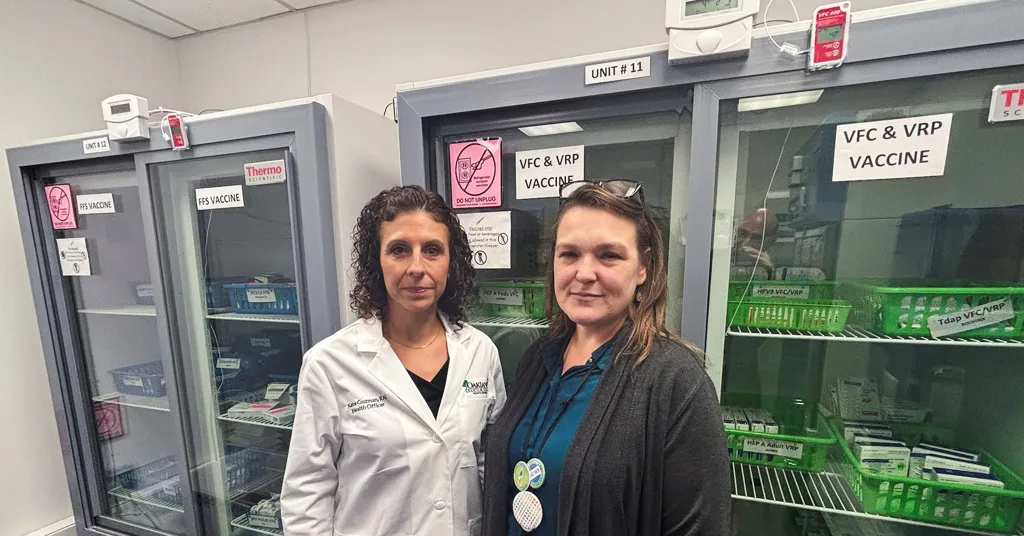
Centro Multicultural La Familia,a Latino advocacy organization based in Oakland County, partners with the county to host periodic vaccination clinics. On any given day, up to a dozen people would come for the shots in the past, Oakland County Health Officer Kate Guzmán said.
As deportation activity increased in Michigan last year, Guzmán said, no one showed up to the vaccine clinic held at the county health department, which sits next to the local jail and sheriff’s department.
“One of the greatest public health achievements was vaccinations, and we’re going backwards,” said Angela Reyes,a Detroit community leader who has arranged collaborations between Latino organizations and local health departments.