Chile is studying ways to curb electricity rate hikes while promoting electric vehicles, the energy minister said in an interview, two weeks after the new government stoked inflation by delivering the biggest fuel price increases in decades.
In a package of limited relief measures, the government said in late March it would delay until July an electricity tariff rise that was scheduled to take effect in April. Now, officials are working behind the scenes on a longer-term solution that would avert higher prices, Energy Minister Ximena Rincón said in her first interview with a foreign media outlet since assuming her post on March 11.
"We're talking about a technical solution that I think is doable," said Rincón, a lawyer who most recently served as senator and has also run for the presidency. "It will bring important relief to families and will also provide legal certainty."
As the new right-wing government settles in, the approach would have to balance efforts to contain hikes for consumers with investor sensitivities in Chile's market-based system of supply auctions.
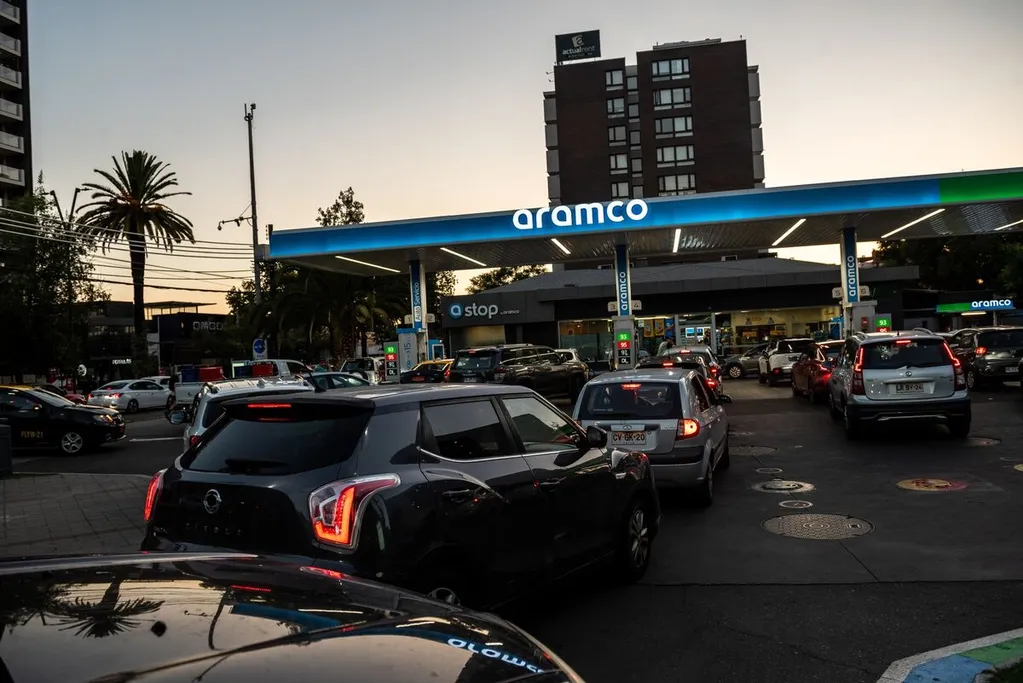
Rincón is one of the most politically experienced cabinet members in the administration of President José Antonio Kast, who took office last month vowing to propel economic growth and narrow the fiscal deficit. After an initial burst of activity, Kast's approval rating plummeted, reflecting the decision to loosen a fuel-price stabilization mechanism that would have cushioned the blow of the war-driven international oil shock. As a result, gasoline and diesel prices jumped by as much as 54% on March 26. Inflation climbed more than expected in March.
Chile is particularly exposed to higher crude prices because it imports nearly all of its oil. Kast and his Finance Minister Jorge Quiroz have said reckless spending under leftist predecessor Gabriel Boric gave them no other choice but to unleash the brunt of surging global oil prices onto consumers all at once.
In contrast, Brazil introduced and then expanded federal tax cuts and subsidies on fuels to shield consumers, while in Argentina, President Javier Milei -- a Kast ally -- has departed from his free-market approach by having state-run energy firm YPF SA cap gasoline prices for 45 days.
In coming days, the Chilean administration will discuss alternatives on electricity rates with industry executives, academics, lawmakers and their advisers with the intention of making a proposal public as soon as possible, Rincón said.
"The worst that can happen to us is that we have a problem of such magnitude that people feel unfairly put down and companies feel pressured," Rincón said. "So this requires serious, technical, transparent work that leads to a solution for a real and important problem."
She ruled out price controls and said the government won't entertain subsidies because of spending constraints. The solution will also consider electricity company debts lingering from a multi-year period starting in 2019 when tariffs were frozen, she added.
"We want to build a solution that doesn't lead to an increase in prices, and we're working on that," she said.
Investment Drive
Within Kast's right-wing team, Rincón's center-left pedigree makes her an anomaly. Her previous roles include stints as labor minister and chief liaison with Congress under leftist ex-President Michelle Bachelet. More recently she helped to establish a tiny centrist party, Partido Demócratas.
That track-record stands to buoy Kast, a conservative whose leadership is often questioned by political analysts and opposition lawmakers over his ability to negotiate outside his inner circle. This month, his administration has delayed sending Congress pivotal umbrella legislation that seeks to spur economic growth by cutting corporate taxes while also facilitating reconstruction from wildfires.
Rincón inherited a portfolio marked by expanding renewable solar and wind energy that's a focal point for attracting more investment.
Last month, the Kast administration pushed through three renewable projects entailing total investments of over $1 billion that had been stalled by red tape. Rincón said a similar announcement could come Monday.
"We haven't had a single day without meeting lobbyists, hearing out all the associations, all the companies," she said, noting interest is coming from Chilean and foreign firms. "They want to have certainties, and they want to get to know the agenda of the ministry and the government."
The minister signaled that the administration would be open to introducing a mechanism for screening foreign investment, but added that it is not yet under formal consideration.
Screening is used in other countries as a way to assess investment proposals through a national security lens, an approach that's often associated with checking China's role in critical infrastructure. The thorny topic flared up during this year's presidential transition.
Screening is "an issue that's been talked about," she said. "It hasn't been discussed in terms of implementation, but it's important to be always reviewing international legislation and how it applies -- or could apply -- in Chile."
The administration's focus for now is on reforming environmental permitting to unlock investment, Rincón said, adding that foreign investment -- including from China, the US and Europe -- is welcome, provided no single actor gains excessive control over essential infrastructure.
"The more diversified it is, the more security and autonomy we have," she said.
EV Incentives
Chile is weighing incentives to accelerate EV adoption as soaring fuel costs sharpen the economic case for cleaner transport, the minister said.
Measures under consideration include easier access to credit, regulatory changes and the installation of charging stations at roughly 100-kilometer (62-mile) intervals on highways.
"We believe the fuel crisis is an opportunity to push electro-mobility more strongly," Rincón said.
Rincón said the current pricing framework for charging operators is a constraint because companies can be billed for installed capacity before demand is sufficient to generate returns.
The administration is also considering whether to extend or revive breaks tied to vehicle circulation permits to lower the cost of switching to an EV, she said, adding that the government can't afford broad new spending and is therefore focusing on encouraging uptake without direct subsidies.
"We need to achieve a balance because we can't sustain the economy by collecting revenue without giving incentives to make the change," Rincón said.