This report is from this week's CNBC's UK Exchange newsletter. Like what you see? You can subscribe here.
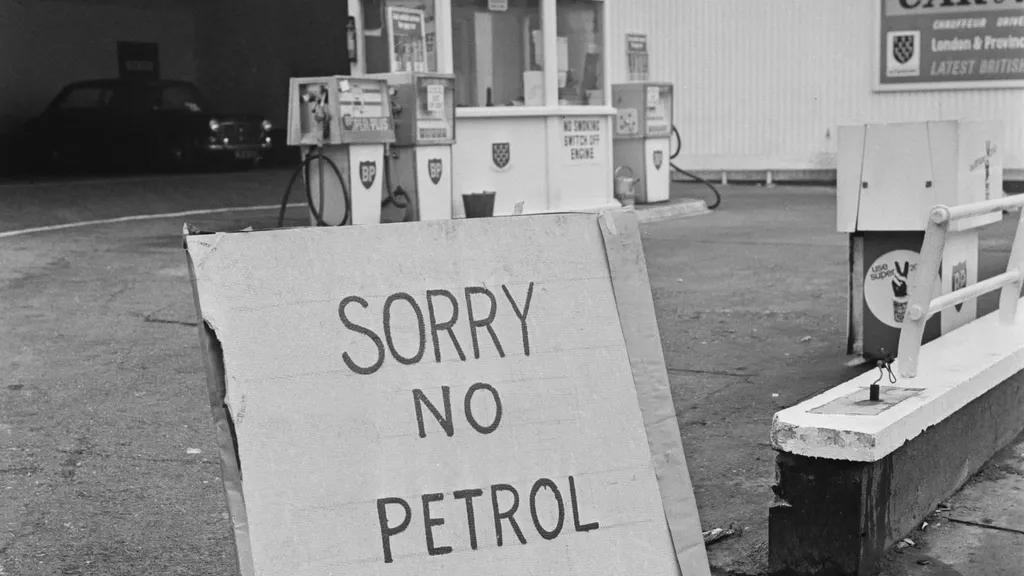
For Britons of a certain age, an oil price shock brings back memories of the 1970s, with food and petrol shortages, the state-imposed three-day working week, power cuts, doing school homework by candlelight, and the resulting increases in both inflation and unemployment.
The good news is that, according to an assessment by the independent Office for Budget Responsibility, the energy intensity of U.K. GDP has fallen by 70% since the mid-1970s, reflecting improvements in energy efficiency and a decline in heavy industry.
So even a prolonged rise in energy prices should not see the U.K. economy suffer as it did in that decade.
In theory, as a country still enjoying some domestic oil and gas production, Britain should also be rather less exposed to the impact of higher energy prices than peers such as Japan and some major euro zone economies.
In practice, however, the oil and gas price surge is having a dire impact.
This is partly because Britain's electricity prices are higher than those of its peers. According to the International Energy Agency, the average price per megawatt hour for electricity in the U.K. in April was $110.56, compared with $92.89 in Japan, $88.98 in Germany, $44.19 in France and $26.48 in the U.S.
Ministers blame this on Britain's "marginal pricing" system, under which the most expensive source of energy brought onto the grid to meet demand sets the price for all generators unless those generators have agreed to accept a fixed price. That is currently natural gas -- and has delivered windfalls for other generators, including renewables operators, not on fixed contracts.
Energy U.K., the industry body, argues the system is efficient because the cheapest generation capacity is used first and notes that gas often sets the price "because it is typically the flexible generation needed to meet demand when lower-cost sources [like renewables] are unavailable."
The government, whose dash to net zero is blamed by many for pushing up the cost of power for industrial and domestic users alike, has just announced plans to try and break the link between gas and electricity prices.
Nonetheless, energy-intensive businesses are suffering.
Denby Pottery, one of Britain's best-known producers of china and tableware, went into administration in March, blaming high energy and labour costs, while the government is spending more than £1 million ($1.35 million) per day to keep British Steel, the country's last producer of virgin steel via energy-intensive blast furnaces, alive.