Forbes contributors publish independent expert analyses and insights.
Whenever breaking news unfolds, Google Trends data can feel like a kind of window into real-time public sentiment about what's happening. That was certainly the case following the joint U.S. and Israeli attack on Iran, which saw Search terms like "Iran" and "Khamenei" immediately surge to the top of Google's U.S. rankings -- followed immediately by major news outlets like "CNN."
I was actually part of that wave of interest in CNN myself. As a cord-cutter scrambling to find live coverage of the attack as it got under way, I decided this was the perfect opportunity to finally try out CNN's newest standalone streaming offering. A few taps on my phone later, and it was done. I settled in front of my TV for the dual purpose of consuming Iran coverage and also for taking the CNN app for a spin.
But it didn't take long for the frustrations to begin.
Testing CNN's streaming app
The Apple TV version of the app was practically unusable -- with menus freezing, navigation lagging and, at one point, audio continuing to play even after I'd closed out of the app entirely (which only happened successfully after the app froze up and spent a few minutes thinking about what it wanted to do next). No matter how many times I closed and restarted the app or even redownloaded it, the experience was the same.
Not everyone, of course, will have my same experience with the app, which is included with "CNN All Access" -- the direct-to-consumer subscription that lets users stream live CNN programming, among other benefits. And I'll certainly try again once I see that the app has gotten an update. But I bring up my experience, which other users have shared based on reviews in the Apple App Store, because it actually points in my view to a broader set of challenges facing CNN at the moment.
The Paramount takeover
The looming acquisition of CNN parent company Warner Bros. Discovery by Paramount Skydance, though still contingent on final regulatory approval, has certainly brought a number of long-term challenges into view.
Many inside CNN are uneasy about what the takeover will mean for the network's editorial independence, especially given Paramount CEO David Ellison's ties to Donald Trump. There's also the fear that somehow combining Paramount-owned CBS with CNN could bring layoffs or newsroom consolidation as executives look for cost savings.
"For CNN," a New York Times headline warns, "a change in ownership means a suddenly uncertain future."
Not that the uncertainty is some new condition that employees will suddenly need to get accustomed to. CNN anchor Erin Burnett, in a recent conversation with me, acknowledged the volatility that CNN has lived with for years now. "The industry is in seismic change," she told me, before pivoting to praise for her colleagues. "But what matters most is who you go through it with."
Notwithstanding all of the reporting about CNN's possible future under Paramount ownership, though, it feels like one thing lost in some of the coverage is that CNN still has many urgent priorities that demand attention today, right now, as opposed to whatever Paramount and Ellison may or may not do down the line. Not the least of which is making sure its streaming product actually works when viewers show up during a major breaking-news moment.
CNN's more immediate priorities
The issue isn't simply that the CNN app can be buggy or slow. It's that CNN, like many legacy media organizations, is still figuring out how to operate like a technology company. The future of TV news now depends on a blend of software, subscriptions and direct consumer relationships -- areas where Silicon Valley firms have decades of experience and traditional broadcasters have had to play a game of catch up.
Paramount and WBD say they expect Paramount's takeover to close by the end of September. Once the deal is done, the combined company will be carrying $79 billion in debt, meaning executives will be under pressure to cut billions in costs pretty much immediately. That's a large part of why CNN staffers are already nervous about what comes next.
But having said that, CNN can't afford to wait and see what fallout results from the new ownership deal. Because, beyond the app experience that I noted above,the network is grappling right now with a deeper set of existing challenges.
'Running news is hard'
For one thing, CNN has struggled for years to clearly define its lane. Fox News dominates conservative cable audiences, while MSNBC is the home for progressive primetime viewers. That leaves CNN feeling too conservative for many liberal viewers and too liberal for many conservatives.
"Under the Ellisons, CNN obviously will be a strong competitor, as we'd expect," Fox Corp. CEO Lachlan Murdoch said this week at the Morgan Stanley Technology, Media & Telecom Conference. "But we like competition, and ... running news is hard."
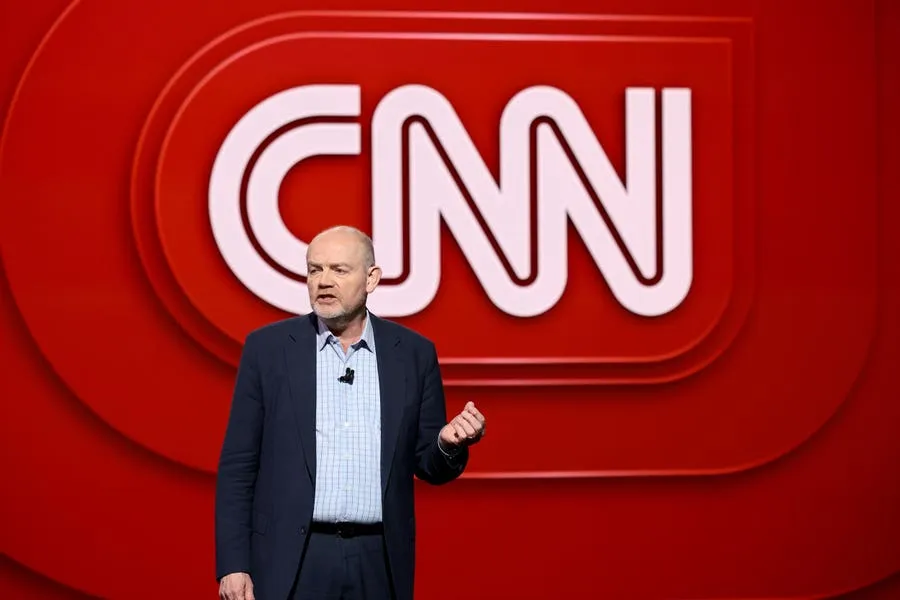
CNN employees have already lived through multiple strategic pivots and leadership turbulence in recent years, the brief tenure of former CNN chief Christ Licht -- who never really settled on a big picture kind of vision for the network -- having given way to current chief Mark Thompson, who's still in the process of resetting CNN's culture and strategy.
At the same time, Google is sending less traffic to publishers and news operations like CNN's, while audiences are more fragmented than ever thanks to independent newsletters, podcasts, and individual creators (including some former CNN employees who are now doing their own thing). And then there's the vast expense that comes with maintaining CNN's global reporting apparatus, complete with foreign bureaus and large production teams.
All of which is to say: Speculation about CNN's future ownership may dominate headlines. But CNN's biggest challenge isn't the aftermath of the Paramount deal -- it's everything the network still has to grapple with in the meantime.