Shaun Boyd is Your Political Reporter at CBS News Colorado. Share you story ideas with her by sending an email to sboyd@cbs.com or yourreporter@cbs.com.
An unlikely duo in the state decided to join forces last year after judges began releasing potentially dangerous defendants suffering from mental health disorders, intellectual disabilities and traumatic brain injuries with no supervision or treatment.
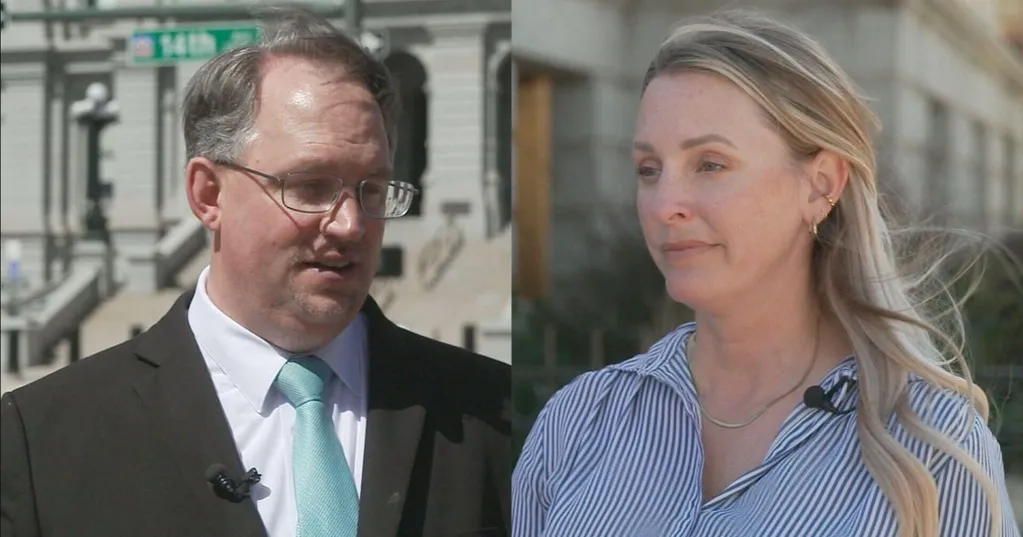
Jessica Dotter with the Colorado District Attorneys' Council and James Karbach with the Colorado Office of the State Public Defender are usually on opposing sides. But they now have a common goal to fix a system that they both say is failing victims, defendants and the public.
"We've created a solution that ensures that people will be placed if they're dangerous and permanently incompetent, instead of thrown out on the street," Dotter told CBS Colorado.
It's a solution decades overdue. In 1972, the U.S. Supreme Court ruled judges cannot jail defendants indefinitely if they are found incompetent and unlikely to be restored. They can civilly commit them, but Colorado has struggled to find facilities for defendants charged with violent crimes. After learning some defendants were sitting in Colorado jails for years, the federal government began fining the state $12 million a year.
In an attempt to get facilities to accept defendants, Democratic state Sen. Judy Amabile brought up a bill in 2024 that, among other things, required judges to dismiss charges against them. It didn't work. Colorado made national news as judges released some defendants accused of violent crimes back on the street.
Amabile is now sponsoring a 197-page bill supported by both district attorneys and public defenders.
"It creates pathways to placements and then it funds placements," Amabile told CBS Colorado.
The measure requires the state to open more beds at the Colorado Mental Hospital for defendants with behavioral health disorders, repurpose a facility in Pueblo for those with intellectual disabilities, and contract with or buy a secure nursing home for those with Alzheimer's disease or traumatic brain injuries.
Judges would have almost 6 months -- instead of 30 days -- to find a placement for defendants or put them in the Colorado Mental Health Hospital, and they could only dismiss charges in certain cases where defendants are found permanently unrestorable after treatment.
"We have to provide care in these settings and be able to step people down, as a matter of constitutional rights, but also humanity and fairness," Karbach told CBS Colorado.
The challenge will be funding the bill. The Joint Budget Committee, which Amabile sits on, has set aside $23 million.
"I believe the state is committed to spending the money that it takes to get people into these placements," Amabile said.
Dotter estimates 25 to 45 defendants a year would be civilly committed if the bill passes.
"The district attorneys of the state along with the office of the public defender both agree that we can't afford not to do this," Dotter said.