Shaun Boyd is Your Political Reporter at CBS News Colorado. Share you story ideas with her by sending an email to sboyd@cbs.com or yourreporter@cbs.com.
Patient portals like MyChart have dramatically changed health care, giving people immediate access to their medical records, bloodwork, and test results.
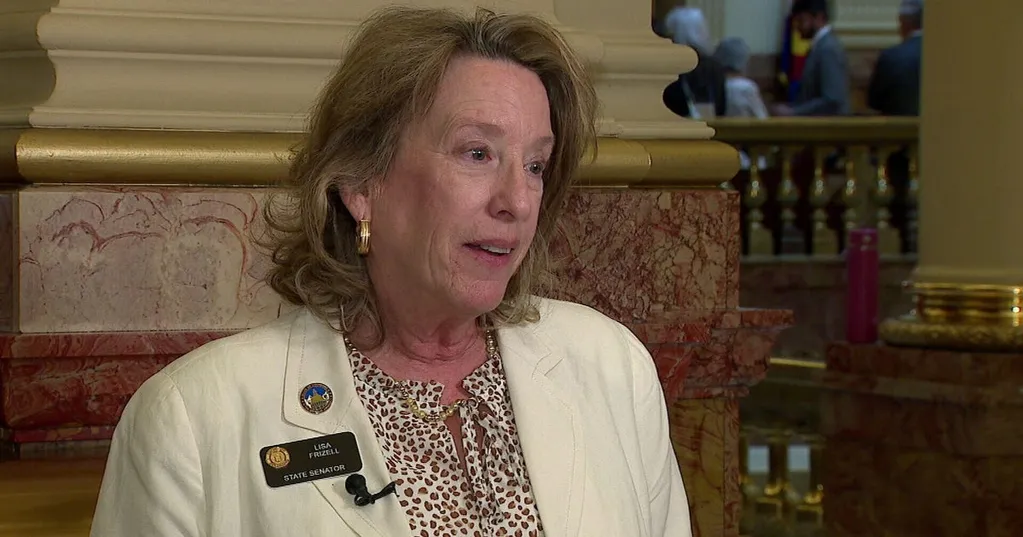
But they have also led to patients receiving devastating news while they're alone and without their doctor there to help them interpret it. Republican state Sen. Lisa Frizell is among them.
"I brought this legislation forward in response to my own experience," Frizell told her Colorado Senate colleagues.
They knew she'd been diagnosed with breast cancer in 2025. So, when she went before them recently to talk about a bone scan showing her cancer had spread, the chamber fell silent.
"It said metastasis in L3 vertebrae," Frizell explained in Senate chambers. "Whew, that's a lot."
Frizell says she saw the results in her patient portal at night when there was no one to help her decipher them. She says she went into panic mode and went online looking for answers.
"It was pretty scary," Frizell said. "Actually, it was terrifying."
Frizell says patients shouldn't have to face grim news like that alone. She's teamed up with Democratic state Sen. Kyle Mullica, an emergency room nurse, to delay when certain test results are posted.
"We're not talking about if your flu test is positive or negative," Mullica said before the state Senate. "We're talking about life and death."
The problem is that federal law doesn't differentiate between mundane and life-altering tests.
The 21st Century Cures Act requires all test results be posted immediately to a patient's portal. But it allows states to pass laws exempting certain tests, including cancer.
Bill SB26-162, sponsored by Frizell and Mullica, would give doctors three days to notify patients before the results of cancer tests or genetic tests for cancer markers are posted.
"There's no way that a doctor should have to race against the clock to get to a patient before they open their portal," Frizell told CBS Colorado.
Frizell says her doctor called the next day, and, after follow-up tests, she learned that what the radiologist thought was cancer wasn't cancer after all.
"And here's the thing is that, once you are diagnosed with cancer, everything is cancer, every shadow, every spot," Frizell told the Senate. "Patient portals are great, but they don't replace the conversation. That hardest conversation, where a doctor tells their patient that they have cancer."
The bill is supported by both the Colorado Medical Society and Colorado Oncology Society.
It passed the Colorado Senate and will now be heard in the Colorado House.
Kentucky, Texas and California have passed similar laws.