WASHINGTON -- Congress has begun assembling fiscal 2027 funding bills even as lawmakers wait for the White House's budget request and continue to negotiate an end to the Department of Homeland Security shutdown.
The House Transportation, Housing and Urban Development, and Related Agencies Appropriations Subcommittee on March 25 held its "member day" hearing, offering lawmakers a chance to outline funding priorities before drafting the upcoming fiscal year's transportation bill. In the Senate, appropriations staff also have started internal talks on anticipated transportation funding levels for the coming fiscal cycle.
Members' requests covered a wide range of infrastructure needs, from modernizing multimodal facilities to improving freight and commuter corridors.
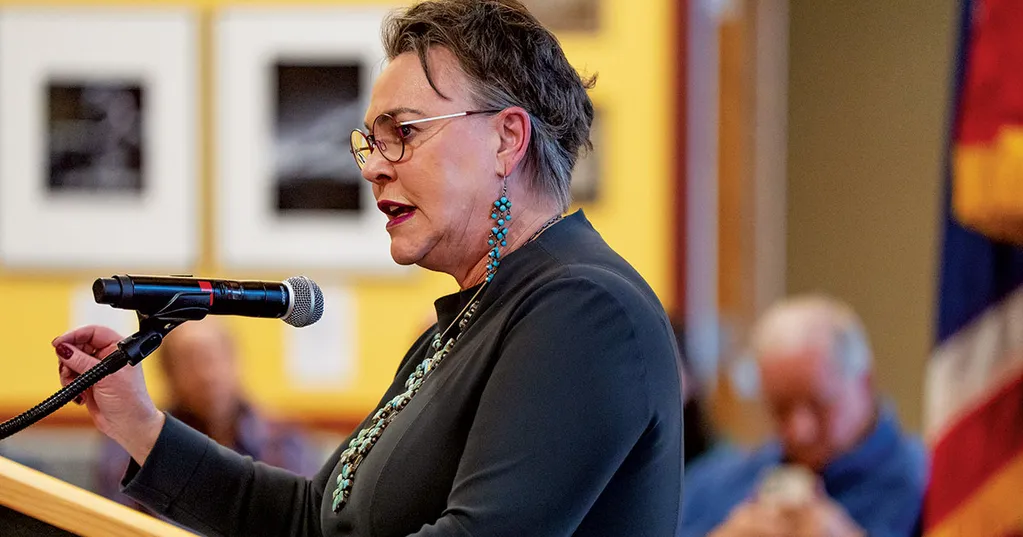
Rep. Harriet Hageman (R‑Wyo.) urged appropriators to further enhance strict English‑language requirements for commercial drivers and expand federal efforts to identify and shut down chameleon carriers. These are trucking companies that evade enforcement by repeatedly re‑registering under new names, ownership structures or Department of Transportation numbers.
"Being able to read, write and speak English proficiently is a fundamental safety matter that impacts everyone who travels on our roadways," Hageman said, noting the Trump administration has elevated the issue during the president's second term.
Hageman said chameleon carriers continue to present safety and accountability risks across the freight network, pointing to examples of carriers dissolving and reappearing with new identities to avoid insurance scrutiny or compliance actions. She recently introduced the Safety and Accountability in Freight Enforcement Act, which seeks to strengthen the federal registration process and curb fraudulent carrier practices.
The SAFE Act would establish a more robust system to detect chameleon carriers during registration reviews and subject them to enforcement if violations are identified. The bill also would order a nationwide study on the impact of such carriers, direct the Federal Motor Carrier Safety Administration to implement automated screening tools to flag suspicious applications and improve data‑sharing between state and federal agencies.
Industry groups have endorsed the proposal. "Chameleon carriers are a plague on our nation's highways, putting all motorists at risk and undercutting the vast majority of trucking companies that are responsible and follow the rules," Alex Rosen, senior vice president of legislative affairs for American Trucking Associations, said during the bill's February rollout.
Several other lawmakers used the March 25 hearing to spotlight local infrastructure concerns. Rep. Jeff Van Drew (R‑N.J.) called for aviation upgrades and flood mitigation funding in his district. Rep. Delia Ramirez (D‑Ill.) asked for additional federal support for transit and rail investments as well as bridge maintenance projects. "These programs connect communities. They reduce congestion. They improve public transit, and they spur economic development," she said.
The House's Republican‑led appropriations panel has yet to schedule a markup for the transportation funding bill. For now, appropriators continue to negotiate an end to the Department of Homeland Security shutdown as they await the White House's budget blueprint that could include a war funding package.
This month, Senate Appropriations Committee Chairwoman Susan Collins (R-Maine) framed the shutdown along partisan lines. As she put it, "The United States is less safe because the Democrats chose to walk away from the bipartisan DHS funding bill and have blocked repeated Republican efforts to pass a short-term funding patch to prevent disruptions while negotiations continue."