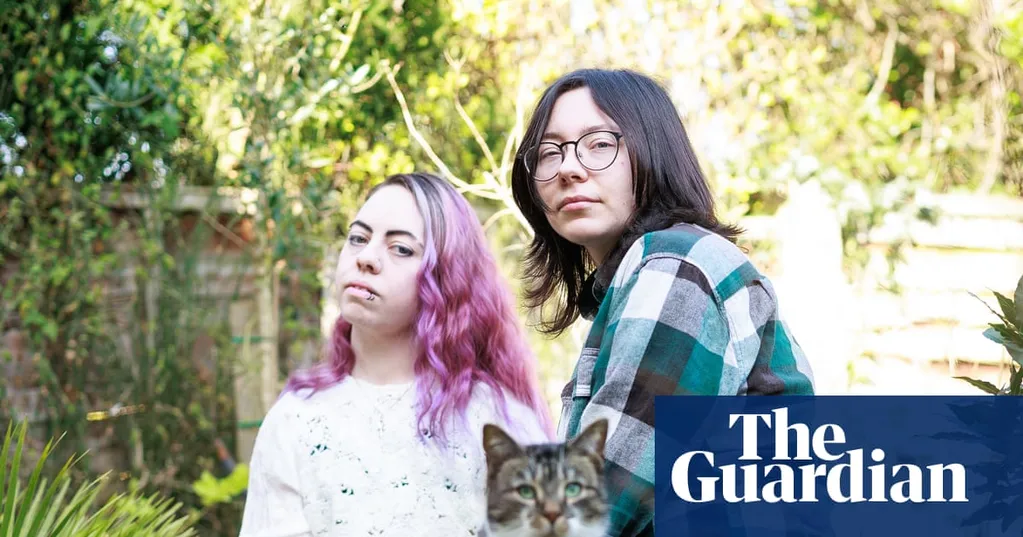
"It's the sickening stress of never quite feeling like you have roots. My marriage feels like it's on probation, conditional to whether the government puts a stamp on the next renewal. It's the constant uncertainty that makes me ill," Felix King said.
King, 31, an IT worker, wants to adopt a child with her American wife, Tessa, 29. But the impact of the home secretary Shabana Mahmood's "earned settlement" immigration plan means the couple, who live in Cheshire, fear they will never get the chance.
Tessa came to the UK from the US in 2024. She is among about 2 million migrants who have arrived in the UK in the past five years who face a longer wait for settled, indefinite leave to remain (ILR) status in the country, under rule changes expected to begin next month, including for spouses of British nationals.
Mahmood says the changes are necessary to restore fairness to the system and that the "pace and scale of migration in this country has been destabilising". Last week the former deputy prime minister Angela Rayner described the proposals as "un-British" in the Guardian.
Felix and Tessa were friends for years online before falling in love, and they meet the conditions for Tessa to qualify for the five-year route to settled status in the UK under the current system.
However, the proposals will introduce a minimum contribution requirement that would require Tessa to demonstrate earnings in the UK of at least £12,570 for three to five years to get ILR, which is expected to apply retrospectively. Tessa faces a battle to meet this condition because of leave from her cleaning and maintenance job for family bereavement and ill health. She is not allowed access to public funds as a visa condition and was supported throughout her time off by Felix. Migrants could face waits of 20 years for settlement under the proposals.
Felix says the new contribution requirement jeopardises their hopes of having a family, as they fear they cannot demonstrate the stability needed to adopt. The financial burden of visa reapplication costs and immigration health surcharges - £5,000 every two-and-a-half years - is another barrier.
"It's more difficult if you are a same-sex couple," Felix said. "It's missed that you can't just decide to have a baby, and that you need to show a certain amount of stability and surplus income to adopt.
"When I'm at work and my colleagues will be chatting about starting families, it's a reminder your ambitions are on a wire, that your freedom to start a family has been taken away from you."
On Wednesday, Abtisam Mohamed, the Labour MP for Sheffield Central, chaired a parliamentary briefing on the government's earned settlement proposals, featuring contributions from campaigners Reunite Families UK, trade unions and experts warning of the impact on applicants, children, NHS and social care staff, higher education and businesses.
Migration rules were hardening before Labour came to power. The minimum income requirement for British citizens applying for spouse visas increased in 2024 from £18,600 to £29,000.
For Felix, this meant a race against time to bring Tessa over from Ohio before the income requirement became unachievable for her. Felix suffered a breakdown under the stress.
The couple live with Felix's mother, as the process prevents them from buying a home. Tessa's current visa runs out in November. The couple are anxious at the prospect of years more expensive visa applications, or an error or job loss leading to Tessa's removal.
"It's not an outside possibility that something could go wrong and my partner could be deported in November," Felix added. "You couldn't really bring an adopted child into that kind of situation.
"We've got two people working full-time with a deposit in the bank for a house, but the government are saying no; we want that as a tax for you to be married.
"The practical reality is you're not inconveniencing one person who's got dreams of living in Britain. You're completely upturning the lives of that person, their British spouse and their immediate family.
"You're telling people the only marker of Britishness is their taxable income - and this explicitly targets legal migration."
Matteo Besana, Reunite Families UK's head of policy and advocacy, said: "As Felix's case makes clear, despite the government's rhetoric, these cruel rule changes will also profoundly impact British citizens, especially children. We urge the government to scrap these changes and create a better system for everybody, migrants and British citizens alike."