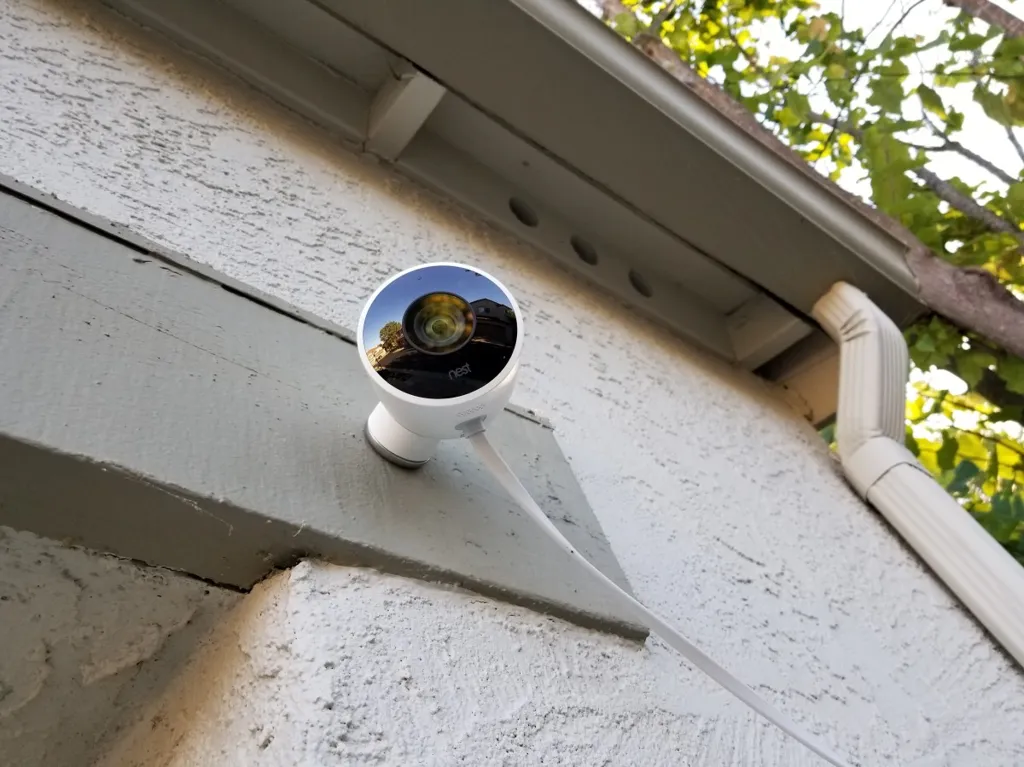
As the search for Nancy Guthrie continues, one of the biggest developments has been the release of footage from her Google Nest doorbell camera. This digital evidence provided investigators with information about the suspect's backpack, holster and gloves. While the data release raises hopes that Mrs. Guthrie will be returned home safely, it also raises broader concerns about consumer privacy, as Google possessed the data even though Guthrie did not subscribe to its services. This revelation highlights the importance of understanding how home digital devices collect, store and use our data as well as the need for technology companies to fully explain their practices -- in layman's terms -- that enable consumers to make informed decisions.
Doorbell cams are extremely popular -- 27 percent of U.S. homes have them. In 2024, the global doorbell cam market size was estimated to be $2.02 billion, and it's projected to reach $6.84 billion by 2033. Some store the data they collect locally while others (including Google and Amazon versions) store data in the cloud. Most doorbell cam manufacturers offer a subscription option to retain and access older footage. Without a subscription, doorbell cam owners are only able to see a limited window of data. In the Guthrie case, it was initially reported that the Nest doorbell cam data was inaccessible because Mrs. Guthrie did not have a subscription. However, the FBI subsequently released a statement explaining that Google was able to recover the video from "residual data located in backend systems." There was no further explanation offered. Residual data could refer to the digital forensic concept of data existing until it is overwritten -- in essence, it remains even after it is "deleted" until the space it exists on is needed.
It has been reported that Google dedicated extensive time and effort to locating Mrs. Guthrie's doorbell cam data. Google's willingness to work with law enforcement isn't surprising given that this is a high-profile case where President Donald Trump has personally offered support and federal resources. However, the sudden appearance of video that purportedly was inaccessible days earlier led people to question Google's data handling processes. Google may not be required to provide clarity to the public now, but, if the subject masked man is identified, arrested and put on trial in this case, his defense attorneys will challenge the video's admissibility. They will demand answers from Google, under oath, on how the data was stored and recovered, and whether it was altered or enhanced.
Privacy concerns have landed doorbell cams in the headlines for many reasons. Amazon is facing backlash from its Super Bowl ad promoting the AI-enabled "Search Party" feature on Ring cameras. The commercial described it as a way to reunite families with lost pets by enabling pet owners (including those who don't have Ring cameras) to use the Ring app to report their lost pet, which then triggers participating outdoor Ring cameras to scan the area. Despite Amazon's President and CEO Andy Jassy's attempt to assure Ring users that "privacy stays in your control -- you decide each time whether to help}," social media users were outraged by the Search Party feature, objecting to it as a creepy tool for conducting surveillance of people.
Amazon's ad also caught Congress' attention. Several days after the Super Bowl, U.S. Senator Edward Markey sent a letter to Jassy recounting the public's "overwhelming opposition to the image recognition technology" embedded in Ring doorbell cams. Markey accused Amazon of "consistently fail[ing] to prioritize public privacy with its Ring doorbells," pointing to its 2025 decision to incorporate facial recognition technology which he views as easily susceptible to abuse by Amazon or law enforcement. The following day, Amazon announced the cancellation of its partnership with Flock Safety, a company that operates a network of license plate reader cameras. The partnership would have enabled Ring customers to share video from their cams with police through Ring's "Community Requests" program.
Taken together, these events highlight the lack of consumer clarity that pervades a rapidly evolving and data-focused industry. While the knowledge imbalance between consumers and tech companies is continually examined by the Federal Trade Commission, the problem persists. The importance of consumer education about smart device privacy trade-offs increases by the day as AI magnifies both the public safety enhancing- and privacy infringing- capabilities of popular consumer tech. AI platforms, social media, data brokers and law enforcement want our data; we must be informed if tech companies are capturing and using doorbell cam "surprise" footage that happens to exist until it is overwritten.
It remains to be seen whether the headlines surrounding the Guthrie case doorbell cam will persuade more people to purchase these devices -- and pay for subscriptions -- or whether privacy concerns about AI capabilities and associated data-sharing arrangements will deter consumers. The best-case scenario is that tech users and tech companies will come together to increase transparency and accountability -- and use technology to help bring Nancy Guthrie home safely.
Leeza Garber, Esq., is a cybersecurity and privacy attorney and expert; owns her own executive education and employee training company; teaches at both The Wharton School and Drexel's Thomas R. Kline School of Law.
Gail Gottehrer, Esq., is an expert on cybersecurity, AI strategy and emerging technologies law; founder of Gail Gottehrer Consulting LLC.