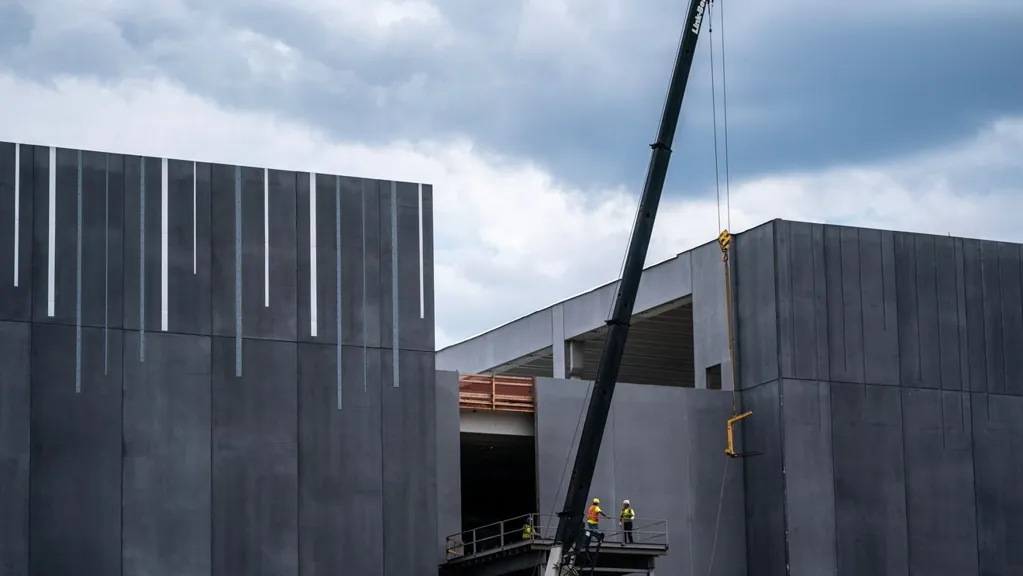
WASHINGTON (TNND) -- The tech industry's push to rapidly expand its footprint across the U.S. with sprawling data centers to serve artificial intelligence is running into pushback from Americans and lawmakers over fears about boosting utility bills that are already on the upswing.
Massive facilities filled with computer servers powering the latest AI models are crucial to the industry's continued growth but are running into fierce opposition across the country over their massive demand for resources like land, water and electricity. As tech companies invest more into growing their models, they need to expand and are looking to move in states across the country.
It comes as Americans have already been hammered by higher prices since the economy restarted after the pandemic. Inflation has not been at the 2% target since 2021 and electricity prices were a pinch point in 2025 with a 6.7% increase, according to government data.
How the sprawling facilities impact energy prices will only grow more prominent as more are built and their demand for electricity grows. Researchers at the Massachusetts Institute of Technology have estimated data centers will account for up to 21% of global energy demand by 2030.
AI companies and lawmakers are already starting to see resistance to construction of more data centers in communities across the country in an issue that cuts across partisan and generational lines.
"This is not an issue that people are going to stop paying attention to, because it's clearly a trend that's going to continue, at least in terms of reliance on AI and need for data centers and greater energy supplies. People will be paying attention to this because it affects their bottom line," said Chris Devine, an associate professor of political science at the University of Dayton.
Americans are willing to absorb some costs from data centers, but with pretty minimal limits, according to new Politico polling.
Sixty-two percent of voters said they would still support a data center in their area if it increased their monthly electric bill by $5, and 52% were still on board if rates went up by $10, according to the survey. Once hypothetical data centers increase bills by $25 or more, voters opposed building a data center in their area.
Electricity costs are the biggest issue around the expansion of data centers. Nearly 3-in-10 said higher electric bills are their biggest concerns, while 24% were worried it would increase the risk of blackouts, 23% thought it would cost taxpayers money, 21% said it will cost jobs and 20% had environmental concerns.
Potential job losses from AI were the top concerns among respondents 24 or younger in the Politico survey, which comes as college graduates are facing one of the worst job markets for entry-level work in recent history as companies pull back on hiring and look for ways AI can replace tasks.
"If some of these fears come to fruition, we are already seeing some indication of it that AI, in a broad sense, is taking away jobs while also -- at least through the data centers -- driving up energy prices. Then you really have the roadmap for a populist backlash against this," Devine said.
Data centers were already a flashpoint in last year's election and will remain in the spotlight moving forward as the industry invests trillions to ramp up capacity. Zoning restrictions, electricity agreements and other regulation are increasingly popping up during local government meetings, in statehouses and within Congress.
A handful of state-level lawmakers on both sides of the aisle have introduced legislation forcing temporary bans on construction, mandating tech companies pay for increased utility prices or mandating they are built with their own power sources.
The Trump administration has been a leading advocate for the development of AI, pushing Congress to pass a moratorium on state-level regulation and clearing the runway for U.S. companies to be the global leaders in the tech's advancement. But Trump has also pushed the industry to get ahead of the political backlash and backed a pledge from Microsoft to keep consumers from bearing the financial burden of data center construction.
Some tech companies have tried to soothe concerns about the impact of data centers by volunteering to pay for the increased burden on the grid or secure their own power sources. They have also highlighted the jobs that will be created through construction projects and that AI will help boost productivity and the U.S. economy.
Trump's support for AI has been backed by most Republicans in Congress but there are still concerns about how to handle it moving forward. Republicans have signed onto or led legislation calling for a temporary ban on construction and some governors, like Ron DeSantis in Florida, have been supportive of restricting further development.
Sens. Josh Hawley, R-Mo., and Richard Blumenthal, D-Conn., introduced a bill last week aimed at shielding consumers from paying for data centers' outsized demands on the electric grid by requiring data centers build their own power sources.
"Our bipartisan bill ensures consumers have priority on the grid and do not have to pay a penny more because of burdensome data centers. Families should not be forced to bankroll Big Tech's electricity and infrastructure costs," Blumenthal said in a statement.