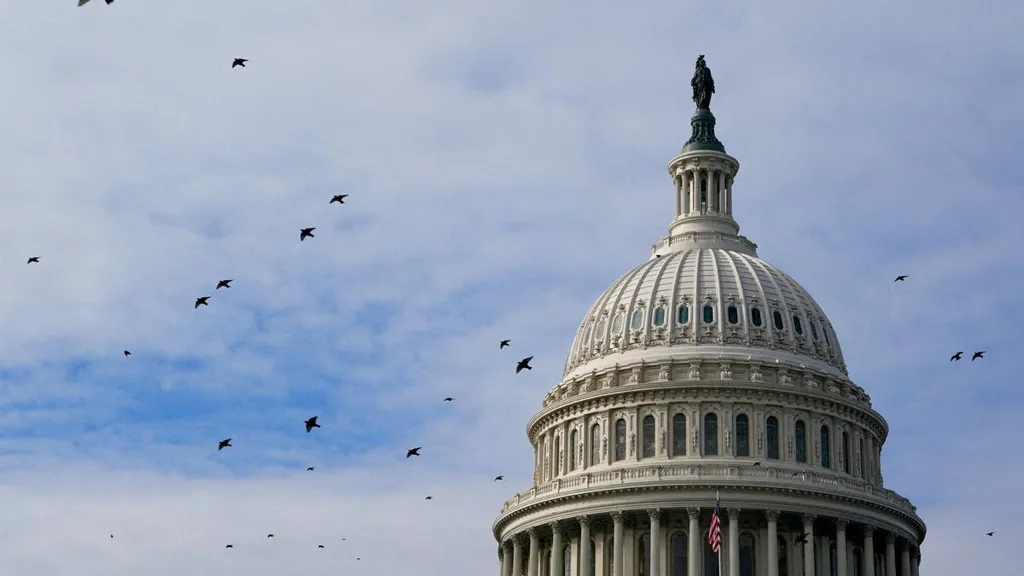
WASHINGTON - Lawmakers in Congress are racing toward a deadline to get all their funding bills passed before Jan. 30 in order to evade yet another government shutdown.
They took one big step closer to that goal on Jan. 20, releasing the last remaining batch of bipartisan appropriations bills. Though the $1.2 trillion funding package still has some big hurdles to clear before becoming law, it has many eye-popping provisions.
Included in the legislation are notable reversals of some of President Donald Trump's steepest cuts to government health and education programs, along with measures meant to ultimately reduce prescription drug costs for consumers.
"Because Democrats were at the table, this legislation staves off extreme cuts that would have raised families' costs and jeopardized people's health and livelihoods, and it instead delivers new funding for child care, our K-12 schools, rental assistance, and so much else," said Sen. Patty Murray, D-Washington, the vice chair of the Senate Appropriations Committee, in a statement.
The megabill also would implement new accountability and transparency measures for the Department of Homeland Security and Immigrations and Customs Enforcement, amid national scrutiny of federal law enforcement after an ICE agent shot and killed a mother of three in Minneapolis.
After last year's record-breaking crisis, there's little appetite among members of either party for another shutdown. But time is running short to get the deal through Capitol Hill: The Senate is scheduled to be out of town for the rest of the week. And the House of Representatives is supposed to be out all of next week - including on the Jan. 30 deadline.
Rep. Tom Cole, R-Oklahoma, the chair of the House Appropriations Committee, said in a statement that the latest funding package "applies innovation and discipline to deliver results without waste."
"It's time to get it across the finish line," he said.
House Speaker Mike Johnson echoed that sentiment.
"After years of Washington abandoning regular order, this Congress under Republican leadership has proven it can work as intended," he said in a statement.
New restraints on ICE
Congressional Democrats have been in a tough political position in recent weeks, trying to balance their heightening concerns over immigration enforcement with their hopes to avert another shutdown. As a result, deciding how to fund DHS has been a big obstacle in lawmakers' negotiations.
Republicans ultimately agreed to impose new restrictions on DHS, including more deescalation training for ICE and Customs and Border Patrol agents and oversight of detention facilities. The legislation additionally restricts how DHS can spend money while mandating the agency regularly tells Congress about specific spending plans.
Rep. Rosa DeLauro, D-Connecticut, the top Democrat on the House Appropriations Committee, acknowledged the bill may not go as far to reign in ICE as some Democrats had hoped. But she said allowing DHS funding to lapse past January would've endangered other important federal agencies, including the Federal Emergency Management Administration, or FEMA, which is responsible for helping respond to natural disasters.
"The bill takes several steps in the right direction, such as cutting ICE enforcement and removal operations and reducing the number of detention beds, but it does not include broader reforms Democrats proposed," DeLauro said in a statement. "I understand that many of my Democratic colleagues may be dissatisfied with any bill that funds ICE. I share their frustration with the out-of-control agency."
One of those colleagues - Sen. Chris Murphy, who like DeLauro is another Connecticut Democrat - is already saying he won't support the DHS funding bill.
"Democrats have no obligation to support a bill that not only funds the dystopian scenes we are seeing in Minneapolis but will allow DHS to replicate that playbook of brutality in cities all over this country," he said in a Jan. 20 social media post.
A small health care compromise
Rising health care costs emerged as the main sticking point during the longest-ever government shutdown last fall.
Yet lawmakers still didn't come out of the political fiasco with a concrete deal for how to reduce insurance and drug prices for patients. Bills to potentially extend special Obamacare subsidies - which were relied on by millions of Americans to afford their premiums until they expired at the start of this year - failed to garner enough support in the Senate to pass.
The funding package released on Jan. 20 includes some relatively modest components aimed at improving health care affordability. It would crack down on drug intermediaries and bolster funding for community health centers.
The legislation also would reverse some of the Trump administration's cuts to health research, curbing a policy change under Health and Human Services Secretary Robert F. Kennedy Jr. that has imposed the specter of massive financial strain on academic and medical institutions.
Pushing back on Education Department dismantling
Democrats were hoping to use the upcoming funding deadline to reverse at least some of Trump's efforts to dismantle the federal Education Department. In particular, they wanted Trump to stop offloading the department's responsibilities to other agencies, such as the Labor Department.
They didn't exactly get what they wanted. But they got some concessions. The bipartisan spending package increases the Education Department's discretionary funding by $217 million compared to 2025. And it requires Trump administration officials to provide lawmakers with biweekly briefings about their efforts to break up the agency.