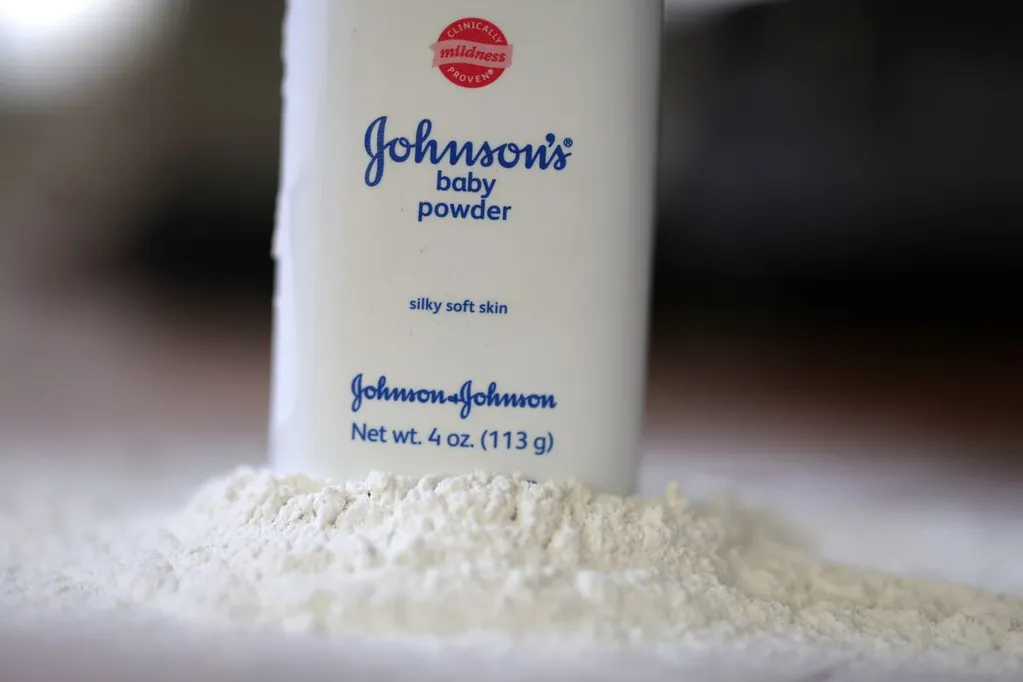
The Lancet, one of the world's leading medical journals, retracted a nearly five-decade-old paper extolling the safety of talc, the main ingredient in Johnson & Johnson's iconic baby powder that fueled tens of thousands of lawsuits against the company after it was linked to cancer.
The journal editors said they recently learned the unsigned article was written by Francis J C Roe, a J&J consultant and prominent cancer researcher. Roe, who is dead, ran the manuscript by the company for changes before publication in 1977 -- all unbeknownst to the journal's staff at the time. The original paper concluded there was no reason to believe the cosmetic talc use could lead to cancer.
The conflict "was a clear breach of publishing ethics," the current Lancet editors wrote on Wednesday. "In our view, had the editors at the time known of this situation and been aware of the author's undeclared competing interest, they would not have published this commentary."
All of this came to the attention of The Lancet via two historians, David Rosner at Columbia University and Gerald Markowitz at John Jay College of Criminal Justice, both of whom have long worked to shed light on occupational and public health crises.
The pair wrote to the journal in December revealing that documents obtained during discovery in the lawsuits against J&J showed the 1977 paper was written by Roe, who then gave an advance copy to J&J and took the company's suggestions into account, according to a commentary they wrote that accompanied the retraction.
The original paper was published amid a fight between US health officials and the cosmetic industry over whether to regulate asbestos in talc, Rosner and Markowitz said.
"The industry's opposition gained legitimacy when The Lancet published an unsigned commentary in 1977, asserting that there was no need for regulation because the cosmetic industry in both the US and the UK had ensured that their products were virtually free of asbestos," they wrote.
The paper has since been used to defend companies that sell talc products in litigation, Rosner and Markowitz said.
Opposite Sides
J&J said in a statement that Rosner and Markowitz are "are themselves paid plaintiff-side experts in the talc litigation."
"Johnson & Johnson strongly disagrees with the suggestion that a 1977 editorial in The Lancet reflects misconduct or warrants retroactive condemnation," the company said. "While Johnson & Johnson respects The Lancet's commitment to ensuring a lack of bias in the materials it publishes, unfortunately, in this instance the journal is being used as part of ongoing and underhanded litigation tactics."
US Food and Drug Administration officials recognized that the original piece was an opinion paper and knew it was written by Roe, J&J said.
J&J was facing more than 73,000 lawsuits in September from consumers who blame its baby powder for their illnesses. While the company already has litigated claims in more than 20 state court trials, a federal judge in Trenton, New Jersey, is setting up the first federal court cases for trial.
The company has been hit with big verdicts in jury trials, including one in December when $1.56 billion was awarded to a woman who blamed baby powder for her cancer.
While J&J took its talc-based baby powder off the market worldwide in 2023 and replaced it with a product made from corn starch, cosmetic companies still use it in beauty products like eye shadow and blush. Some vitamins and drugs also contain talc.
FDA Commissioner Marty Makary has said he wants to look more closely at its use in products consumers ingest, though he hasn't yet. In November, the agency pulled a proposal to regulate testing for asbestos in talc.