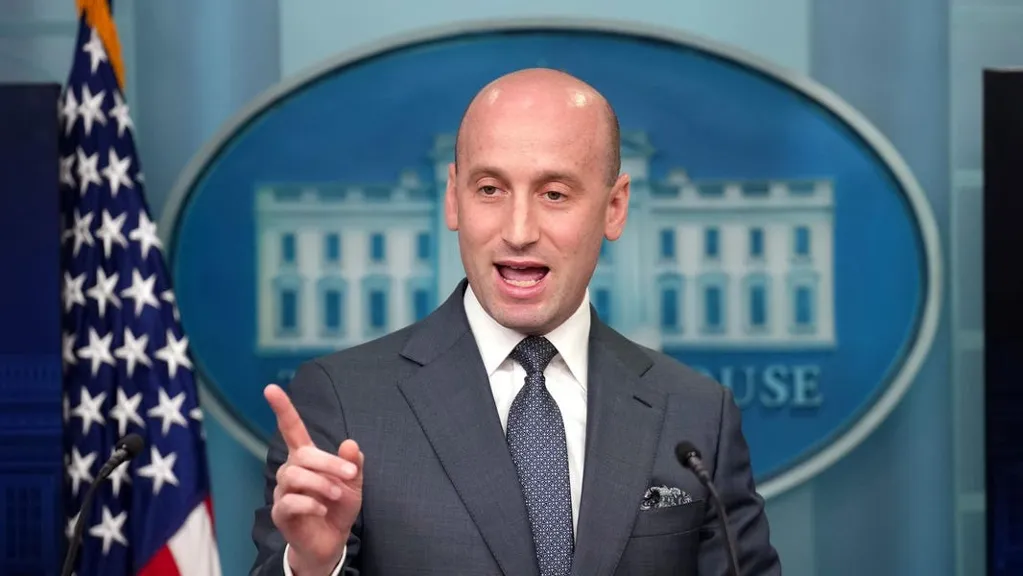
The Trump administration has finalized a controversial immigration rule that will significantly change the H-1B selection process to favor individuals in senior positions. Despite receiving nearly 17,000 comments on its proposed rule, the Department of Homeland Security published the final rule without changes. By disadvantaging international students in the H-1B selection process, the rule achieves a longtime goal of White House Deputy Chief of Staff Stephen Miller, the chief architect of the administration's immigration policy. While working for Sen. Jeff Sessions (R-AL), Miller helped draft legislation that would have prohibited most international students from working in the United States in H-1B status for at least a decade after graduation. Business and university groups are expected to challenge the rule in court.
H-1B temporary visas are often the only way for high-skilled foreign nationals to work in the United States long term. Employers must pay the higher of the actual or prevailing wage paid to U.S. professionals with similar experience and qualifications. When companies recruit at U.S. universities, they find that international students account for approximately 70% of full-time graduate students in AI-related fields, such as computer and information sciences. The H-1B annual limit is 65,000, with an exemption of 20,000 for individuals with master's degrees or higher from a U.S. university, or about 0.05% of the U.S. labor force.
In FY 2025, with sizable investments in artificial intelligence at stake, Amazon, Meta Platforms, Microsoft, and Google had the most approved new H-1B petitions, according to a National Foundation for American Policy analysis. At the same time, Indian-based companies have mostly disappeared from the top rankings, with their numbers plummeting. Only three Indian companies were among the top 25 employers of new H-1B visa holders in FY 2025, and executives at two of those companies, TCS and LTIMindtree, said they do not plan to file for new H-1B visa holders in the coming year.
The New Immigration Rule Significantly Changes The H-1B Lottery
U.S. Citizenship and Immigration Services conducts a lottery when it receives more H-1B registrations than the 85,000 annual limit. While currently all registrants have an equal chance of selection for an H-1B petition, the new rule requires USCIS to use the four Department of Labor salary levels for prevailing wage determinations to "weight" the lottery in favor of individuals in positions that require more experience. Unless it is blocked, the rule will take effect in 2026 before filings begin for the FY 2027 H-1B cap.
Registrants offered a position that corresponds to a Level IV salary will have four chances to be selected; a Level III registrant three chances; a Level II registrant two chances; and a Level I registrant one chance.
Past analyses of H-1B selection found that approximately 90% of H-1B applications for international students are at Level I or Level II salaries due to their lack of experience in the labor market.
The four DOL wage levels primarily consider an individual's current level of experience, not their talent or potential contributions. DOL lists employees at Level IV, the highest level, as people who "generally have management and/or supervisory responsibilities." The rule makes it significantly more likely that a U.S. company could hire foreign-born senior managers on H-1B petitions than promising recent international students graduating from U.S. universities with degrees in a field such as artificial intelligence.
Analysts have noted that shifting the H-1B selection using a Department of Labor salary scale that focuses on the amount of experience to fill a position changes the country's talent acquisition policy toward mid-career professionals rather than fostering more innovation within the United States.
"The method chosen to rank H-1B petitions does not measure skill level . . . but is a Department of Labor tool to divide job classifications based on the experience and related factors needed to perform in the position," according to an NFAP analysis of the rule.
The rule establishes a policy that an H-1B visa holder paid a Level IV salary is four times more valuable to employers and the U.S. economy than someone paid a Level I salary. However, attorneys say that is not accurate.
"International students finishing graduate degrees in STEM fields have cutting-edge training, but may have lower salaries to start in entry-level research jobs, especially in startups," said Dan Berger of Green & Spiegel in an interview. He believes the new policy values salary above all. "The rule makes it much harder to hire people with the latest skills or training." He points to the example of an individual with a graduate degree in computer science doing AI work that might have a lower salary and, therefore, a much lower chance of selection in the H-1B lottery.
"The Department of Labor's OEWS wage levels are designed as a job classification tool that reflects the amount of experience, supervision and responsibility required for a position, not an assessment of whether the worker is 'highly skilled' or 'less skilled,'" said Vic Goel of Goel & Anderson in an interview. "A Level I role is simply an entry-level version of the occupation, while Level IV is a senior-level position requiring greater judgment and independence."
Goel disagrees with the central premise of the rule, that higher wage levels in the DOL system equate to higher skill and greater economic value. "USCIS used its framing to justify weighting the lottery in favor of Level III and IV beneficiaries. Wage levels don't correspond to skill in the way USCIS suggests, and instead they correspond to how DOL has structured job progression for prevailing wage purposes."
The two systems, according to Goel, are incompatible because the DOL wage levels focus only on making sure an employer's pay for foreign nationals is fair relative to the job requirements. "USCIS lottery weighting attempts to twist those same levels into a proxy for 'skill' and 'best and brightest,'" he said.
The New Immigration Rule Produces Significantly Different H-1B Lottery Outcomes
The percentage change in the probability of being selected in the H-1B lottery may be the best indicator of the rule's impact. According to NFAP, under the rule, the probability of USCIS selecting an individual at Level IV for an H-1B petition would increase by 107% but fall by 48% for individuals at Level I. The probability of USCIS selecting an H-1B petition would increase by 55% for individuals at Level III and by 3% for individuals at Level II.
Currently, individuals at all four salary levels have a 29.59% chance of being selected for an H-1B petition, according to USCIS. Under the rule, a person at Level I would see their selection chances drop to only 15.29%. In comparison, individuals at Level IV would see the probability of being selected surge to 61.16%. Individuals at Level III would see their opportunity of being selected increase to 45.87% under the proposed rule, and H-1B registrants at Level II would experience a slight increase to 30.58%.
DHS Argues The Immigration Rule Does Not Restrict H-1B Visa Holders Or International Students
According to DHS, "A commenter stated that contrary to DHS claims that H-1B workers displace U.S. workers, research by the National Foundation for American Policy demonstrates that H-1B professionals complement U.S. workers. The commenter wrote that the presence of H-1B workers is associated with lower unemployment rates among college graduates, faster earnings growth for U.S. workers in fields with more H-1B nonimmigrants, and better career alignment for U.S.-born graduates." The commenter went on to state that "data show that increasing the share of H-1B workers in an occupation reduces unemployment and boosts wage growth for U.S. workers, with no evidence of displacement, even among recent graduates. Thus, restricting H-1B visas could inadvertently harm U.S. workers by reducing opportunities for collaboration, innovation, and overall job growth."
DHS responded that it appreciated "the commenters' reference to research suggesting that high-skilled foreign workers, including H-1B workers, complement U.S. workers and may contribute to innovation, collaboration, and economic growth. However, DHS disagrees with the commenters that the new weighted selection process would restrict H-1B visas." DHS said, "The rule is designed to increase the chance of selection for higher-paid, higher-skilled beneficiaries in years of excess demand for numerically limited H-1B visas. The rule does not restrict access to the program, reduce the number of H-1B workers, or respond to general labor-market effects."
DHS also denied the rule would negatively affect international students. "DHS disagrees that this rule will significantly harm international students. First, this rule will not impact the ability of international students to study in the United States, which is the basis of their admission to the United States in student status." DHS said, "DHS also disagrees that this rule will worsen the profile of international students. Conversely, DHS believes this rule will help attract the best and brightest international students, to the extent that they will earn relatively high wages, as they will see their chances of being selected in the H-1B lottery increase compared to the current random selection process."
DHS Denies The Immigration Rule Is Unlawful
Many commentators argued that the rule violates U.S. immigration law. "The Proposed Rule is ultra vires because it improperly changes the process and adds new requirements to the selection order for H-1B cap subject petitions that exceed what is clearly stated in the Immigration and Nationality Act," according to a comment from the American Immigration Lawyers Association. "Congress created the current H-1B quota of 65,000 H-1B cap numbers and provided plain and unambiguous language on how petitions subject to the cap should be selected."
AILA notes that INA section 214(g)(3) states: Individuals subject to H-1B numerical limitations "... shall be issued visas (or otherwise provided nonimmigrant status) in the order in which petitions are filed for such visas or status." AILA states: "The statute does not impose any other criteria on the H-1B cap-subject petition selection process, nor does it provide any authority for USCIS to impose qualitative factors such as offered salary in the allocation of H-1B cap numbers."
DHS responded that it disagreed that the weighted selection process would violate the INA or that DHS lacks the statutory authority to implement the new process: "The statute is silent as to how USCIS must select H-1B petitions; or registrations; to be filed toward numerical allocations in years excess demand; term 'filed' as used INA sec. 214(g)(3), 8 U.S.C. 1184(g)(3), ambiguous; these changes reasonable within DHS's general authority."
Employers; attorneys; Trump administration expect court decide whether immigration rule changing H-1B lottery lawful.