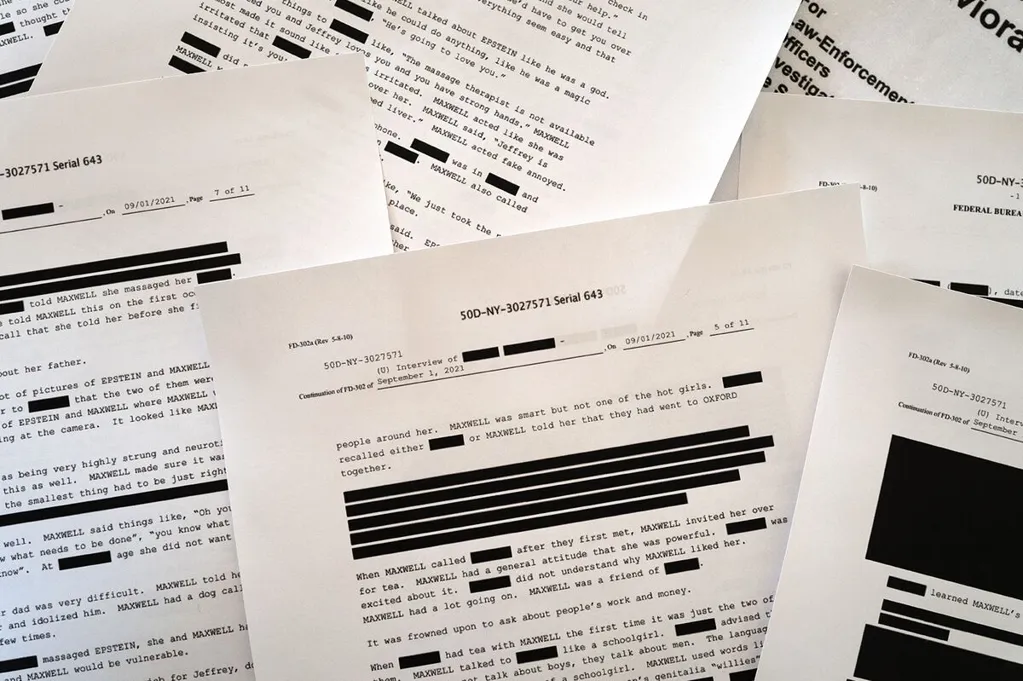
The US Justice Department's handling of files related to the disgraced financier Jeffrey Epstein has brought condemnation from Democrats and even led to rare blowback against President Donald Trump's administration from within his own party.
The administration has released millions of pages of material related to Epstein and his associate Ghislaine Maxwell since December. At issue is whether the government's extensive redactions of names and other personal details -- as well as its decision to not release other documents at all -- comply with the Epstein Files Transparency Act, a bipartisan law passed last year to force the administration to release the records. Critics say the administration violated the law by blacking out the names of certain powerful individuals and potential predators tied to Epstein.
Epstein died in custody in 2019 while facing federal sex-trafficking charges. His death was ruled a suicide. Documents such as emails, contact lists, and travel records from more than a decade of state and federal investigations are now being released. Many powerful individuals, including Trump and former President Bill Clinton, appear in the records because of their prior associations with the financier. The appearance of a name in the so-called Epstein files doesn't imply that the person engaged in wrongdoing.
What does the Epstein files law say about withholding information?
The Epstein Files Transparency Act states: "No record shall be withheld, delayed, or redacted on the basis of embarrassment, reputational harm, or political sensitivity, including to any government official, public figure, or foreign dignitary."
The law does allow the government to redact records containing victims' personally identifiable information, as well as their medical files and similar records that, if released, would constitute "a clearly unwarranted invasion of personal privacy."
The government is also permitted to withhold information that "would jeopardize an active federal investigation or ongoing prosecution, provided that such withholding is narrowly tailored and temporary." The law calls for written justifications of redactions to be submitted to Congress.
Has the Justice Department followed the law?
It depends who you ask. Delays and heavy redactions have prompted Congressional Democrats and some Republicans to say the administration is in violation of the Epstein Files Transparency Act.
In a December post on X, Representative Robert Garcia, the top Democrat on the House Oversight Committee, blasted what he called the government's "lies, incompetence, missed deadlines and illegal redactions." Republican Representative Lauren Boebert, a MAGA-aligned lawmaker whose relationship with the president was strained after she voted for the bill that forced the release of the files, said after viewing the unredacted files at the Justice Department that "there are folks who are definitely implicated" named in the documents.
Such criticisms escalated when, on Feb. 9, lawmakers were invited to the Justice Department to view unredacted copies of the Epstein files. Republican Representative Thomas Massie and Democratic Representative Ro Khanna, the co-sponsors of the Epstein Files law, said after viewing the files that they believed there are six men whose names were redacted who are likely incriminated by their inclusion in these files. They called on the department to make them public. Speaking outside the Justice Department, neither provided additional details for how or why the men might be incriminated.
Massie and Khanna also said the Justice Department appeared to have failed to unredact some Federal Bureau of Investigation and grand jury documents that were supposed to be made public under the transparency law.
There have also been complaints that the Justice Department failed to redact information pertaining to victims. The BBC reported on Feb. 15 that lawyers for victims said some publicly released Epstein files included email addresses and nude photos that could be used to identify victims. The Justice Department blamed "technical or human error" and removed those files.
Did the DOJ explain why certain content was withheld?
The Justice Department has repeatedly sought to explain its reasons for redacting and withholding certain documents after review. In a Feb. 14 letter to lawmakers, the DOJ said it didn't withhold information to protect anyone's reputation or because of political sensitivities. Officials withheld information to protect victims' privacy and for other specific reasons allowed for by the law, according to the letter. In late January, Deputy Attorney General Todd Blanche told reporters that files weren't withheld on a national security basis, even though that was allowed by the law.
Blanche said that a team of government lawyers had reviewed a total of 6 million pages of material, including emails, interview summaries, images and videos; the government ultimately released only about 3.5 million pages. "We erred on the side of over-collecting of materials from various sources to best ensure maximum transparency and compliance, which necessarily means that the number of responsive pages is significantly smaller than the total number of pages initially collected," he said.
The Justice Department's explanations have not satisfied critics.
Has Trump-related information been withheld?
Democrats say it has. Garcia said on Feb. 24 that the Justice Department appears to have withheld files related to a claim that Trump sexually abused a minor.
"Oversight Democrats can confirm that the DOJ appears to have illegally withheld FBI interviews with this survivor who accused President Trump of heinous crimes. Oversight Democrats will open a parallel investigation into this," Garcia said.
Blanche said that Justice Department's review of documents before their release wasn't conducted with the purpose of protecting the president. "We did not protect President Trump. We didn't protect or not protect anybody," he said. The Justice Department has also said that some of the documents "contain untrue and sensationalist claims against President Trump that were submitted to the FBI right before the 2020 election."
The White House pointed to a Justice Department social media post that said "ALL responsive documents have been produced" unless there is a legitimate legal reason for withholding them. Trump has repeatedly said he cut ties with Epstein two decades ago and was not aware of the late financier's activities. The president has said he didn't engage in wrongdoing.
Could the Justice Department be forced to release withheld information?
Yes, through a lawsuit. However, so far, pressure has only come through lawmakers calling on the Justice Department to remove redactions and release certain withheld documents. It could be months or longer before the matter is fully resolved.