Cruising Altitude is a weekly column about air travel. Have a suggestion for a future topic? Fill out the form or email me at the address at the bottom of this page.
British Airways started allowing passengers to make video calls during flights on March 19. Not all progress is good, readers.
To be clear: I don't fault British Airways for doing this. Airlines need to give passengers the amenities they want, and if technology allows for this level of onboard connectivity, there's no reason for companies to withhold.
But more broadly, this is a sad move for all of us. Not just because I still think of airplanes as one of the last places where a person can truly disconnect for a few hours, but also because I'm not confident that people will be respectful about it.
I live in New York City, and as it is, I see plenty of people making FaceTime calls on public transit or in other shared spaces without their headphones. I think I'd find it even more annoying if I were stuck in a metal tube with them for hours on end.
British Airways is among the first airlines to officially introduce this capability, and I'm sure it's just the start of a shift in what flights could be like going forward.
What is British Airway's new policy?
As British Airways rolls out high-bandwidth Starlink Wi-Fi across its fleet, it will allow passengers to use their inflight connection to make voice and video calls over the internet.
The airline asks that passengers use headphones and keep their voices low while speaking, but I am not convinced this will work on every flight.
At least one etiquette expert shares my concerns.
"In my experience as a human and as someone who lives and breathes etiquette crimes all day long, I am nervous," Nick Leighton, an etiquette expert and co-host of the "Were you Raised by Wolves" podcast, told me. "I've been on flights where people are playing Candy Crush at full blast for eight hours ... It puts (flight attendants) in a very awkward position."
Like Leighton, I'm not convinced a gentle reminder will be enough to keep the noise down.
Do US airlines allow inflight phone calls?
For now, U.S. airlines generally prohibit calls during flights, but that could change.
According to the Federal Aviation Administration, phone calls using a cell network are prohibited by the Federal Communications Commission during flights, but there's no regulation explicitly prohibiting calls over Wi-Fi.
It's down to individual airline policies, and as more U.S. carriers roll out free, high-speed internet onboard, it feels like only a matter of time before onboard phone calls become more commonplace here, too.
United Airlines, like British Airways, is rolling out Starlink across its fleet, so passengers will have the technical capability to make Wi-Fi calls on United flights soon. For now, though, the airline told me it's not making any changes to its onboard call policy.
American Airlines, which is British Airways' largest partner in the U.S., is also working on rolling out free Wi-Fi to its AAdvantage loyalty program members. A spokesperson for the airline told me they didn't have a comment when I asked if they would follow their partner's lead when it comes to onboard calls.
So far, other U.S. carriers haven't announced plans to introduce onboard calling, but it would be a throwback if they did, in a way.
Many planes, historically, had Airfone onboard, a seatback device that let passengers make calls to contacts on the ground during their flights. But, Leighton pointed out, those were not widely used.
"The only reason Airfone worked 20 years ago is that it was so expensive and no one used it," he said. With cheap, high-quality connections, a lot more people could be poised to make calls from 35,000 feet.
"We've all been on Amtrak where people are making phone calls the entire time; we know how this is going to go," Leighton said.
What you should do if you make a call during a flight
For the sake of my sanity, I hope that travelers don't take advantage of inflight Wi-Fi calling capability, but I'm not optimistic.
If you do need to make a brief call during your flight, Leighton recommends getting up and going to the galley, so other passengers don't need to overhear your conversation. Or, he said, maybe airlines could sacrifice a bathroom to make a phone booth onboard.
Beyond that, he said, there could be another old-school solution to contain the noise.
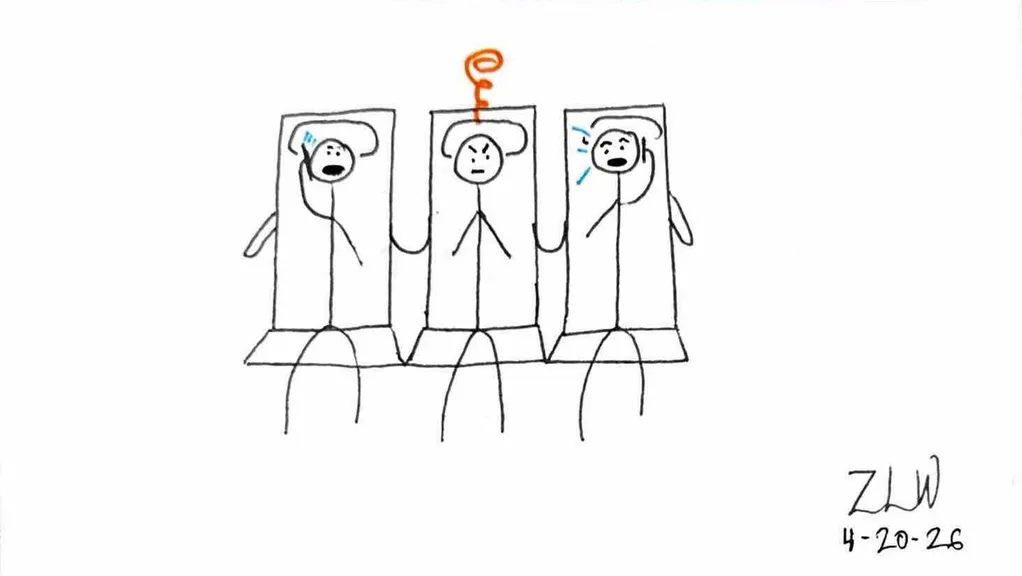
"A 'phone call' section, like an old smoking section," Leighton said.
Possibly without meaning to, he made another great point: we should all probably work to be less addicted to our phones.
Zach Wichter is a travel reporter and writes the Cruising Altitude column for USA TODAY. He is based in New York, and you can reach him at zwichter@usatoday.com.