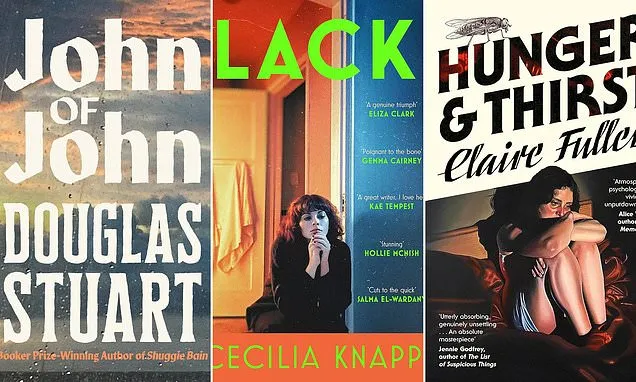
JOHN OF JOHN by Douglas Stuart (Picador £20, 416pp)
A remote Hebridean island is the backdrop for Stuart's third novel, which also feels removed in tone from its emotionally gruelling Glaswegian-set predecessors.
It's the early 1990s, and young John-Calum ('Cal') is returning from art school to care for his grandmother, the gloriously eccentric Ella, while keeping his sexuality under wraps.
His father, John, a crofter and weaver, is a taciturn Presbyterian who was scandalously abandoned by his wife. But Cal and John are closer than they know: for years, John has been conducting a secret affair with his bachelor neighbour, Innes.
Themes of desire and duty, inheritance and duty are woven as expertly as the tartan John produces, and Stuart's gift for descriptions often feels miraculous.
Some may hanker for the operatic highs and lows of his previous books, but this beautiful story of literal and metaphorical homecoming is wholly satisfying.
LACK by Cecilia Knapp (The Borough Press £16.99, 272pp)
Knapp, an award-nominated poet, provides as acute and relatable a portrait of modern life as a thirtysomething woman as you could wish for.
Our unnamed, permanently drained narrator is in a stable relationship, has a job that consumes her time, a rent bill that consumes her salary, and is ambiguous about having children.
Gradually, we learn her history: the shadow cast by the loss of her mother at 11; her father's infidelity; the pernicious effects of the Nineties and Noughties culture of misogyny and fatphobia; the fallout from a toxic situationship.
It could have felt like a box-ticking exercise, yet in Knapp's skilful hands feels utterly authentic as our narrator finally arrives at a hard-won place, if not of plenty, then from which she can create a sustainable existence.
HUNGER AND THIRST by Claire Fuller (Fig Tree £18.99, 320pp)
Fuller, known for her award-winning Unsettled Ground, returns with a queasily oppressive psychological horror about trauma that refuses to stay repressed.
When we meet Ursula 'Uschi' Major, she's a reclusive sculptor whose past - in a somewhat underutilised frame narrative - is about to be exposed by a documentary maker.
Back in 1987, Ursula was a vulnerable teenager, learning to live independently after years in care following her mother's tragic death. Ursula hungers for a family, and in would-be horror film-maker Sue, she thinks she's at least found a friend.
But when Ursula moves into a squat that was the scene of a terrible murder, reality starts to break down. The result is a creepily effective (if not truly edge-of-seat) tale which deftly deploys horror tropes and motifs.