The European Central Bank is prepared to offer euro liquidity to monetary authorities from around the world, an effort to prevent market tensions and increase global use of the single currency.
The Frankfurt-based institution will extend repo lines to "all central banks, unless excluded on the grounds of, in particular, money laundering, terrorist financing or international sanctions," it said in a statement on Saturday, adding that the changes will apply as of the third quarter.
"The framework will enable central banks in jurisdictions outside the euro area to address risks of euro liquidity shortages swiftly," it said. "These changes aim to make the facility more flexible, broader in terms of its geographical reach and more relevant for global holders of euro securities."
The move to make euros more readily available reflects Europe's broader efforts to redefine its place in a global order upended by US President Donald Trump. Policymakers have long viewed his erratic policies as an opening to challenge the dollar's decades-long dominance and bolster the euro's international role.
ECB President Christine Lagarde last year highlighted swap and repo lines, which help ensure the smooth transmission of monetary policy, as part of the responsibilities that come with an international reserve currency.
Earlier this month, she said that the ECB was in the process of reframing its liquidity framework to open up access and make repo lines "more attractive" to central banks outside the euro area and outside Europe.
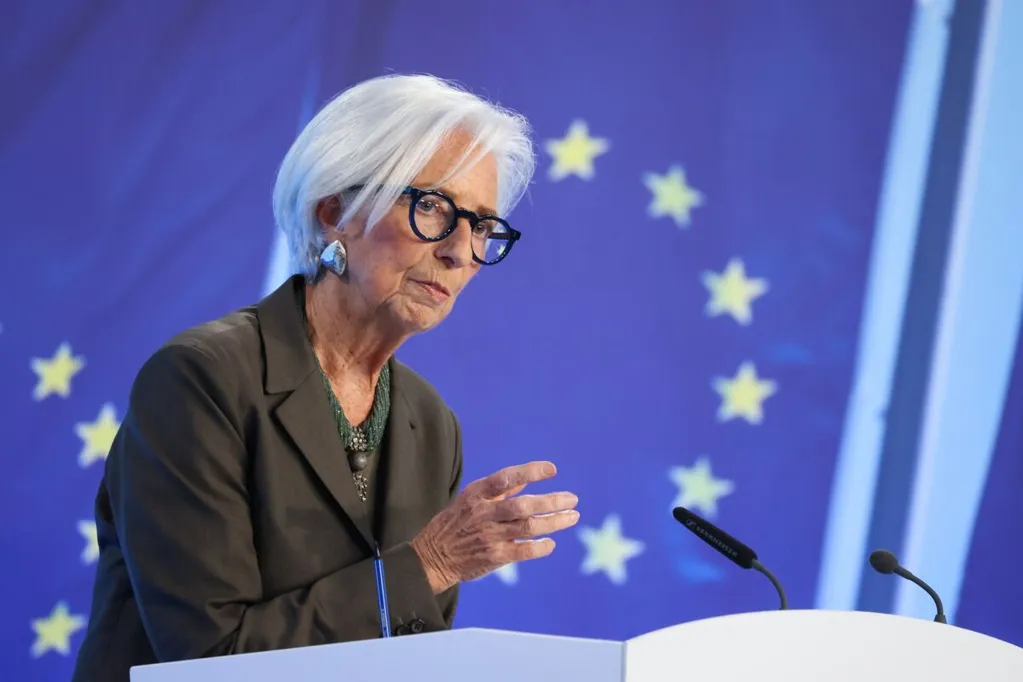
Speaking at the Munich Security Conference on Saturday, Lagarde stressed that the ECB "must avoid a situation where that stress triggers fire sales of euro-denominated securities in global funding markets, which could hamper the transmission of our monetary policy."
"This means we have to give partners who want to transact in euros the confidence that euro liquidity will be available if they need it," she said, highlighting the permanence, scope and agility provided by the new repo framework and saying that it "reinforces the role of the euro."
Lagarde highlighted that "the availability of a lender of last resort for central banks worldwide boosts confidence to invest, borrow and trade in euros, knowing that access will be there during market disruptions."
Temporary Funding Needs
The ECB said Saturday that under the new Eurosystem repo facility for central banks, or EUREP, it will no longer publish information about which central banks have accessed its repo lines. Instead, it will provide details of overall weekly drawings of euro liquidity across all repo lines.
"There are no ex ante restrictions on how non-euro area central banks can use funds borrowed under the revised EUREP," the ECB said. "In view of the increased geographical scope, central banks worldwide can use the euro liquidity provided under EUREP to address a wider range of temporary funding needs."
In a speech about Europe's monetary sovereignty, Executive Board member Piero Cipollone said Thursday that the ECB's liquidity facilities address the risk of disruptions in euro-denominated funding markets outside the region thereby preventing turmoil in global markets to lead to "strong adverse effects" on euro-area financing conditions.
Repo lines offer access to euros for specified periods in exchange for high-quality euro-denominated financial assets as collateral. They're different from swap lines, under which the ECB exchanges money with major peers including the Federal Reserve, the Bank of England and the Bank of Japan.
Both arrangements help address -- and prevent -- market dysfunctions that can spill into the euro area, push up interest rates and impair the way the ECB's monetary policy affects the economy.
The ECB created EUREP during the Covid-19 pandemic and currently has repo lines with the central banks of Romania, Hungary, Albania, Andorra, North Macedonia, San Marino, Montenegro and Kosovo.
South Africa's central-bank chief Lesetja Kganyago has already said that the G-20 country would be keen to utilize new ECB repo lines if available, given the vast amount of trade and investment that comes from Europe, according to Reuters.
The ECB can also count on the backing of European policymakers.
In a paper prepared for Monday's meeting of the euro-area finance chiefs and seen by Bloomberg, the European Commission called for reinforcing euro diplomacy by reassuring partner countries about access to euro liquidity.
Meanwhile, the European Parliament this week stated in its resolution on the ECB's annual report 2025 that it "supports the ECB in its efforts to accommodate the international role of the euro through inter alia sufficient currency swap and repo lines."