Learn how to identify Border Patrol and ICE agents and understand their tactics and roles in immigration enforcement.
WASHINGTON - On April 1, Republican leaders in Congress said they were on the verge of ending the record-long Department of Homeland Security shutdown "in the coming days."
That was three weeks ago.
The political situation has only gotten messier since then. Rank-and-file Republicans are adamant about moving legislation with more money for federal immigration enforcement alongside a bill to fund the rest of DHS. Making these moves has been a logistical slog, made worse by a relative lack of urgency on Capitol Hill after President Donald Trump rerouted federal dollars to pay the embattled agency's employees.
But that money is running out - and fast - newly minted DHS Secretary Markwayne Mullin warned this week. After the first week of May, Congress will have to act, he said on "Fox and Friends."
If not, tens of thousands of Transportation Security Administration agents could go without pay again.
"I've got one payroll left and there (are) no more emergency funds, so the president can't do another executive order because there's no more money there," he said.
Facing pressure from the House GOP, Senate Republicans are doing their best to end the shutdown by fast-tracking a budget blueprint that recommends giving Immigration and Customs Enforcement and Border Patrol roughly $70 billion over the next three years. Moving it through the Senate, however, will allow Democrats to force Republicans to take a series of tough votes this week.
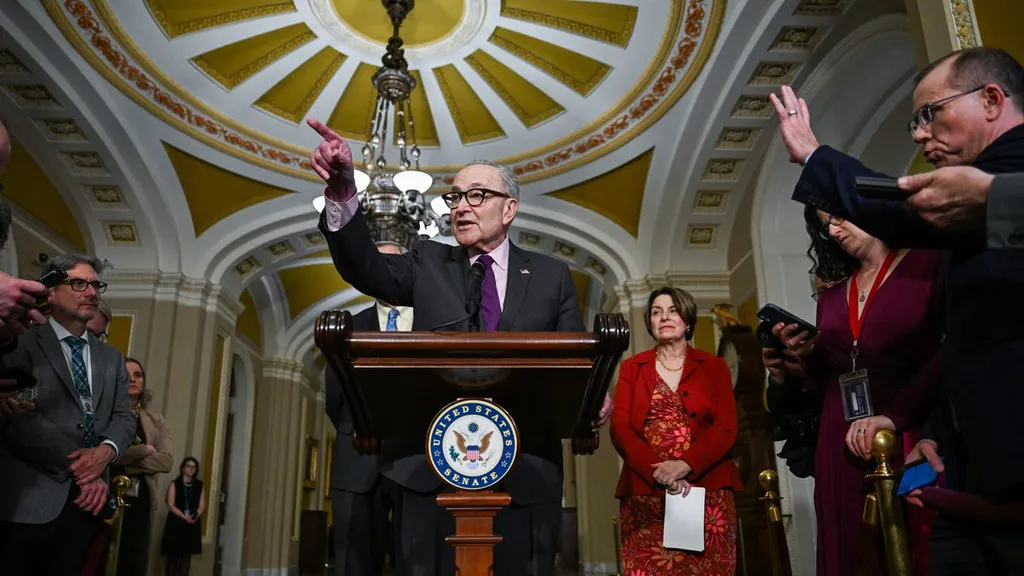
Senate Minority Leader Chuck Schumer, D-New York, vowed on April 22 to hammer his GOP colleagues in the coming days on affordability issues, in hopes of differentiating the two parties' positions before the November midterm elections.
"Senate Democrats will make these contrasts increasingly clear, vote after vote, amendment after amendment,"
he told reporters.
DHS still in crisis
By the end of March, the Homeland Security shutdown became the longest in American history, surpassing a record set last year. The greatest pain points of the funding impasse were alleviated, however, by directives Trump signed several weeks ago to reroute money to pay DHS employees.
Still, the agency has stressed it remains in crisis mode.
At the Federal Emergency Management Agency, for instance, training for firefighters has been postponed due to a lack of operational funding (which includes all classes at the National Fire Academy). The National Flood Insurance Program is also operating under significant limitations. And even amid the Iran war, more than half the employees at the Cybersecurity and Infrastructure Security Agency - a division of DHS that protects Americans from cyber threats - are on furlough.
Zachary Schermele is a congressional reporter for USA TODAY. You can reach him by email at zschermele@usatoday.com. Follow him on X at @ZachSchermele and Bluesky at @zachschermele.bsky.social.