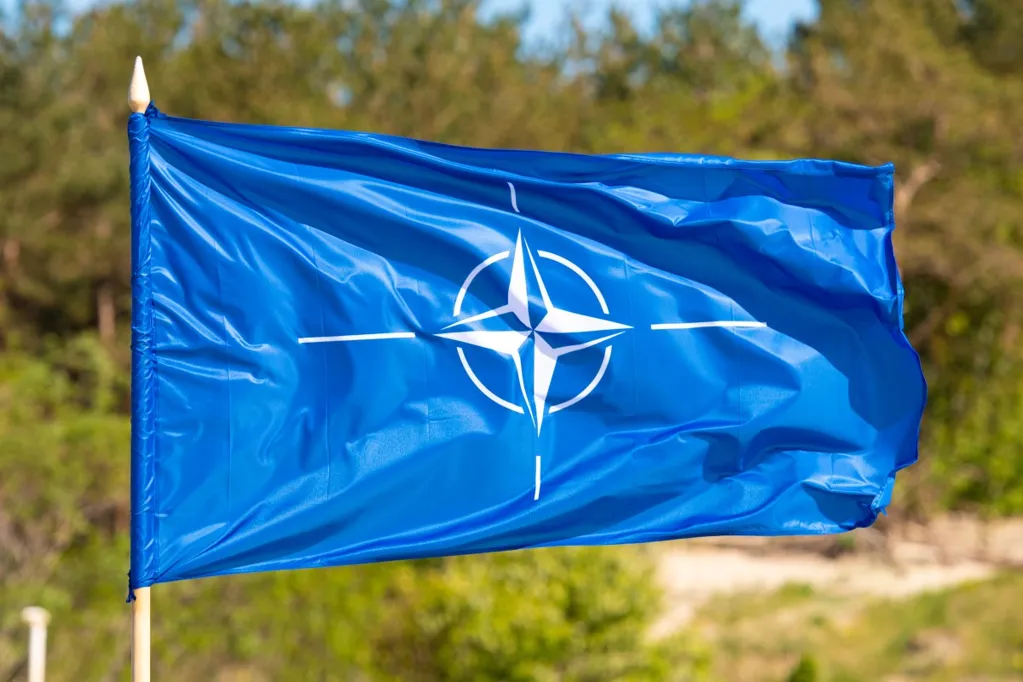
European security officials are now issuing a message that would have been unthinkable just a decade ago: prepare for war. As The Wall Street Journal recently reported, governments across Europe are warning citizens to brace for the possibility of conflict with Russia. The moment is sobering, but long overdue. It exposes a hard truth Europe spent years avoiding: The continent's vulnerability is not simply the result of the war in Ukraine. It is the consequence of strategic complacency, fiscal misallocation and the reckless assumption that the United States would always pick up the tab.
Europe's security must first and foremost be Europe's responsibility.
President Donald Trump forced that reality into the open. He has pressed NATO allies to honor commitments long made in theory but ignored in practice -- serious defense spending. Under sustained pressure, NATO members finally began moving toward higher outlays beyond the long-neglected 2 percent-of-GDP benchmark. Trump's blunt insistence compelled Europe to confront what genuine burden-sharing means. As reported in The Washington Post, senior Pentagon officials are preparing a plan to downgrade several of the U.S. military's major headquarters, including U.S. European Command. This move aligns with President Trump's national security strategy which declared that the "days of the United States propping up the entire world order like Atlas are over."
European leaders should have absorbed this lesson during Trump's first term. Instead, many misread his resolve and assumed the United States would continue underwriting European security regardless of European choices. That miscalculation has proven costly.
Some argue that Europe "earned" sustained American protection by deploying troops to Afghanistan after 9/11 and assisting U.S. missions abroad. Those efforts mattered but were never intended to substitute for investment in Europe's territorial defense. Solidarity abroad does not excuse neglect at home.
Trump's approach to NATO and Ukraine is consistent: The United States will support allies who take responsibility for themselves. America cannot serve as Europe's permanent wallet or security guarantor while Europe avoids hard trade-offs. European leaders who want influence over Ukraine's future must demonstrate seriousness with military readiness, not diplomatic communiqués.
This realignment should have happened long ago.
For decades, European governments treated American protection as entitlement, not partnership. While U.S. taxpayers financed deterrence, many European capitals prioritized expansive social programs, early retirements and permissive immigration policies over defense spending. Political comfort was chosen over strategic responsibility on the assumption that America would always make up the difference.
The 1994 Budapest Memorandum is often invoked to claim the United States now "owes" Ukraine protection because Kyiv surrendered Soviet nuclear weapons. But the memorandum was not a binding defense guarantee. Its failure underscores a central lesson: deterrence depends on credible capability, not wishful documents.
Recent disputes over frozen Russian assets and Ukraine funding make Europe's dilemma even clearer. European leaders agreed to provide Ukraine with a €90 billion loan backed by the European Union (EU) budget through 2026 and 2027. They reached this after failing to agree on their preferred plan of using roughly €210 billion in frozen Russian state assets as collateral. That proposal collapsed because governments -- led by Belgium, where most of the assets sit -- feared legal retaliation and liabilities if Moscow sued. The hesitation, infighting and reliance on budget-backed borrowing show how difficult European decision-making is, even at an existential moment on Europe's own continent.
The United States can and should stand with Europe when Europe stands up for itself. But American power should augment well-funded European defenses -- not replace them. NATO's Article 5 is a mutual defense commitment, not a perpetual subsidy for governments unwilling to invest in the military strength that makes NATO's Article 5 credible.
This is not isolationism. It is accountability.
The United States faces pressing needs at home including aging infrastructure, rising health care costs and border pressures. Asking American families to carry Europe's defense burden when Europe possesses the wealth, population and industrial base to defend itself is neither fair nor sustainable.
And Europe is capable. With one of the world's largest economies, Europe has the resources to defend itself -- if it chooses to. What has been missing is not capacity but will.
Instead of building ammunition stockpiles, air defenses, cyber resilience and rapid-response forces, many governments offered benefits and reassurances, acting as if history had ended and U.S. protection was eternal. That assumption has shattered.
If Europe believes Russia is a genuine threat, Europe must act accordingly. Defense spending and credible deterrence cannot depend on Washington. And these efforts must be funded by Europe -- not American taxpayers. The White House and its envoys are doing their part, balancing support for Ukraine with the realities of Russian power. But this is Europe's problem first, not Washington's to solve.
The United States can serve as a backstop. Europe must be the frontline.
Europe must finally take ownership of the continent's security and future. True allies share burdens. They do not ask others to do their work for them.
Europe enjoyed the peace dividend for decades. Now it must pay the security premium.
Jason D. Greenblatt was the White House Middle East envoy in the first Trump administration. He is the author of In the Path of Abraham: How Donald Trump Made Peace in the Middle East and founder of Abraham Venture LLC.