"There are clear retaliation instruments at hand if this continues...At the same time we want to publicly call for calm and give him an opportunity to climb down the ladder," a European diplomat briefed on the discussion told Financial Times. "The messaging is...carrot and stick."
Newsweek reached out to the White House, European Parliament, and European Commission by email on Sunday afternoon outside of normal business hours for comment.
Trump has escalated his ambitions for Greenland in recent weeks, leading to heightened tensions with Denmark and NATO allies who oppose his ambitions for the world's largest island, which is a semi-autonomous territory within the Kingdom of Denmark.
Trump, however, has continued to insist that the U.S. must acquire Greenland as part of shoring up its security, particularly in the face of Russian and Chinese ambitions in the Arctic. He has said that Denmark is not capable of defending Greenland, and several European nations, which have urged Trump to achieve his goals within diplomatic pathways already available through NATO, deployed troops to Greenland as part of the Danish exercise Operation Arctic Endurance.
Therefore, Trump announced he'll introduce punitive tariffs against nations that oppose his efforts, with a 10 percent tariff introduced on February 1 and increasing to 25 percent on June 1, where it will remain until a deal for Greenland is completed.
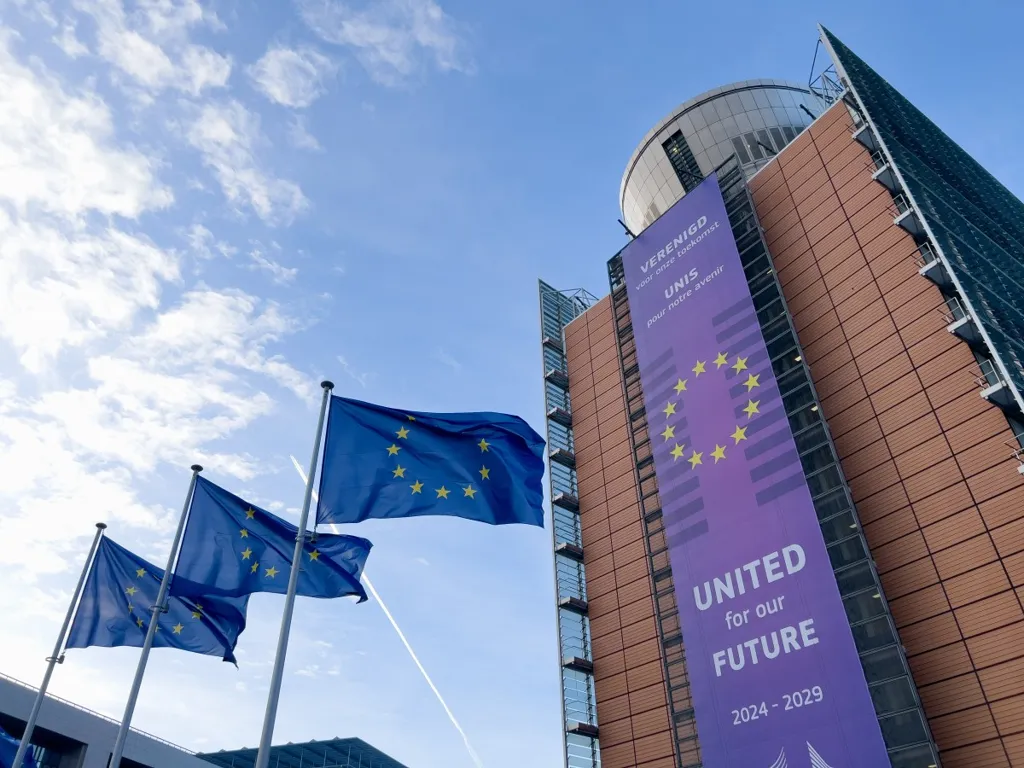
European ambassadors from all 27 countries in the EU convened on Sunday for an emergency meeting to determine possible responses to Trump's tariff threat, which European politicians have warned could derail a trade and tax deal between the U.S. and the union that was agreed upon last summer but awaiting ratification.
The Financial Times, citing officials involved in preparations, reported that European leaders are now drawing up plans for retaliatory tariffs that they believe will provide leverage in meetings with Trump at the World Economic Forum in Davos this coming Wednesday and Thursday.
The discussions focus on finding a compromise that will help heal the growing rift between the longtime allies before it turns into a full split, which could threaten Europe's security at a delicate time during negotiations with Russia over Ukraine in their ongoing war.
The tariffs under consideration are part of a list that was drawn up last year but suspended until February 6 to avoid entering a trade war with the U.S.
Another measure under consideration, and backed by France, is the use of an anti-coercion instrument, which could limit American companies from accessing the internal European market -- a measure introduced in 2023 but not yet used or tested.
President Donald Trump on Truth Social last week: "The United States needs Greenland for the purpose of National Security. It is vital for the Golden Dome that we are building. NATO should be leading the way for us to get it. IF WE DON'T, RUSSIA OR CHINA WILL, AND THAT IS NOT GOING TO HAPPEN! Militarily, without the vast power of the United States, much of which I built during my first term, and am now bringing to a new and even higher level, NATO would not be an effective force or deterrent - Not even close! They know that, and so do I. NATO becomes far more formidable and effective with Greenland in the hands of the UNITED STATES. Anything less than that is unacceptable."
Swedish Prime Minister Ulf Kristersson on X: "We will not let ourselves be blackmailed. Only Denmark and Greenland decide on issues concerning Denmark and Greenland. I will always stand up for my country, and for our allied neighbors. This is an EU issue that affects many more countries than those now being singled out," he added. "Sweden is now having intensive discussions with other EU countries, Norway, and the United Kingdom for a coordinated response."
French President Emmanuel Macron on X, in part: "No intimidation or threat will influence us - neither in Ukraine, nor in Greenland, nor anywhere else in the world when we are confronted with such situations. Tariff threats are unacceptable and have no place in this context."
The finance ministers of France and Germany will meet on Monday before traveling to Brussels to meet with their other European counterparts to determine a coordinated response to Trump's tariffs threat.