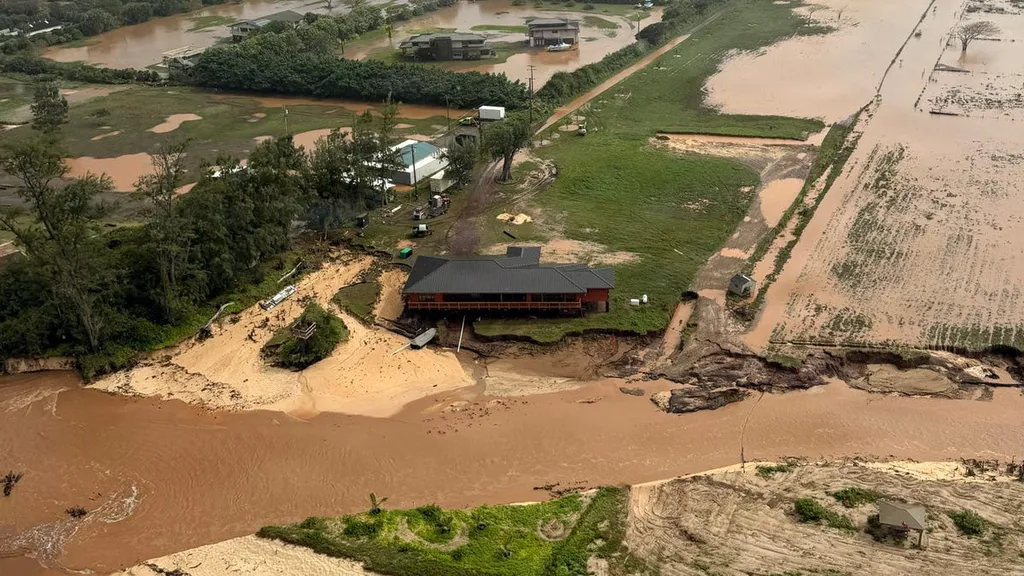
Aircrews conducted overflights and rescues in northern Oahu after heavy rain caused massive flooding, the U.S. Coast Guard says.
Evacuation notices Hawaii have lifted after catastrophic flooding prompted evacuation alerts in parts of the state, but flood watches remain in place for most of March 22.
Much of the state remains under a flood watch into the evening of March 22, including Oahu, Maui, Molokai, Lanai, Kahoolawe and the Big Island, according to the National Weather Service, following what authorities described as the worst flooding the state has seen in 20 years.
Excessive rain caused torrents of water to wash out homes, damage roads and threaten to bust through a dam, sparking an emergency evacuation of thousands in Oahu on March 20. The Hawaii Emergency Management Agency later clarified that the 120-year-old dam had not failed but "is at imminent risk of failure."
Haleʻiwa and Waialua also saw evacuations on March 21 as an alert warned that all roads out are at risk of "imminent failure," though those alerts have since been lifted. Most recently, flash flood warnings were issued through the morning of March 22 in parts of Maui, Molokai, Lanai, Kahoolawe and are set to expire at 8:30 a.m. local time, according to the Honolulu National Weather Service office.
Additionally, the National Weather Service in Honolulu warned of potential excessive rainfall and flash flooding later in the day as the forecast showed possible heavy rain and showers continuing through March 22 into the work week, including in Oahu, Maui, Molokai, Lanai, Kahoolawe and the Big Island.
"Significant flooding may occur due to the overflow of streams and drainages," the weather service said. "Roads in several areas may be closed along with property damage in urban or low lying spots due to runoff. Landslides may also occur in areas with steep terrain." The March 22 forecast includes rain showers and possibly a thunderstorm, with new rainfall amounts between a quarter and half of an inch possible.
Hawaii Gov. Josh Green said there have been no deaths or people unaccounted for during the flooding, USA TODAY previously reported, but called it the worst the state has seen since the early 2000s. Some 200 people have been rescued from the flooding and about 10 presented at hospitals with hypothermia, he said.
"This is a major threat to our people and to our state," Green said at a news conference March 20.
Green said some areas of Hawaii received between 40 and 50 inches of rain in a March 21 update posted to X, adding that while storms are moving away from Oahu and over to Maui, 4 to 12 inches of rain are expected and could produce flooding.
"Don't drive through heavy water, make sure that you're kind of laying low...everyone please be safe," Green warned in the post. "You've done a wonderful job. No loss of life so far, a few serious injuries, but don't take this storm lightly. There's still more storm force out there though it does appear to finally be clearing somewhat on Oahu."
Hotels are also available at discounted rates for residents needing to move locations, Green added in a second post on X, directing people to go to ready.hawaii.gov and call hotels directly to make reservations.
"Check on your neighbors and make sure your family has a plan," Green wrote. "We will continue to provide updates throughout the day. Stay safe and take care of one another."
The flooding and rain are a result of a series of low pressure systems that have struck Hawaii throughout the month.
They're a winter phenomenon, often called kona lows or kona storms, for the Hawaiian word "kona" for leeward. The winter storms typically impact the leeward side of the islands that are usually sheltered from tradewinds and intense rains, according to Steven Businger, a professor in the meteorology department at the University of Hawaii.
On average, one to two kona storms impact Hawaii during the November-to-March season, but it's very rare for two to form within the same month, let alone within a week, AccuWeather meteorologists said.
The first round of storms impacted the islands from March 10 to March 16 and brought local rainfall totals of over 4 feet. These storms have raised water levels, with one stream rising more than 10 feet, spiking fears about flooding and the structure of aging dams and reservoirs in the state.
Damage from the March flooding could total $1 billion, Green said. That includes damage to numerous homes, roads, schools, airports and a hospital on Maui, he said. Flooding from the most recent batch of storms have swept away a house in Mokuleia and closed multiple roads in the state, part of a road in Makaha Valley on Oahu in both directions March 20 after part of it collapsed, sending vehicles over the edge, USA TODAY previously reported.
Contributing: Dinah Voyles Pulver and Jeanine Santucci, USA TODAY
Kate Perez covers national trends and breaking news for USA TODAY. You can reach her at kperez@usatodayco.com or on X @katecperez_.