Forbes contributors publish independent expert analyses and insights.
25 years ago, The Fast And The Furious hit the silver screen in the US, opening up a whole new realm to the greater automotive enthusiast audience. While tuner car culture had been well-established for quite some time, particularly in Southern California, the craze that followed the first film bolstered it to never-before-seen levels from coast to coast. On top of that, the following films coincided with other significant events happening in America during their production and release, and the series continued to exemplify the evolving corners of automotive culture as it reached into the 2010s and 2020s.
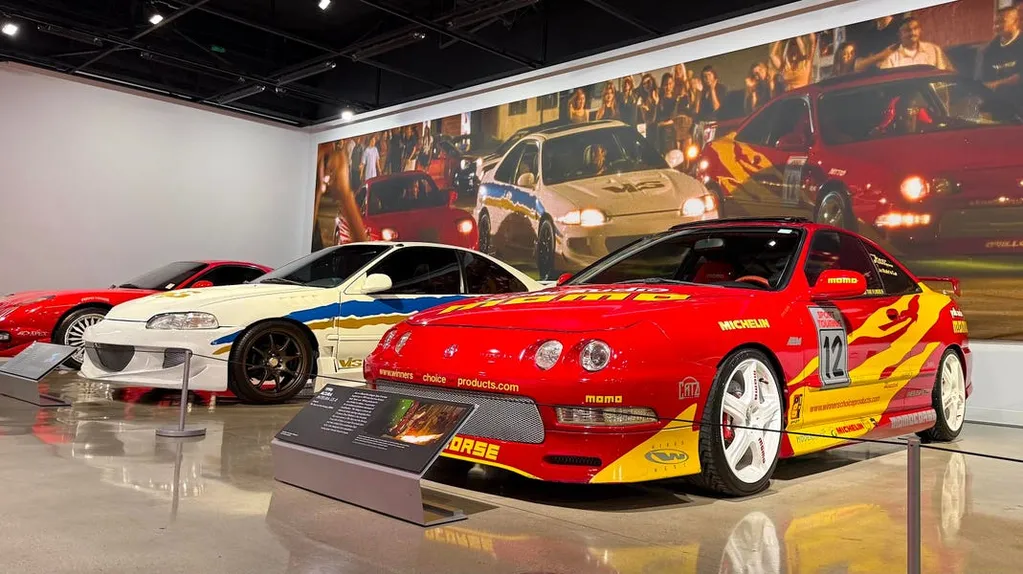
Walking through the Petersen Automotive Museum's most recent exhibit, "A Fast And Furious Legacy: 25 Years of Automotive Icons," one is instilled with a sense of all of this, and it's worth both highlighting and celebrating. Especially when it comes to how the films influenced automotive culture. I recently had the opportunity to soak up the exhibit and meet with its curator, Kristin Feay, to dig into some fascinating behind-the-scenes details.
One Livery To Change It All
Despite its massive success, the original FATF film was produced on a relatively small budget for its era. 38 million dollars, even in 2001, was tight for what was planned as a box office hit; therefore, production staff had their work cut out for them. "The director wanted to ensure accuracy in the street racing scene," Feay shared, not just in the pivotal first drag race in the first film but for the overall tuner car scene.
To understand how tuner culture looked, acted, and above all, modified its cars, staff attended local car events around SoCal. They quickly discovered that aftermarket styling aesthetics were a little on the plain side. Feay shared that many of the vehicles were rented directly from owners in the local SoCal car scene but were turned up a notch to pop on screen. They gave them a variety of bright colors, graphics, and relevant aftermarket company decals. The quintessential hero car of the story, Brian’s (played by Paul Walker) orange A80-generation Toyota Supra sported custom graphics, widely referred to as “Nuclear Gladiator.” This wasn’t sourced from an aftermarket supplier but rather concocted by Troy Lee in Universal’s art department, in-house. This was “to dramatize the type of graphics seen on JDM-style cars around Los Angeles,” as Feay pointed out.
Following the film’s release and wave of enthusiasm, the car community took notice and was inspired to create its own loud, graphics-intense creations. And just learn that it existed in general in a world that was largely pre-internet. Naturally, many clones of the Supra and other starring cars have been created since, and they remain iconic. The shift in bright and loud wasn’t homegrown but rather a byproduct of production making cars more camera-friendly.
Additionally, while the tuner car scene is vast in terms of powertrain, drivetrain, automaker, and more, the cars selected for the pivotal first drag race were intentional. Production wanted a large variety of color and overall aesthetic. Then, while the excessive use of exhaust flames wasn’t exactly realistic, it definitely added to the style and drama.
A Rebirth
The FATF franchise saw no sign of slowing down when The Fast and the Furious: Tokyo Drift arrived in summer 2006. The film is often viewed more critically by fans due to not featuring any of the original cast; yet, it still made its own massive impact. The fascinating world of drifting was quickly catching on in the US, and Tokyo Drift added an immense amount of fuel to the fire.
One of the film’s cars has a fascinating backstory. The protagonist, Sean (played by Lucas Black) undergoes extensive drift training by Han (played by Sung Kang), and the platform in which he develops his skills is a red ninth-generation Mitsubishi Lancer Evolution, more widely known among enthusiasts as the Evo 9.
Hurricane Katrina hit American soil in Fall 2005 and was one of the largest tragedies in American history. It would be in incredibly poor taste to say that any good came from it, but there was one instance of rebirth.
Every Evo 9 used in TD’s production -- ten total -- was donated by Mitsubishi Motors North America as they had been on a dealer lot in New Orleans during Katrina. Due to their salvage status and thus inability to ever be sold as new, they were repurposed and made ready for production. "It's a story of rebirth -- repurpose these and make them an iconic part of American culture," Feay shared. The Evo's appearance on-screen not only bolstered the appeal of the platform among enthusiasts but also acted as the perfect training tool under Han's tutelage -- a crucial part of the plot. If someone can seamlessly drift an all-wheel drive chassis that's well-regarded for having potent grip, they can truly drift anything.
Maturity
One striking detail that fans may not pick up on is the fact that maturity plays into the Fast and Furious series. As the characters grow up, their wardrobe does too. Additionally, the cars become less loud in their appearance and more understated. Dare I say -- due to the absence of bright liveries and more of a "if you know, you know" vibe -- they're more classy.
One could chalk this up to keeping with the times; by Fast And Furious' release in summer 2009, tuner scene style from the beginning of the decade was well on its way out. But between the way the characters dress, modify their cars, and even present themselves on-screen, it shows that they've grown wiser from the lives they've lived.
This is perhaps one of the top reasons why the franchise has maintained massive fanfare. The viewership has grown with the characters; between what's on-screen staying current yet also always taking the opportunity to give a nod to where it's been proves that it'll always hold a special place in the hearts and minds of enthusiasts.
If you're in Los Angeles or have plans to pay it a visit this year, not only is the Petersen Auto Museum well worth any car enthusiasts' time -- whether as a casual admirer or devoted gearhead -- but its "A Fast And Furious Legacy: 25 Years of Automotive Icons" exhibit is a must-pore-over, filled with more interesting history about the franchise.