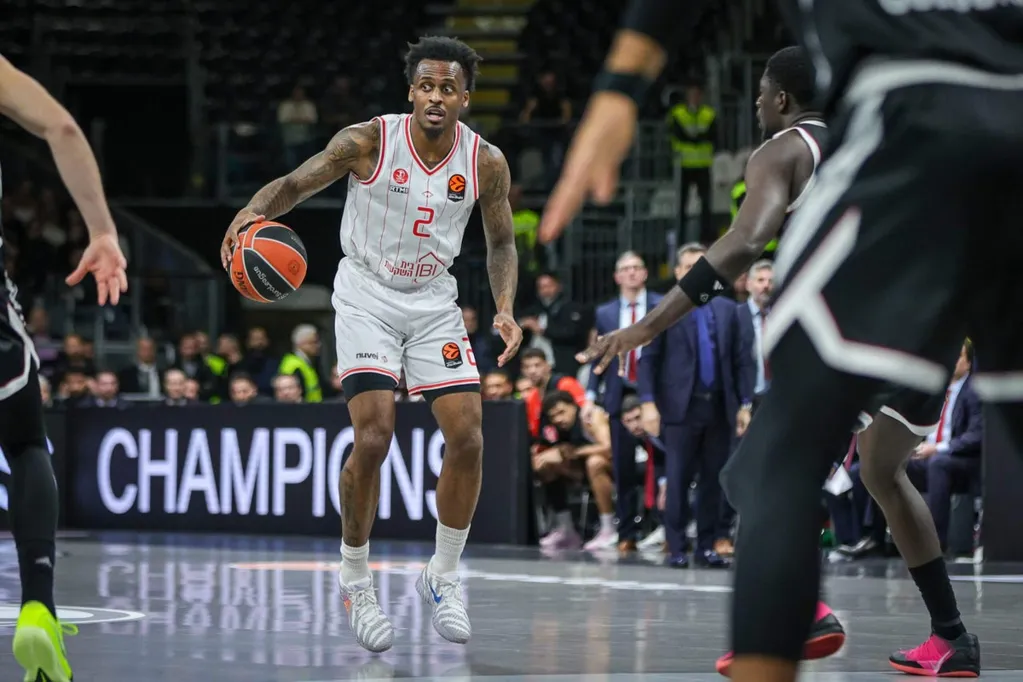
PHILADELPHIA -- Federal prosecutors announced charges Thursday for 20 men for what they said were their roles in an alleged conspiracy to bribe and manipulate college basketball games involving then-active college athletes. The scheme, according to federal prosecutors, involved two men who were also indicted this fall for their alleged role in an NBA sports gambling scheme as well as former LSU and NBA player Antonio Blakeney.
Prosecutors said that the scheme ultimately included 39 college basketball players on more than 17 teams who shaved points in more than 29 Division-I games.
Shane Hennen and Marves Fairley, two men who were indicted in a federal district in New York in October, worked with Blakeney and a number of others to manipulate college basketball games during the 2023-24 and 2024-25 seasons, according to an indictment brought by the US Attorney's Office for the Eastern District of Pennsylvania. Prosecutors said Hennen and Fairley worked with others to recruit college players with bribes and then asked them to help fix games so their teams would not cover the spread -- the number of points by which a sportsbook predicted a team would lose its game. The players, prosecutors say, were offered between $10,000 to $30,000 for each game to be a part of their gambling ring.
The scheme was alleged to be far-ranging, including players on DePaul, Nicholls State, Tulane, La Salle, Fordham, Northwestern State, Saint Louis, Buffalo, Robert Morris, Southern Miss, North Carolina A&T, Coppin State, University of New Orleans, Abilene Christian, Alabama State and Kennesaw State.
The scheme began in 2022, according to prosecutors, when Fairley and Hennen recruited Blakeney, then playing in China for the Jiangsu Dragons for the Chinese Basketball Association, to fix games in that league. Blakeney, who had played two seasons in the NBA, was asked to manipulate his performance in some Jiangsu games so that Fairley and Hennen could wager and win on them in the United States.
Fairley and Hennen bet $198,300 at a Pennsylvania casino, along with other wagers, on one March 2023 game where Jiangsu was an 11.5 point underdog. Blakeney scored just 11 points in that game during a season in which he averaged more than 32, and his team lost by 31 points. Later that month, prosecutors allege that Blakeney said he would not play in a game on March 15 but that his replacement would take their money to perform and help them. Fairley and Hennen, according to the indictment, bet about $100,000 in total on that game.
The scheme grew profitable enough that Hennen, according to the indictment, texted another person involved that "Nothing gu[a]rantee[d] in this world but death[,] taxes[,] and Chinese basketball."
Blakeney, prosecutors say, was paid $200,000 at the end of the season.
The group then moved on to Division I college basketball games the next season.
Hennen and Fairley were two of six men charged by federal prosecutors in New York for running a sports gambling scheme in the NBA, which included Terry Rozier. They are accused of buying insider information on injuries and players to then place bets on those games. Hennen was also indicted in a separate case brought by federal prosecutors that alleged a poker ring that defrauded victims by using ex-athletes like suspended Trail Blazers coach Chauncey Billups and Damon Jones as lures. Hennen and Fairley have both pleaded not guilty.
On a separate track, the NCAA has been investigating some of the schools and athletes mentioned in the indictment. Over the past year, the NCAA has ruled more than a dozen Division I men's basketball players permanently ineligible for manipulating game results and their own performances, making impermissible bets, providing information to gamblers and not cooperating with investigations.
At the NCAA convention this week in Maryland, during a presentation on legalized gambling's impact on college sports, Mark Hicks, NCAA managing director of enforcement, described how players mostly at smaller, mid-major schools on teams with losing records were being targeted for game-fixing schemes.
The NCAA has also been pushing for a ban on prop bets in college sports. Its lobbying helped lead four states to remove prop betting on college players, but many others still allow bettors to wager on the performance of individual players.
"Our enforcement team uncovered student-athletes who manipulated their performance to win bets, and we caught coaches trading inside information, and we took action, and we banned those responsible," NCAA President Charlie Baker said during his address to membership at the convention Wednesday. "But the sports betting community's response to that was a shoulder shrug. While sports books announced they're taking some prop bets off the market for NBA games because in their own words the bets are too risky they refuse to do the same for college prop bets. In some respects the sports betting industry's drive for profits is coming at the expense of our student-athletes and it must stop."